
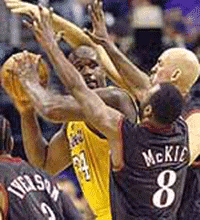
Practical advice on pressing defense from the head coach of Metro State University in Denver.
- When the offense breaks your press, the defense must remain just as solid and aggressive.
- If you want to become a pressing team, your entire program has to be built around that mentality.
- One of the greatest advantages for a pressing team is simply making shots. Scoring gives you more opportunities to organize and vary your pressure defense.
- The goal of the defense should be to become disruptive.
Step by Step
Take the Primary Ball Handler Out of the Game
One of the first objectives of the press should be to disrupt or remove the opponent’s primary ball handler from his usual role.
Make someone else organize the offense.
You Have to Be in Excellent Condition
Pressing requires conditioning.
The press may not immediately produce a steal, but the reward can appear later in the game as the opponent becomes increasingly tired and uncomfortable.
Control the Tempo
Use pressure to influence the rhythm of the game.
Sometimes you want to speed the opponent up.
At other times, you may want to slow them down and prevent them from comfortably entering their offense.
Force Turnovers
The defense should actively create mistakes.
Do not simply wait for the offense to make one.
Force Poor Shots
Pressure should encourage the opponent to take:
- rushed shots,
- quick shots,
- poorly prepared shots,
- and shots outside the normal offensive rhythm.
Pressing Is About Effort
An effective press is not primarily about athletic ability.
It is about effort.
That effort has to be consistent if the defense is going to work.
Transition into the Press
Your team must be excellent at changing from offense to defense.
Players have to take their positions quickly.
The press cannot begin late.
The first few seconds after possession changes are critical.
Forget Your Matchup When You Trap
When a trap is initiated, players must stop thinking only about their individual matchup.
The team has to rotate.
Once two defenders commit to the ball, the remaining defenders must understand the resulting responsibilities.
Pressing and Trapping Are Not the Same Thing
Players need to understand the difference between a pressing defense and a trapping defense.
Not every press has to produce a trap.
And not every trap has to occur within a full-court press.
The purpose, timing and rotations are different.
The “NOW!” Call
Whenever the ball is passed to a center or another interior player in the backcourt or far away from your own basket, the entire team should immediately communicate:
“NOW!”
This becomes an emergency signal.
It tells everyone that the defense has an opportunity to increase pressure.
From that moment, your own assignment must not receive an easy pass.
The whole team has to react together.
Let the Big Players Experience the Front of the Press
Occasionally place your interior players at the front of the press.
This allows them to experience how much effort perimeter players normally have to produce at the top of the defense.
It can improve understanding and appreciation of each player’s role within the system.
Sometimes the Press Is Only There to Slow the Game
A press does not always need to be extremely aggressive.
Sometimes its purpose is simply to slow the opponent down.
In those situations, there may be no need to trap.
The objective may simply be to reduce the time available for the opponent to organize the offense.
Your Centers Must Direct the Defense
Interior players must communicate extremely well from the back of the press.
They can see almost everything in front of them.
For that reason, they have a major responsibility for organizing and directing the defense.
An effective full-court press is therefore not simply five players running aggressively after the ball.
It requires:
- effort,
- conditioning,
- communication,
- clear responsibilities,
- intelligent trapping,
- coordinated rotations,
- and a shared defensive mentality.