Szerző: BasketClinic

  • Banzuke at Lake Balaton

    Banzuke at Lake Balaton

    Posted on August 9, 2013

    I had always dreamed of testing myself against the terrifying obstacle courses of Japan.

    I used to watch them on television with envy as contestants put their skill and courage to the test on one challenge after another. Somehow, I always imagined that I would be able to do it too.

    Well, from today on, I look at those modern gladiators as true heroes.

    I could never quite decide whether they entertained the audience more — or themselves.

    Balatonfüred, August 6, 2013

    Countless events have taken place on this date throughout history.

    For me, while actively searching along the path of the Tao for the meaning of myself, my life and my place in this constantly changing world, something also became clear: how to experience this rather unusual kind of challenge — the sort that makes some people laugh and others more confident.

    But let us begin.

    Lake Balaton can take this too.

    At Kisfaludy Beach, a tower roughly two storeys high immediately catches the eye of anyone taking in the panorama.

    In front of it, floating on the water in bright summer colours, is a huge inflatable pillow.

    From the moment we arrived on Sunday, we were already shouting and laughing whenever holidaymakers gathered their courage at the top of the tower and prepared to jump.

    The idea was simple.

    One person landed flat on the nearer end of the giant inflatable pillow.

    At the other end sat another participant, waiting to be launched into the air like a lion ready to leap.

    The flatter the first person landed, the more spectacular the result.

    I am still not sure what was funnier.

    Watching the trembling-legged heroes struggle to make themselves jump, like characters in a fairy tale facing some impossible task?

    Or watching the helpless Flying Man waiting at the far end of the pillow?

    Naturally, we discussed which role we ourselves would choose.

    And naturally, we laughed every time we remembered the roar of the crowd from the shore and the water, and all the comments shouted at these gladiators after their questionable performances.

    We joined in too, of course.

    That is simply what people do.

    Then It Was Our Turn

    This morning, somebody approached us.

    I had never been used as part of a promotional attraction before, so naturally I said yes.

    A few moments later, looking into the excited eyes of my two sons, who were clearly enjoying the anticipation, I was already beginning to regret it.

    Do I really need this?

    Then I remembered how much I had enjoyed watching everyone else suffer the day before, and I started laughing again.

    Never mind.

    A physical education teacher?

    A graduate of the University of Physical Education?

    A basketball player?

    Of course there would be no problem.

    It was only another challenge, a little test of courage designed to pump up the adrenaline.

    And to be fair, there are not many things these days that make me feel that much adrenaline.

    Up the stairs.

    Life jacket on.

    I went first.

    From the lower level of the tower, I jumped forward onto the pillow so that my smiling sons could launch me closer to the sky.

    The giant floating cushion challenged me to battle.

    And, to be perfectly honest, it defeated me.

    Within a minute of landing, I had no chance of riding the moving pillow far enough to crawl or climb toward its end.

    I slipped into the water.

    Second Attempt

    This time I waited for the miracle with much greater confidence.

    And a miracle was exactly what would have been required for me to stay on.

    I fell into Lake Balaton at almost precisely the same spot.

    As I dropped, I could still hear the fading laughter of my two sons.

    The older one was already crawling forward.

    He managed it on his first attempt.

    All right, I thought.

    Just wait.

    I am going to launch you so far that you will never find your way back.

    While imagining this heroic revenge, I suddenly became very aware of the height waiting for me.

    Standing above the middle of Lake Balaton was an unfamiliar situation.

    Unfamiliar height.

    No railing.

    There was only one possible solution.

    Jump.

    At the public’s request, I threw myself into the open space below.

    A moment later, I hit the water again with what had already become a familiar feeling.

    This time on the other side.

    I immediately started swimming, because my younger son was already waiting for me at the launching point.

    Back up again.

    A few moments later — jump.

    This time I landed with a position worthy of judging, executing the manoeuvre with remarkable virtuosity and accepting all the risks involved.

    Flat on my back.

    Exactly as required for a successful launch.

    The Fastest-Improving Human Slingshot

    By the time I reached the stairs again, my older son was already waiting in position.

    Fine, I thought.

    He deserves this.

    After all, I had clearly become the fastest-improving human slingshot at Lake Balaton.

    This time I jumped even more confidently.

    The crowd roared.

    They almost seemed to demand that we switch roles and that I attempt the supposedly easier part of the challenge.

    A few moments later, both boys were encouraging me from the top of the tower.

    I jumped onto the lower end.

    And I actually stayed on for quite a while.

    By which I mean I slid off the right-hand side of the violently moving inflatable at almost exactly the same place as before.

    The great mystery remained unresolved.

    So I tried again.

    The boys explained what I was doing wrong.

    Apparently, I did not need to make such a big jump.

    I should simply fall gently onto the pillow, almost like a mermaid.

    Excellent advice.

    This time I slid backward.

    At least that was progress — an entirely new direction.

    At that point, regardless of everyone watching, I finally abandoned the skill event altogether.

    I accepted the truth.

    I am a knight who prefers danger.

    Apparently, Big Fun is not my natural event.

    Flying Toward the Sun

    What I regret most is that I enjoyed jumping from the tower so much that the adrenaline took over completely.

    My attention turned inward.

    I had no chance to properly enjoy the sight of my sons flying through the air with their acrobatic launches.

    And what flights they were.

    Even Icarus would probably have looked at them and said:

    “Yes. That is exactly what I dreamed of.”

    Flying toward the Sun.

  • Much Ado

    Much Ado

    Posted on May 6, 2013

    As coaches, we constantly have to deal with new challenges if we want to succeed.

    Sometimes the greatest motivation does not come from success itself — or even from winning.

    We have to compete with the challenges around us and keep learning how to renew ourselves in order to maintain our players’ interest and commitment.

    We could give up.

    There were times when even the most obvious sources of motivation were enough on their own to restore lost energy and help players approach the next challenge with renewed enthusiasm.

    They could return to the routine, the discipline and the work that ultimately provide the foundation for success.

    But we cannot give up.

    At the same time, we also have to look carefully at ourselves.

    Coaches must renew themselves as well.

    We need to keep finding new sources of motivation, new energy and new reasons to continue.

    That is why our goals must constantly be reconsidered, redefined and expressed clearly.

    Without clear goals, motivation fades.

    With meaningful goals, both coaches and players can find a reason to move forward again.

  • From the Basket Clinic Archive

    From the Basket Clinic Archive

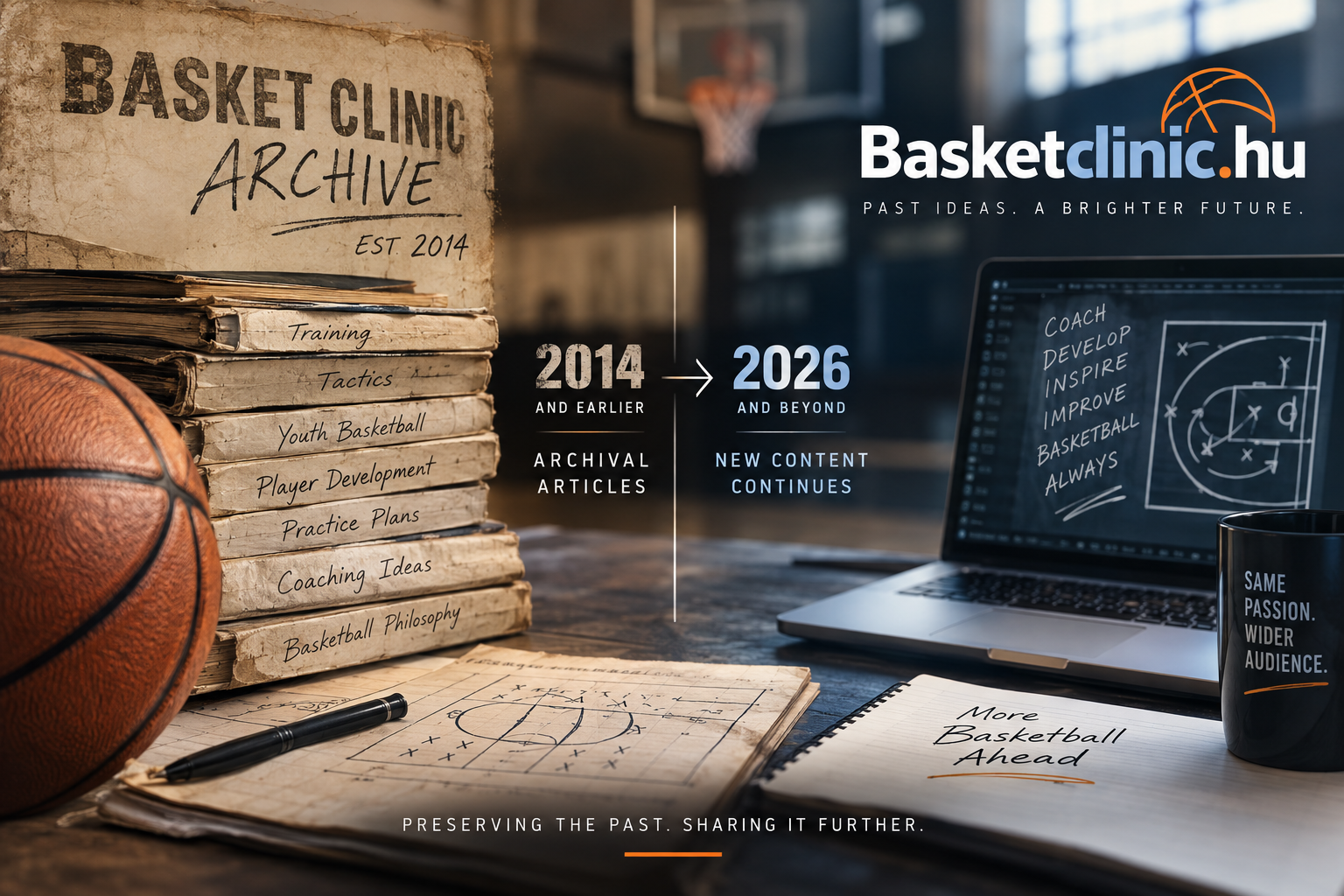
    Basket Clinic has been sharing ideas about basketball, coaching, player development, training and the game itself for many years.

    As part of the renewal of Basketclinic.hu, we have also restored a significant part of the original Basket Clinic article archive.

    Articles Dating Back to 2014

    The articles published before this point include materials that originally appeared on Basket Clinic over several years, with some of the oldest posts dating back to 2014.

    These are not newly written articles presented as current publications.

    They are part of the history of Basket Clinic.

    The original articles were primarily published in Hungarian and have now been translated into English so that they can once again be available on the renewed website and accessible to a wider international audience.

    Preserving the Original Ideas

    Our aim during the translation process has been to preserve:

    • the original ideas,
    • the coaching philosophy,
    • the practical recommendations,
    • the historical context,
    • and the character of the original articles.

    The English versions are not intended to rewrite the history of the archive.

    Instead, they make the original material easier to read and understand for today’s international audience.

    Where necessary, formatting, terminology and sentence structure have been improved to create clear and natural English.

    Historical Basketball Content

    Basketball changes continuously.

    Training methods develop.

    Rules change.

    Tactical trends evolve.

    Sports science provides new information.

    For this reason, some older articles may contain terminology, training methods, tactical ideas or recommendations that reflect the period in which they were originally written.

    Where this is particularly important, an editorial note has been added to provide appropriate historical context.

    The goal is not to silently modernize the original material.

    The goal is to preserve it while making its context clear.

    An Archive of Coaching Ideas

    The archive covers a wide range of subjects, including:

    • coaching philosophy,
    • offense and defense,
    • shooting,
    • player development,
    • youth basketball,
    • practice planning,
    • strength and conditioning,
    • tactical concepts,
    • sports science,
    • and personal reflections on basketball.

    Some articles are detailed coaching materials.

    Others are short observations, practice ideas or reflections from a particular moment in basketball.

    Together, they document the development of Basket Clinic and the basketball thinking behind it.

    Original Credits Remain Important

    Whenever an original article included:

    • an author,
    • a source,
    • a translator,
    • a presentation,
    • a publication date,
    • or another attribution,

    we have aimed to preserve that information.

    Articles translated or adapted from external sources are identified accordingly.

    The archive is therefore not only a collection of basketball ideas, but also a record of where those ideas came from.

    Why Bring the Archive Back?

    Because useful basketball knowledge should not disappear simply because a website changes.

    Some concepts remain just as relevant today.

    Others are valuable because they show how basketball thinking has evolved.

    And some simply belong to the history of Basket Clinic.

    By translating and restoring these articles, we want to preserve that history while making it available to a much wider basketball community.


    The articles published before this post should therefore be read as part of the historical Basket Clinic archive, with original materials dating back as far as 2014 and now republished in English translation.

    From this point forward, Basketclinic.hu continues with its renewed English-language content while keeping its past accessible as part of the same basketball journey.

  • 10 Cuts Every Basketball Coach Should Know

    10 Cuts Every Basketball Coach Should Know

    The technique of cutting and getting open is one of the most underrated areas of teaching in youth basketball.

    Many coaches spend relatively little time teaching these movements, assuming that players will naturally learn how to get open as they gain experience.

    But there is much more to it.

    Good cutting technique allows players to create separation from defenders throughout a game.

    Players need to learn how to get open.

    They cannot always rely on screens to receive the ball. Sometimes they must create separation in an isolated situation simply by reading the defender and using the correct footwork, timing and change of direction.

    Some players become masters of this skill.

    They read the defense, manipulate the defender and then use the appropriate cut to create space.

    The following are ten of the most common cutting techniques.

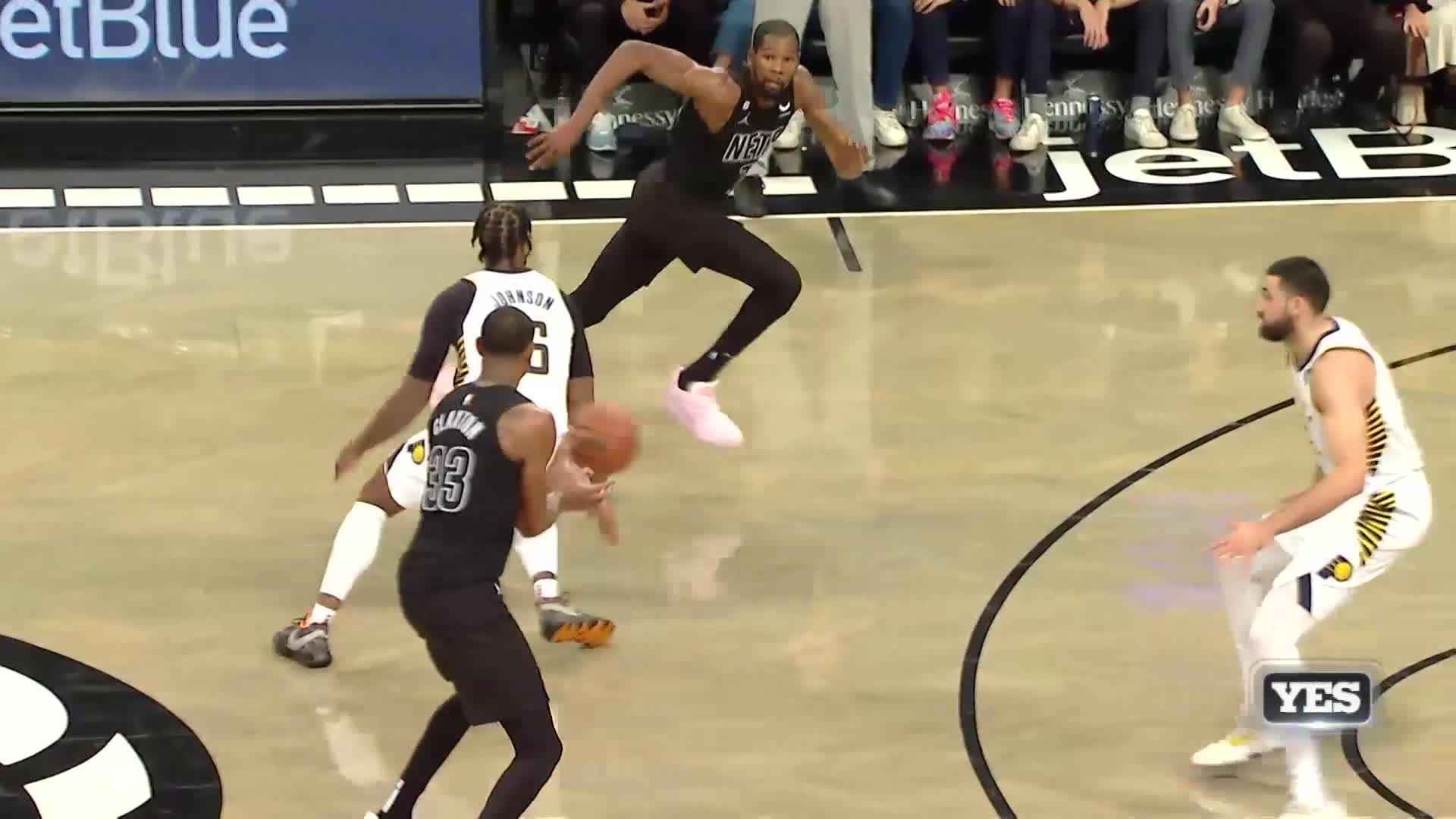
    1. Backdoor Cut

    The backdoor cut is used when the defender aggressively denies the passing lane.

    When the defender moves between the offensive player and the ball, space opens behind the defense.

    That space can be attacked.

    The greatest challenge with the backdoor cut is that it requires an accurate, well-timed pass to create a clean finishing opportunity.

    At younger levels, this action may lead to turnovers when the timing or passing ability is not yet developed.

    The backdoor cut is most effective when the offensive player first encourages the defender to move farther into the passing lane.

    Then:

    1. sell the movement toward the ball,
    2. change direction sharply,
    3. explode behind the defender,
    4. cut toward the basket.

    The defender’s aggression becomes the source of the offensive advantage.

    2. V-Cut

    The V-cut is one of the most common techniques for getting open on the perimeter.

    The offensive player first moves inside the three-point line toward the defender.

    The player should get close enough to threaten the defender’s space.

    Then:

    1. plant the inside foot,
    2. change direction explosively,
    3. sprint back toward the perimeter,
    4. present a clear target for the pass.

    The path creates the shape of a “V.”

    The effectiveness comes from the sudden change of direction and speed.

    3. L-Cut

    The L-cut is particularly useful when a player begins near the low block and wants to get open on the wing.

    The movement requires:

    • quickness,
    • effective footwork,
    • and strong body positioning.

    Bring the defender upward with you.

    Use the inside foot to gain positional advantage and create brief body contact or separation.

    Then change direction sharply and sprint toward the wing to receive the pass.

    The route resembles the shape of the letter “L.”

    4. Curl Cut

    The curl cut is used around a screen.

    The cutter must read the defender.

    When the defender follows closely behind the offensive player through the screen, the cutter can curl tightly around the screener toward the basket.

    If executed well, the movement can lead directly to a layup.

    The closer the defender trails, the more effective the curl can become.

    However, if the defender anticipates the action and goes over the top of the screen into the passing lane, the offensive player should consider another option — particularly the flare cut.

    5. Flare Cut

    The flare cut and curl cut are closely connected.

    The correct choice depends on how the defender plays the screen.

    When the defender moves over the top and attempts to take away the passing lane toward the ball, the offensive player should move away from the ball rather than toward it.

    The cutter fades toward open perimeter space, often toward the corner or wing.

    This creates greater distance between the offensive player and the defender.

    The principle is simple:

    Curl when the defender trails. Flare when the defender goes over.

    6. Baseline Cut

    In this action, the offensive player runs underneath the other players along the baseline from one side of the court to the other.

    It can be particularly effective against zone defense.

    Defenders may become occupied with:

    • the basketball,
    • another offensive player,
    • or their designated zone responsibility.

    The cutter can then move behind the defense and appear in an area that is difficult to see.

    The baseline cut works best when the movement occurs outside the defenders’ field of vision.

    7. UCLA Cut

    The UCLA cut became closely associated with the UCLA teams coached by John Wooden.

    A common setup begins with a player positioned around the elbow.

    The guard passes the ball to the wing.

    After making the pass, the guard cuts toward the basket using the elbow player’s screen.

    When the timing and spacing are correct, the action can create a direct path to the rim and an open layup.

    It is a classic example of combining:

    • passing,
    • screening,
    • and immediate movement toward the basket.

    8. Ball-Side Cut

    This is a cut toward the ball.

    The offensive player will often begin by faking in the opposite direction.

    For example:

    1. make a movement away from the ball,
    2. cause the defender to shift backward or away,
    3. plant,
    4. then cut explosively toward the ball.

    The initial fake creates the separation.

    The final movement allows the offensive player to receive the pass.

    9. Cut Under the Ball Handler

    This movement is often used during an exchange with the dribbler.

    The off-ball player cuts underneath or behind the ball handler while the ball handler dribbles toward the area the cutter has just left.

    The movement can:

    • occupy the cutter’s defender,
    • create space for the dribbler,
    • improve spacing,
    • and generate a possible receiving opportunity on the opposite side.

    The two players effectively exchange positions.

    10. Flash from the Low Post

    This is a quick, explosive movement from the low-post area toward the middle of the floor, often into the high-post or free-throw-line area.

    The player should not drift slowly into position.

    The movement should be sharp and decisive.

    A well-timed flash can:

    • create a passing target,
    • move the defense,
    • open space behind the cutter,
    • and connect the inside and perimeter areas of the offense.

    Cutting Is About Reading the Defense

    Cuts should not be memorized as isolated routes.

    The most important skill is recognizing why a particular cut is available.

    For example:

    • denial can create the backdoor cut,
    • trailing defense can create the curl,
    • overplaying the screen can create the flare,
    • poor weak-side vision can create the baseline cut.

    The defense provides information.

    The offensive player must recognize it.

    Move the Defender First

    Effective cutting often begins before the real movement.

    Players should learn to:

    • change speed,
    • change direction,
    • use body contact legally,
    • fake one way before cutting another,
    • and manipulate the defender’s positioning.

    Simply running toward open space is usually easier to defend.

    Creating a reaction first makes the eventual cut far more effective.

    Timing Matters

    Even the correct cut can fail when the timing is poor.

    The cutter must coordinate movement with:

    • the passer,
    • the screen,
    • the position of the ball,
    • and the defender’s attention.

    Too early, and the passing window may not exist.

    Too late, and the defender may recover.

    Good cutting requires both technical execution and tactical awareness.

    Teach Players How to Get Open

    Youth players should not be expected to discover all of these solutions by accident.

    Cutting deserves deliberate teaching.

    Players need to understand:

    • when to cut,
    • where to cut,
    • how to create separation,
    • how to read the defender,
    • and how their movement affects teammates.

    A player who knows how to move without the ball becomes much more difficult to defend.

    And a team filled with players who understand cutting can create scoring opportunities without relying only on dribbling or set plays.


    Source: Basketball for Coaches — Cutting in Basketball
    Hungarian translation: Dr. Ágoston Nagy
    Original Basket Clinic publication date: March 31, 2020

  • Teaching Tactical Principles Through Integrated Offense and Defense

    Teaching Tactical Principles Through Integrated Offense and Defense

    MKOSZ Coaching Clinic at the University of Physical Education
    June 24–25, 2016
    Summary of a presentation by Dr. Ágoston Nagy

    Introduction

    The style of play we choose helps define our team.

    A clear playing style can make a team:

    • stronger,
    • more consistent,
    • easier to evaluate,
    • and more valuable as a collective unit.

    Every player has an important role within this structure.

    Players are connected like links in a chain. They complement one another and contribute to each other’s development.

    The strength of the team is therefore influenced by its weakest link.

    For this reason, individual technical and tactical development cannot be neglected, and a team cannot be built exclusively around its current key players.

    The objective is to teach an offensive and defensive style in which the principles are:

    • understandable,
    • attractive,
    • achievable,
    • consistent,
    • and available to every player.

    This is particularly important in university-age basketball, where players are still developing both as athletes and as people.

    Understanding the Team

    The composition of a university team presents particular challenges.

    There may not be large age differences, but players can have very different basketball backgrounds.

    Some have played together for years.

    Some are clearly talented.

    Others possess potential that still needs to be developed.

    The program must provide a place for all of them.

    Use Competition as Part of the Learning Process

    University players can practice only as much as their academic schedule allows.

    Because of their age, they may also participate in several competitions.

    Games should therefore not be viewed only as events that must be won.

    They can also become part of the preparation process.

    Competition gives players additional opportunities to:

    • apply what they have learned,
    • reinforce habits,
    • experiment with new ideas,
    • gain playing experience,
    • and prepare for the most important competitions.

    Playing time per athlete across the week can itself become part of the development program.

    Basketball Changes Constantly

    The game evolves rapidly.

    A team that does not adapt will eventually fall behind.

    Our philosophy is to teach creative basketball.

    That means developing players who can recognize situations rather than merely reproduce memorized movements.

    The teaching method must therefore evolve as well.

    Especially at university age, a more inclusive teaching approach can involve players more deeply in the learning process.

    The emphasis should be placed on positive development.

    This requires positive personalities both on and off the court.

    The objective is not only to help players progress in basketball.

    They should also learn to see possibilities for growth outside their sporting careers.

    Quality Matters More Than Numbers

    Sometimes eight fully committed players can create a better practice environment than twelve players when even one or two negative influences consistently slow the group down.

    The quality of the learning environment matters.

    Modern technological tools can also support teaching, feedback and understanding.

    The Offensive Principles of DEAC

    One of the key objectives of teaching is to save time without sacrificing understanding.

    Players should not always be forced to restart their learning from the lowest possible level.

    Some already understand certain movements and concepts.

    Their experience can help accelerate the learning of the entire team.

    Instead of repeating identical patterns every day, coaches can:

    • change the drill,
    • change the emphasis,
    • increase the decision-making demand,
    • or add defensive reads.

    The objective is increasingly creative knowledge.

    Ultimately, we want players to make decisions that are:

    • faster,
    • more accurate,
    • and more effective.

    1. Ball Movement

    The more often the ball is moved from one side of the floor to the other, the more the defense must:

    • rotate,
    • communicate,
    • and close out.

    Ball movement creates defensive movement.

    Offensive Rules

    On the weak side, players should remain ready to receive the ball.

    When the ball arrives:

    • attack an aggressive closeout,
    • shoot when the defender gives too much space,
    • pass when the next advantage is available.

    Do not hold the ball unnecessarily.

    Think ahead.

    Know what you are likely to do before the catch.

    Avoid meaningless dribbles.

    After receiving the ball, look first to:

    shoot, drive or pass.

    2. Player Movement and Spacing

    Do not simply stand.

    A stationary offensive player is easier to guard and often forces the offense toward isolated 1-on-1 play.

    There are moments when maintaining space is important, but most offensive situations require intelligent movement.

    Cut Hard

    Every cut should have a purpose.

    Read the defense and choose the appropriate movement.

    Possible options include:

    • backdoor cuts,
    • ball-side cuts,
    • hard basket cuts,
    • and relocations into open space.

    Before cutting, move the defender.

    Use a fake.

    Change from slow movement to explosive movement.

    Every cut should threaten the basket.

    Even when the cutter does not receive the ball, the movement may create a scoring opportunity for a teammate.

    3. Screens

    Set legal screens.

    The objective of the screen is to help a teammate create an advantage.

    Do not use unnecessary force.

    And never remain stationary after setting the screen.

    Once the screen has been set, read:

    • the defender,
    • the ball,
    • and the movement of your teammate.

    Then decide where to move next.

    Screen with Purpose

    If the defense anticipates the screen, fake the screening action and exploit its reaction.

    The screener and the player using the screen must work together.

    Spacing and timing are essential.

    Using a Screen to Get Open

    Before using a screen, move your defender.

    Do not simply run toward the screen.

    Read how the defender plays it and select the appropriate cut.

    Possible solutions include:

    • curl,
    • straight cut,
    • fade,
    • or a more complex change of direction.

    For example, when a defender goes over the top of a down screen, a fade away from the basket may create the better receiving angle.

    Hand-Off

    The hand-off can also be used to help a teammate create separation.

    If the defense aggressively attacks the hand-off, the ball handler should be prepared to fake the exchange and attack the defender.

    The hand-off is not merely a transfer of the basketball.

    It is a two-player tactical action that requires reading the defense.

    4. Penetration

    Drive-and-kick actions must be organized.

    Players without the ball should understand the intention of the penetrator.

    A good drive forces the defense to collapse.

    That collapse creates passing opportunities.

    But the penetration must be believable.

    Attack the basket with the shoulder and body position suggesting a genuine scoring attempt before looking for the kick-out.

    If the defense believes the drive is threatening the basket, help will come deeper.

    That creates better passing opportunities.

    Be Ready for the Kick-Out

    The receiver should be in a low, ready position.

    From the catch, the player should be prepared to:

    • shoot,
    • drive,
    • or make the extra pass.

    Do not hold the ball unnecessarily.

    If the ball stops, the defense has time to recover and the advantage disappears.

    Control the Drive

    Penetration does not mean driving blindly as deep as possible.

    Avoid:

    • offensive fouls,
    • uncertain passes,
    • and driving into areas where too many defenders can reach the ball.

    A controlled drive creates an advantage.

    An uncontrolled drive can destroy it.

    5. Passing Angles

    Receivers must create passing lanes.

    Do not stand still while a teammate penetrates.

    Move upward or downward along the perimeter to create a useful passing angle.

    One of the best moments to relocate is when the defender turns the head to help.

    The receiver should also look for visual connection with the passer, particularly when the ball is being passed inside.

    Receive in an Athletic Position

    Do not catch the ball with straight legs and an upright body.

    Receive in a position from which you can immediately act.

    Before the ball arrives, begin thinking:

    • Can I shoot?
    • Can I drive?
    • Where is my defender?
    • Is the next pass available?

    Good offense starts before the catch.

    6. Inside-Out Play

    Interior and perimeter play should support one another.

    Post Play

    Get the ball inside.

    When defenders help toward the post, look for the pass back outside.

    Perimeter players should establish visual contact with the post player and move into useful passing lanes.

    A hard weak-side cut can also create an open scoring opportunity when the interior player is a good passer.

    Pass Fakes

    Unselfish offense is not only about passing.

    Sometimes the best way to create an opportunity for a teammate is to fake the pass.

    Pass fakes can:

    • move defenders,
    • open driving lanes,
    • create hand-off opportunities,
    • or improve an interior passing angle.

    The fake must be believable.

    Use the eyes and body.

    Protect the basketball with the torso while manipulating the defender.

    7. Controlled Offense

    Controlled offense is used to organize the movement of:

    • the basketball,
    • and the players.

    This can take the form of:

    • a set play,
    • or a continuity/motion system.

    But structure should never eliminate decision-making.

    Read the Defense

    Do not execute offense blindly.

    Do not perform a movement only because that is what the diagram says.

    If the defense overplays the intended action:

    punish the overplay.

    The system provides structure.

    The defense determines the final decision.

    8. Unselfish Basketball

    Make the Extra Pass

    Do not settle merely for a good shot.

    Search for a great shot.

    The extra pass often transforms an acceptable opportunity into a clean one.

    This mentality is contagious.

    Once players begin creating better shots for one another, the quality of the entire offense improves.

    Create Opportunities for Teammates

    Attack with the intention of creating an easier opportunity for someone else.

    This responsibility does not belong only to the point guard.

    Every player can create an advantage for a teammate.

    Celebrate Correct Basketball

    Recognize unselfish actions.

    Value the player who makes the correct pass.

    Value the screen that creates the shot.

    Value the cut that opens space for someone else.

    Everything should ultimately serve the team.

    Teaching Offense and Defense Together

    Offensive principles become more meaningful when they are learned against defensive principles.

    A player cannot truly understand spacing without understanding help defense.

    A player cannot understand the value of a closeout attack without learning what a good closeout looks like.

    A player cannot fully understand pick-and-roll offense without also understanding pick-and-roll defense.

    For this reason, tactical teaching should connect the two sides of the game.

    Main Areas of Offensive Practice

    The offense can be divided into several practical areas:

    • penetration,
    • cutting,
    • pick-and-roll,
    • transition,
    • 5-on-5 offense,
    • out-of-bounds situations,
    • and zone offense.

    These should not simply be memorized as separate plays.

    They should be connected through common principles.

    Daily Defensive Work

    Defensive elements can also appear continuously within the teaching process.

    Examples include:

    • closeouts and 1-on-1 defense,
    • transition defense,
    • pick-and-roll defense,
    • post defense,
    • rebounding,
    • and defending numerical advantages.

    The objective is to develop players who understand both sides of every tactical situation.

    Progressive Teaching

    Teaching can progress through different numerical situations.

    For example:

    1-on-1 → 3-on-1 → 5-on-3 → 5-on-5

    or:

    4-on-0 → 5-on-0 → 5-on-5

    The purpose is to gradually increase:

    • information,
    • pressure,
    • decision-making,
    • and tactical complexity.

    Constraint-Based Games

    Rules can be added to scrimmages to emphasize the desired behavior.

    Instead of simply playing 5-on-5 and hoping the correct habits appear, the coach can manipulate the scoring system.

    Defensive Emphasis Game

    Examples of defensive scoring conditions include:

    • +1 for a steal,
    • +1 for stopping transition without fouling,
    • −1 for allowing a three-point attempt.

    The offense can also receive rewards such as:

    • +1 for an offensive rebound,
    • +3 for successful transition offense.

    The scoring system tells players what matters.

    3-on-3 Stay-on-the-Court

    A competitive 3-on-3 format can require the winning team to remain on the floor.

    Additional tactical conditions can be introduced, such as:

    • pick-and-roll actions,
    • playing to two points,
    • no long outlet passes,
    • three-quarter-court pressure,
    • rewarding charges,
    • or requiring consecutive defensive stops.

    Such constraints connect tactical learning to competition.

    Accelerating the Game

    A scrimmage can also be scored to encourage faster basketball.

    For example:

    Defense

    • +1 for stopping the ball in transition without fouling.
    • +3 if the offense is prevented from attempting a shot from inside the free-throw area during the fast break.
    • −1 if the offense generates a three-point attempt in transition.

    Offense

    A basket scored from transition can count double.

    The objective is to make the tactical emphasis visible in the scoring.

    From Drills to Decisions

    The purpose of these exercises is not to create players who can reproduce drills perfectly.

    The purpose is to develop players who understand:

    • spacing,
    • ball movement,
    • timing,
    • screening,
    • penetration,
    • passing angles,
    • inside-out play,
    • defensive reactions,
    • and team responsibility.

    A drill is only a teaching tool.

    The game is the final test.

    Offense and Defense Are One Learning Process

    Basketball is not divided into two completely separate subjects called offense and defense.

    One creates the problem.

    The other provides the response.

    Then the first must adapt again.

    That interaction is the game.

    When players learn offensive and defensive principles together, they begin to understand not only what to do, but also why the action works.

    That is the foundation of tactical intelligence.

    And tactical intelligence gives players the freedom to play creatively without abandoning the principles of the team.


  • The Context of Rule Enforcement in Hungary’s NB II

    The Context of Rule Enforcement in Hungary’s NB II

    “A basketball game is won by the team that makes fewer mistakes.”

    This article examines basketball officiating and rule enforcement through the particular environment of Hungary’s NB II competition.

    It approaches the subject from several directions:

    • the structure of basketball,
    • the role of competition,
    • the characteristics of NB II,
    • the development of referees,
    • the evaluation of officiating,
    • and the responsibility shared by everyone involved in the game.

    Historical note: This article reflects the structure, financial conditions and officiating environment of Hungarian basketball at the time it was originally written. Specific league structures, regulations and costs should therefore be read as archival context rather than current information.

    Why NB II?

    NB II provides an interesting environment in which to examine rule enforcement.

    It is, in many respects, an unusual competition.

    Teams may have very different objectives, player profiles and levels of experience, while referees may also be at very different stages of their careers.

    That makes the league a valuable environment for examining how the rules of basketball are interpreted and applied in practice.

    The purpose of this discussion is broader than criticizing individual calls.

    It is about understanding the game and considering how all of its participants can contribute to its development.

    Basketball as a Demanding Game

    Basketball places extremely high demands on its participants.

    From the perspective of:

    • training theory,
    • rules,
    • sport psychology,
    • decision-making,
    • and technical execution,

    the game requires constant adaptation.

    Players, coaches, referees and officials are not simply participants.

    They all influence what the game becomes.

    They can contribute to its development — or slow that development down.

    Competition as Feedback

    Coaching is purposeful activity.

    It is also an educational process that shapes the entire personality of the athlete.

    There are many possible ways to reach a training objective, but only one team can ultimately win a championship.

    Individual games should therefore also be understood as checkpoints.

    They show whether:

    • the work is moving in the right direction,
    • the players understand what has been taught,
    • and the team can apply its learning under competitive pressure.

    Coaches must then help players process the result.

    Winning and losing are both forms of feedback.

    The Influence of the Referee

    Especially in youth basketball, the referee’s:

    • personality,
    • attitude,
    • preparation,
    • and professional knowledge

    can have an important effect on the game.

    A match that appears insignificant to an outsider may be extremely important within the development of a player or team.

    For that reason, it is dangerous to say:

    “It is only one game.”

    Every game represents the work of players and coaches.

    Careful and committed officiating should respect that work.

    Four Active Elements of the Game

    Basketball has four particularly important groups of active participants:

    • players,
    • coaches,
    • referees,
    • and table officials.

    All four should ultimately be working toward the same objective:

    a better basketball game.

    The game should develop continuously.

    That requires cooperation.

    The participants may have different responsibilities, but they should not behave as if they belong to opposing systems.

    They are all part of the same game.

    Respecting Each Other’s Work

    Coaches, players and referees experience basketball differently.

    For a committed coach, coaching may become much more than employment.

    It can become a central part of life.

    The work extends far beyond the duration of a practice.

    There is:

    • preparation,
    • planning,
    • teaching,
    • competition,
    • analysis,
    • evaluation,
    • and constant responsibility for other people.

    Referees also invest time in:

    • studying,
    • preparation,
    • physical readiness,
    • travel,
    • competition,
    • and professional development.

    For this reason, the different participants in basketball must respect each other’s work.

    That respect also creates responsibility.

    Basketball as Preparation for Life

    Basketball resembles life in many ways.

    There are rules.

    There are time limits.

    There are people evaluating your decisions.

    There are teammates trying to achieve the same objective.

    There are opponents trying to prevent it.

    You cannot simply take unlimited steps with the ball.

    You cannot use your elbows without consequence.

    You must make decisions under pressure.

    And mistakes matter.

    The team that makes fewer costly mistakes often has the better chance of winning.

    Outside basketball, people also experience real and perceived injustices.

    The way they learn to process these situations can become part of their development.

    That is one reason sport has value beyond competition itself.

    Making Fewer Mistakes

    The principle of minimizing mistakes applies not only to players.

    It also applies to referees.

    No referee can officiate a perfect game.

    But professional respect is earned through preparation and the effort to make as few mistakes as possible.

    That process begins before the opening tip.

    It includes:

    • arriving properly prepared,
    • appropriate appearance,
    • pre-game organization,
    • communication between officials,
    • understanding the level of competition,
    • and approaching the game with the correct attitude.

    Quality officiating begins long before the first whistle.

    The Development of Referees

    Referees should also have a developmental pathway.

    Progress should ideally be connected to:

    • clearly defined levels,
    • performance,
    • evaluation,
    • and examination games.

    Such a structure can create continuous professional control and healthy competition.

    Advancement should be understandable and predictable.

    The objective should not merely be to satisfy minimum requirements.

    The system should encourage commitment and development.

    One possible tool would be structured post-game evaluation in which teams provide standardized feedback that can support those responsible for referee appointments and development.

    Why NB II Can Be Important for Referee Development

    NB II can provide valuable examination situations for officials.

    It includes adult competition but may contain players with very different backgrounds.

    Some teams may be trying to progress toward higher divisions.

    Others may include former top-level players extending their careers.

    Some may primarily develop young players by exposing them to senior competition.

    Others may consist largely of veteran players.

    This variety makes the environment challenging.

    It also makes it useful for referee development.

    A Diverse Competition

    In the historical environment described in the original article, NB II could include several very different types of teams.

    Teams seeking promotion

    These clubs are actively attempting to move toward a higher competitive level.

    Their games may carry significant sporting consequences.

    Former high-level players

    Some teams include players who previously competed in the first division and are continuing their careers at a lower level.

    Their experience creates particular challenges for young referees.

    Developmental teams

    Some clubs use NB II to expose young players to the demands of adult basketball.

    Veteran teams

    Other teams may have a considerably higher average age and participate with different competitive objectives.

    A referee in this environment must therefore adapt to very different games and personalities.

    NB II Should Not Be Treated as an Inferior Game

    The prestige and future of a competition are influenced by the quality of its officiating.

    A referee should not approach an NB II game with less commitment simply because there are not thousands of spectators in the stands.

    The players and coaches still invest:

    • time,
    • energy,
    • preparation,
    • travel,
    • and financial resources

    into the competition.

    The game deserves appropriate professional attention.

    Officiating Under Pressure

    NB II can also be a difficult environment for referees.

    Decisions may receive intense criticism.

    Players and coaches may be experienced enough to have strong opinions about every call.

    The referee must therefore be prepared not only technically, but psychologically.

    Unexpected situations will occur.

    The ability to manage them is part of officiating.

    A technical foul can sometimes be necessary.

    But authority cannot depend solely on demonstrating the ability to punish.

    Managing a game also requires:

    • communication,
    • emotional control,
    • consistency,
    • and an understanding of people.

    Referee Communication

    Officials must also communicate effectively with each other.

    Teamwork between referees is essential.

    There can be situations in which an official hesitates because a call appears to belong to another referee’s area of responsibility.

    But the primary objective should remain the correct management of the game.

    The officiating crew functions as a team.

    As with players, poor cooperation weakens the entire unit.

    Communication with Players and Coaches

    Communication is not a one-sided process.

    The tone, timing and quality of communication influence how a situation develops.

    A referee who focuses only on mechanically performing the technical requirements of the job may overlook the human side of the game.

    Players and coaches also have responsibilities in this relationship.

    Respect must work in both directions.

    Preparation Begins Before the Game

    Reducing officiating errors begins with professional habits.

    These include:

    • punctuality,
    • appropriate clothing and appearance,
    • pre-game preparation,
    • communication with the officiating crew,
    • checking the playing environment,
    • and understanding the responsibilities of the table officials.

    A referee who arrives late or poorly prepared has already created an unnecessary problem before the game begins.

    Professionalism is visible before the ball is tossed.

    The Rules Must Be Enforced Consistently

    The original argument emphasizes that the level of competition should not fundamentally change the seriousness with which the rules are applied.

    Certain youth competitions naturally have specific developmental regulations.

    But within a given competition, rule enforcement should be:

    • clear,
    • consistent,
    • written,
    • and understandable.

    Players and coaches must know what is expected.

    Referees must know what is expected.

    Consistency gives everyone a better chance to learn.

    Referees Influence the Development of Basketball

    Officiating is not separate from player and coach development.

    The way the game is called influences:

    • which techniques players learn,
    • which defensive behaviors are rewarded,
    • which illegal advantages disappear,
    • how coaches teach,
    • and what style of basketball develops.

    This gives referees considerable responsibility.

    A consistently applied rule teaches.

    An inconsistently applied rule creates uncertainty.

    Everyone Is Responsible for the Game

    Players must improve.

    Coaches must improve.

    Referees must improve.

    Table officials and competition organizers must also improve.

    The development of basketball cannot be assigned to one group.

    Each group influences the others.

    The strongest environment is created when everyone understands that they are participating in the same process.

    The Goal

    The objective is not a basketball game without mistakes.

    Such a game does not exist.

    The objective is a culture in which every participant tries to reduce avoidable mistakes and improve the quality of the game.

    Players prepare to perform better.

    Coaches prepare to teach and lead better.

    Referees prepare to make better decisions.

    And all of them respect the work invested by the others.

    Because ultimately:

    the quality of basketball depends on the quality of everyone who takes part in it.