Szerző: BasketClinic

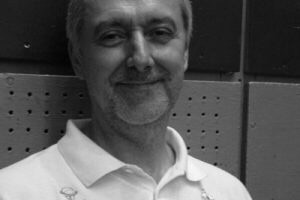
  • In Memoriam: Levente Zentai

    In Memoriam: Levente Zentai

    Posted on January 6, 2017

    In Memory of Levente Zentai

    “A person who loves the game cannot be a bad person…”

    During our careers, we have learned that this saying is not always true.

    But Levi came from a generation for whom passion, integrity and ambition were fundamental values, both as a player and as a coach.

    And around those values, a network of friendships grew naturally.

    Twenty Years of Friendship

    It was around twenty years ago when we travelled to a neighbouring city for a youth game and first met as coaches.

    I still remember Levi standing on the sideline in his characteristic grey sweatpants and red top, his slim figure somehow elegant even while he lived through every moment of the game together with the children.

    How could that energy not have affected us too?

    The coaching profession is naturally competitive.

    Ernest Hemingway once suggested that writers could never truly be friends because they were always competing with one another.

    There is something similar in coaching.

    We compete constantly.

    And yet Levi was one of those people who allowed that relationship to grow beyond professional respect.

    We played against each other almost every month, but that never stood in the way.

    His open and friendly view of the world would not allow time, competition or the events of basketball life to create distance between us.

    Whenever he saw us, his arms would open wide and he would greet us loudly and sincerely.

    Thinking about Nyíregyháza always felt good because Levi would never allow us to visit without meeting him.

    For us, the city and Levi became inseparable.

    A Life Built Around Basketball

    The name Levente Zentai represented a way of life.

    And it will continue to do so for as long as people remember him.

    He left a lasting mark on basketball culture in Nyíregyháza and, through that, on the wider history of Hungarian basketball.

    He did much more than teach the game as an outstanding educator.

    Whenever basketball needed something, Levi found a role.

    He looked for tasks.

    He looked for solutions.

    And he drew energy from the magic of the game.

    Whether the job involved:

    • coaching,
    • organising competitions,
    • technical responsibilities,
    • or federation work,

    it was difficult to imagine the environment without him.

    With that personality, it was easy for people across the country to appreciate him.

    We relied on him.

    Because he did not live only for himself.

    He lived for the game.

    And, in many ways, for all of us who shared it with him.

    Family and Friendship

    Perhaps he could give so much because he also had a wonderful family waiting for him.

    His three daughters accompanied him throughout his life.

    Levi’s family became close to ours too, largely because of his loyalty and his desire to keep people connected.

    He never wanted us to miss an opportunity to spend an entire day talking about basketball.

    When our closest friends and family spent summer holidays in Balatonfüred, Levi would often organise family life in such a way that we could spend at least a week together by the lake.

    Those days created countless memories that once seemed temporary but now feel permanent.

    Cleaning fish at night in a car park under the light of a street lamp.

    Fishing at dawn.

    Levi teaching tricks not only to my two sons.

    The four children creating an atmosphere that became part of our friendship as adults.

    It was good to see that another bond had formed between us.

    Two coaching friends from Debrecen rarely missed those summer days either.

    Levi fitted naturally into the group.

    And, inevitably, we spent hours exercising our minds, trying to solve the problems of basketball and imagining how we might somehow change the game for the better.

    Always There

    In recent years, hardly a month passed without us talking for at least a minute or two.

    Sometimes Levi needed encouragement.

    Not often.

    He always tried to stay on course.

    For coaches, that can seem easy when the world around us is in order, because family and team have a way of putting everything else into perspective.

    Now Levi is gone.

    And it hurts deeply.

    Because he leaves behind an emptiness.

    Not only for his family, but also for those of us who counted on him being there.

    Only after hearing the news did we truly realise how many things had remained unsaid between us.

    The Last Goodbye

    People say death does not choose.

    On November 23, we played in Nyíregyháza.

    Levi came to watch us together with his younger daughter.

    I can still hear the warm, appreciative words he said after the game as we talked before leaving.

    He found it difficult to say goodbye.

    We even laughed about the fact that we must have shaken hands thirteen times, because he simply did not seem ready to leave until we finally departed.

    At the time, I had no idea that this would be our final farewell.

    What Remains

    Levi left us today.

    The devastating news, and the reaction of my family, made one thing clear to me:

    we will never forget him.

    It hurts to think that one great victory he deeply longed for remained unfinished — a championship title that perhaps could have carried his spirit even further.

    So I will continue, partly for him as well, what we both believed in.

    The game.

    The game without which one can live — but why would you want to?

    His passing once again reminds me of what matters.

    Why we get up every morning while we still can.

    I will try to live with greater dignity.

    I will try to work a little for Levi too.

    And I hope that one day, when another great success comes, we will be able to dedicate part of it to his memory.

    Rest in peace, Levi.

    Dr. Ágoston Nagy
    Debrecen, January 6, 2017

  • Nothing Lasts Forever

    Nothing Lasts Forever

    Posted on October 15, 2015

    When someone leaves us forever, when something disappears and we know we will never see it again, a lasting pain remains somewhere inside us.

    Slowly, we begin to understand that what we loved is gone.

    Something that became part of us.

    Something we believed would always remain.

    The same feeling can come when a place is destroyed.

    Especially when that place has become a symbol.

    A symbol of permanence.

    A point of reference in our lives.

    It is comforting to believe that what we do is right because it is connected to values we have inherited, values that constantly remind us where we came from and help us stay on the path we chose at the beginning of our careers.

    Home

    Whenever I walk through the gates of the University of Physical Education, I still absorb what previous generations left behind.

    I almost feel the weight of my own footsteps knowing that the greatest figures of the institution once walked the same paths.

    That feeling never leaves me.

    For a moment, I feel connected to them again.

    And that is when I know:

    I am home.

    Every tree is familiar.

    Every staircase.

    Much has changed.

    Yet somehow, the essence has remained the same.

    The First Time

    I was not yet fourteen when I first entered the main gate of the TF from Alkotás Street.

    It was a Saturday morning.

    There was time to walk around and allow the atmosphere and tradition of the place to become part of me.

    From that moment on, it continued to draw me back.

    Then one April morning, another important chapter began in the athletics hall.

    We completed several aptitude tests there.

    Together with hundreds of other applicants, we prepared for the entrance examinations that would follow three months later.

    The hall was one of the central locations of that process.

    Some memories never disappear.

    I ran my 60-metre sprint there.

    During the handball entrance test, senior students looked at me and said:

    “You must be a basketball player.”

    Becoming a TF Student

    I finished among the top five percent.

    Together with around forty others, I was admitted to the TF.

    After a year of military service, I returned as an adult to the familiar world I had dreamed about every day while I was away.

    I wanted it to be real.

    And eventually it was.

    Because nothing lasts forever.

    Even waiting ends.

    We gathered in the Aula.

    It was there that first-year students became true TF students when, together in September, we recited the university oath.

    That place meant initiation in more than one sense.

    On December 13, on Luca Day, we also became “real” TF students according to another tradition.

    Our godfathers, Géza Polányi and Zsolt Csende, together with the fourth-year graduating male students, presided over the ceremony.

    At the table in front of the Aula, our senior judges made sure the initiation would be unforgettable.

    Some moments were gentle.

    Others were rather less so.

    The Smell of the Hall

    The smell of the athletics hall was unmistakable.

    There was nothing else quite like it.

    It was also one of the essential locations of the night-time initiation of first-year dormitory students.

    One September night, for example, the traditional arm-wrestling contest between fourth-year and first-year students took place there after we had hurried from the Csörsz field to the hall in frog jumps for an early-morning challenge.

    Later, there was a period when we began our immediate pre-game warm-up in the hall’s weight room before heading to Hall D to face our opponents.

    At the time, we genuinely believed that bench pressing 100 kilograms before a game was particularly good preparation for shooting.

    The quiet atmosphere of the hall on weekends somehow reinforced the confidence we had in ourselves.

    Our game classes took place there.

    Later, our handball classes did as well.

    We cheered for the TFSE handball players there, and afterward they would come across to support us at our games.

    Hardly a day passed without entering the hall’s corridor.

    At any moment, a friend, a teammate or someone we loved might walk past.

    And if necessary, we would greet the same people a hundred times a day.

    But nothing lasts forever.

    Graduation

    Eventually another day came.

    Our graduation ceremony took place in the same Aula.

    My family came with me.

    For a brief moment, they could experience something of what that place meant to us.

    Something that, in the early hours of this morning, was lost forever when the fire took everything with it.

    Nothing lasts forever.

    And perhaps now something new — and possibly even better — will begin.

    Another Generation

    Twenty-seven years after my own registration, my two sons enrolled in the same place.

    They stood in line in the Aula just as I once had.

    They waited for their own journey to begin.

    While they waited, they looked at the handprints of Olympic athletes on the wall.

    And I know they also absorbed the distinctive smell of the Aula.

    Like a kind of magic, it connected them to the place too.

    I was happy.

    Because I knew it would help guide them.

    It would help them understand where they were going.

    Those who studied there know what it means to serve their profession and what values should guide them.

    Within those walls, we received tradition.

    We received purpose.

    And those are things that can only be used well.

    What Remains

    That is why what happened today hurts so much.

    Something became part of the past.

    Something that from now on will exist only in our memories.

    And that is why it is so important to pass as much of it on as possible.

    To preserve the legacy.

    To preserve the stories.

    To preserve what those walls represented.

    Because without that inheritance, the TF would somehow be less.

    And so would we.

  • Chapters for a Silent Night

    Chapters for a Silent Night

    Posted on December 25, 2014

    You probably think many years have to pass before a person begins looking back on Christmas Eve, searching for the feelings of the past — feelings connected to better times, to people who are no longer close to us, and to memories that once shaped our lives.

    Memories.

    On ordinary days, we do not always have the energy to remember.

    Sometimes there is simply not enough time.

    And sometimes a memory hurts so much that we prefer not to force the past back into the present.

    Then Christmas arrives.

    Old films return to our favourite television channels.

    And if they do not, we choose them ourselves.

    Christmas Eve

    For us, December 24 begins early in the morning.

    We bring the Christmas tree into the room and place it in its usual spot.

    Then, with the kind of excitement that has become part of our tradition, we head to the multiplex and try to watch one current film after another.

    Sometimes it is only us.

    At other times, a few similarly minded people join us.

    This year, there were far more people than usual.

    Apparently, the world is changing.

    Of course it is.

    At 3:45 p.m., after the final film, we left the cinema and headed home.

    Two years earlier, snow had covered the world outside the Plaza windows.

    This time, bright sunshine accompanied us on the short journey home.

    A Journey Through Music

    On one of the evenings of Christmas, I like to use one of the wonders of the modern age to bring back feelings that remind me why I am who I am.

    My iPhone is always close at hand for this purpose.

    I typed in the names of one or two songs after hearing Steve Tyrell’s On the Sunny Side of the Street during Father of the Bride.

    And suddenly the unstoppable journey through time began.

    It was exactly what my soul needed.

    Tyrell’s music led the way.

    Soon I found myself watching a short Paul Newman tribute set to Raindrops Keep Fallin’ on My Head.

    Scenes appeared from films that even my grandparents had watched.

    Some of them we had watched together.

    We had allowed those films to carry us away and become part of our memories forever.

    And what music.

    One Song Leads to Another

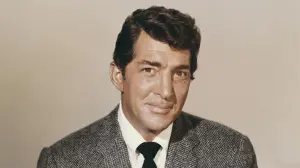
    With one click, I was listening to Dean Martin.

    There is something in the way he performs that makes you feel he knows something you do not want to miss.

    As if you have already lived the same moments.

    And while listening, images begin to return.

    Moments.

    Places.

    People.

    You do not want the music to stop.

    It is magical.

    From there, it was only a short step to Perry Como and Magic Moments.

    And while watching, long-forgotten films began appearing again in my mind.

    One of my favourite scenes returned too:

    Audrey Hepburn singing Moon River.

    For me.

    At least that is how it always felt.

    If Only We Had More Time

    I suddenly thought how wonderful it would be if we had more time for things like this.

    And then, from somewhere in the past, Gene Kelly appeared.

    Singin’ in the Rain.

    I remember when I could still feel that completely, carelessly happy.

    Watching the scene brought me back there almost immediately.

    And to see how timeless it still was, I watched another interpretation associated with Robin Williams.

    Then, as if I still needed proof of how beautiful the music was, I found a performance by the Three Tenors.

    There was something endlessly unrepeatable about the moment at the end when the older Gene Kelly and the tenors applauded one another.

    Christmas and Basketball

    I will not continue listing songs and films.

    I could never reproduce my Christmas mood as well as they did.

    Or, in a completely different but somehow equally fitting way, as the NBA does in its Christmas game broadcasts.

    The league has become remarkably good at weaving timeless melodies, familiar humour and festive imagery into basketball culture.

    Sometimes all it takes is a popular actor introducing the broadcast with a joke and suddenly the fantasy gives way to reality.

    The opponents may tease one another.

    The competition is still serious.

    There will still be hard contact.

    Someone will still lose.

    But the broadcasts somehow remain unmistakably festive.

    The colours.

    The music.

    The humour.

    The atmosphere.

    The beauty of Christmas surrounds the game.

    Back to the Court

    There were not many of us, but I still received my end-of-year gift.

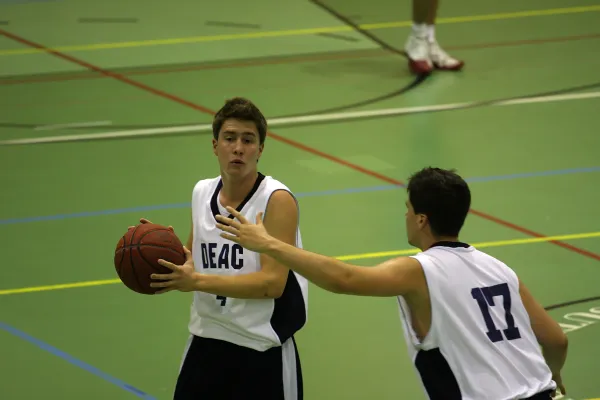
    After spending time wandering through old memories, I was brought quickly back into the present when I stepped onto the court to play in the Christmas evening game with some of DEAC’s finest players.

    It felt wonderful.

    And I was grateful that, even if only for a few moments, I had been able to relive memories that had once meant so much to me.

    The films.

    The songs.

    The actors.

    They felt so familiar and so powerful that it was almost as if the people who are no longer here were somehow present with us again.

    For a little while.

    On a silent Christmas night.

    I recommend it to everyone.

  • Kereszt — Our Pride

    Kereszt — Our Pride

    Posted on November 21, 2014

    If the University of Debrecen had its own Hall of Fame, Gergő Keresztes would surely receive thousands of votes to take his place among its most respected basketball players.

    At twenty-three years old, he was already a serious-minded yet permanently cheerful young man — and a DEAC basketball player whose story represented much more than sport alone.

    The Beginning

    Let us go back to around 1997.

    Together with fellow coaches and the basketball-obsessed members of my family, I spent day after day climbing the stairs of TÁG.

    One practice followed another.

    At the time, the basketball environment kept producing players.

    Some became outstanding competitors.

    Others became lifelong lovers of the game.

    Those were wonderful years.

    At the neighbouring early-afternoon practices, several distinctive young personalities regularly appeared.

    And among them was one small, blond, lightning-fast player who always seemed to have a basketball in his hands.

    You could always hear him when he was in the gym.

    And even then, the way he handled the ball made us think:

    this boy belongs on a basketball court.

    For a long time, I did not even know his name.

    Eventually, however, he made sure everyone noticed him.

    That was simply his nature.

    Sometimes it was his humour.

    Sometimes a sharp remark.

    Sometimes his exceptional fighting spirit.

    Sometimes one of his unusual finishes around the basket.

    One way or another, he always managed to find his way into the spotlight.

    2005: A New Chapter

    Then suddenly it was 2005, and the cadet team came to us.

    The most enthusiastic and fearless members of the 1991 generation — those who had remained — were hungry for success.

    They wanted to compete with the best players of their age group.

    They had enormous curiosity, a desire to learn and several significant talents within the group.

    Kereszt was there too.

    He never missed the team’s activities.

    He began as an intelligent young boy and, by the age of sixteen, had already become one of the leaders of the team.

    He set a strong example for the others because he succeeded in almost everything he did.

    On the court and away from it, he was one of the personalities who held the group together.

    At weekends, teammates often gathered at his home.

    Apparently, spending every day together was not enough.

    Sometimes they even spent Friday night at the Keresztes family home.

    Films.

    Games.

    Stories.

    Time together.

    That mattered too.

    It helped turn a group of players into a TEAM.

    Always Ready for the Next Challenge

    I remember that Kereszt was involved in everything.

    During one Easter ski camp, we were among the first to put skis on his feet.

    It was a pleasure to watch him progress from the early falls and awkward movements to growing confidence.

    Today, he has become an exceptional skier.

    That pattern seemed to repeat itself in almost everything he tried.

    He always wanted to become as good as possible.

    That determination still represents, for us, what a university sports career can mean.

    Basketball and University

    He won bronze medals at cadet and junior level.

    Later, he and his teammates helped launch the first NB I basketball team in DEAC’s history.

    His university years were not always easy from a sporting perspective.

    A shoulder injury created additional difficulties.

    Yet both on and off the court, he still played an important role in one of the historic periods of University of Debrecen basketball.

    The university team won the Hungarian University Championship twice.

    And Kereszt was part of that success.

    Excellence Beyond the Court

    After a long rehabilitation period, he returned to competitive basketball training this year.

    At the same time, his academic performance has been exceptional.

    Alongside outstanding results in his law studies, he received the Republic Scholarship and was recognised during the academic year as one of the University of Debrecen’s most outstanding students.

    It is difficult not to feel something when seeing an example like this.

    Because this is proof that it can be done.

    Sport and education do not have to compete with one another.

    They can strengthen each other.

    Of course, we miss him when he is not with us.

    As a university student, he had already begun working for a major multinational company.

    And perhaps what we miss even more is the shared past — the environment that once allowed such capable and determined young people to grow around us.

    What We Always Wanted to Represent

    I believe this is exactly the point.

    Kereszt represents something we have always believed in.

    This is how we believe young people should study.

    And this is how we believe they should compete in sport.

    They should try to make the most of whatever abilities and opportunities they have been given.

    They should move forward.

    They should try to become one of the best in whatever path they choose.

    And in doing so, they should create something valuable not only for themselves, but also for the generations that follow them.

    That is what gives meaning to our profession as coaches.

    Our work matters when sport helps develop people who can succeed far beyond the basketball court.

    It gives us enormous pride to say that Gergő Keresztes — Kereszt — is one of ours.

  • Warriors vs. Clippers, Game 7: The Decider

    Warriors vs. Clippers, Game 7: The Decider

    Posted on May 4, 2014

    Everyone should watch Game 7.

    And if there is not enough time for the entire game, then at least watch the second quarter.

    Sometimes I meet people who say they do not understand basketball.

    Others say they do not enjoy watching it.

    Some simply are not interested.

    I would recommend this particular second quarter to all of them.

    Basketball at Full Speed

    The game was balanced, spectacular and constantly changing.

    There was barely a moment when attention could drift.

    Thanks to NBA League Pass, games like this could be watched live even from far away.

    Normally, the referees’ whistles interrupt play every few possessions.

    In the first half of this game, however, the teams seemed determined to challenge that pattern.

    Possessions followed one another at an incredible pace.

    Both teams tried to eliminate the opponent’s strengths, yet the offensive players kept pushing the game toward another level.

    It was Game 7.

    Everything was at stake.

    And everyone played like it.

    The offensive possessions were often shorter than usual.

    Both teams used all five players on the court.

    What we saw was close to total basketball.

    Every opportunity became a real scoring opportunity.

    And the players were willing to take it.

    Curry Under Pressure

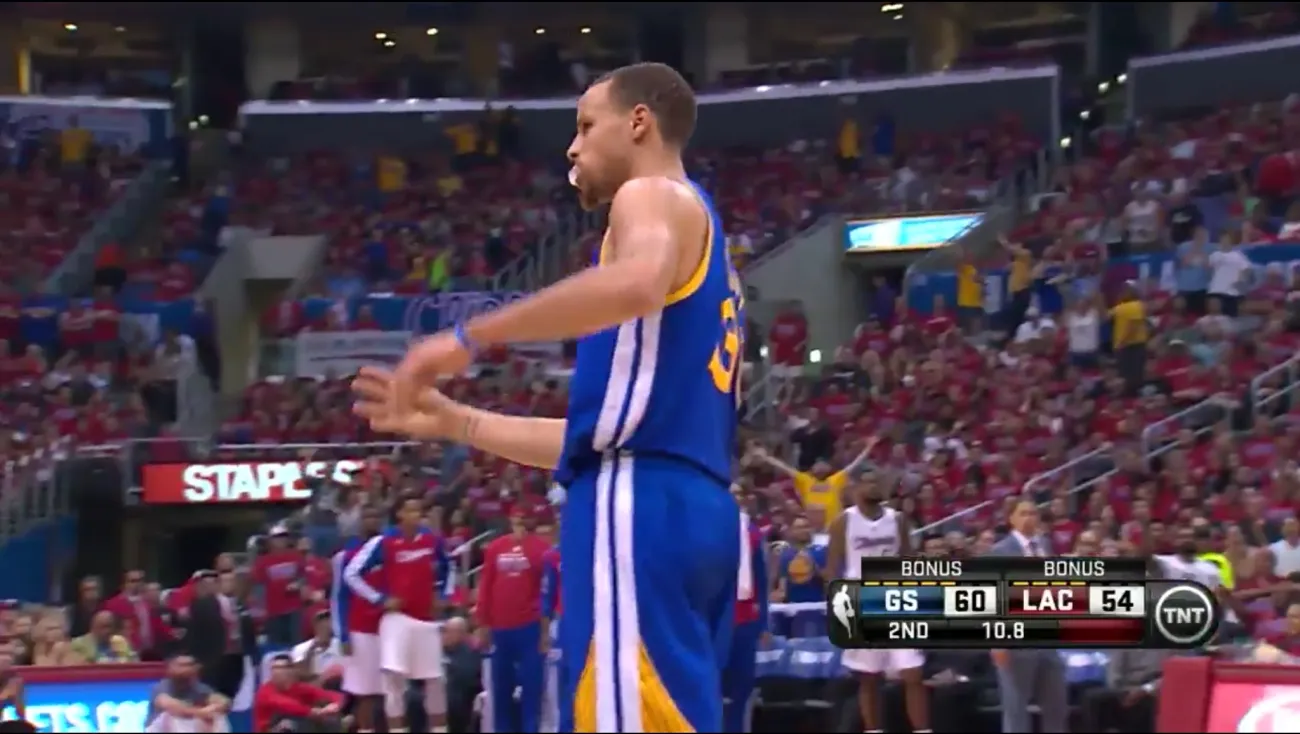
    Chris Paul and the Clippers repeatedly trapped Stephen Curry, trying to surround him and take away his rhythm.

    Curry did not back away from the challenge.

    He simply continued making three-point shots.

    And almost every time Golden State produced a big basket, the Clippers seemed to answer immediately.

    Sometimes it was J.J. Redick.

    Sometimes Jamal Crawford.

    Crawford had built a reputation as an exceptional maker of difficult shots — the kind of player who could create points even when the defense appeared to have done everything correctly.

    Before that, Andre Iguodala had his own stretch.

    He was effective both inside and outside and, within roughly fifteen seconds, hit two almost identical three-pointers from the same area of the floor.

    Athleticism Everywhere

    Blake Griffin took the ball the length of the court and finished at the rim.

    Earlier, he had thrown a lob to DeAndre Jordan, who exploded above the basket and finished with such power that the entire arena seemed to erupt with him.

    The second quarter already felt impossible to improve.

    Then Curry found another way.

    At the end of the period, he tried to beat the buzzer from beyond half court.

    He almost made it.

    The shot came just after the red light appeared.

    Even that miss somehow fit the atmosphere of the game.

    Everything felt possible.

    A Game Where Every Possession Mattered

    The game remained exciting and unpredictable until the end.

    Unfortunately, one team’s season had to finish.

    There would be no next game.

    With stakes that high, every possession mattered.

    Yet there were no major fights.

    No prolonged conflicts.

    Everyone remained completely focused on trying to influence what would happen next.

    In the end, whether because of preparation, execution, fortune or some combination of all three, the Clippers advanced.

    And even in the final minute, when more than twenty points were scored in an incredibly short period of time, the game never became boring.

    Then I noticed something.

    Something was missing.

    The Referees Were Almost Invisible

    Something that so often influences:

    • the result,
    • the atmosphere,
    • our opinion of the game,
    • and sometimes even basketball history.

    The referees.

    Or rather:

    the referees as protagonists.

    This time, they did not take the spotlight.

    They were present, but almost invisible.

    They seemed to understand the importance of the game and worked as partners in allowing the teams to decide it.

    There was no unnecessary theatre.

    No exaggerated display of authority.

    No visible desire to show that they controlled the game.

    They simply officiated.

    And with basketball being played at such a high level, they appeared determined to perform at the same level.

    Authority Without Theatre

    A referee already carries authority simply by holding the whistle.

    That authority also brings responsibility.

    It should not require players and coaches to constantly demonstrate submission to every decision.

    The best officials do not need to become part of the spectacle.

    They allow the game itself to remain the spectacle.

    That is what seemed to happen here.

    They did what was necessary.

    Without obvious prejudice.

    Without constantly demanding attention.

    And that must be a good feeling.

    Respecting the Game

    This was particularly interesting because throughout the playoffs there had already been controversial decisions and situations that generated debate.

    Not this time.

    Game 7 finished in an exemplary atmosphere.

    When the final whistle sounded, players from both teams embraced one another.

    Everyone had done what they could.

    Everyone had competed.

    And everyone had respected the game.

    There is something to learn from that too.

    Sometimes the best basketball is not only about extraordinary players making extraordinary plays.

    Sometimes it is also about everyone involved understanding their role.

    Players play.

    Coaches coach.

    Officials officiate.

    And the game remains at the centre of everything.