
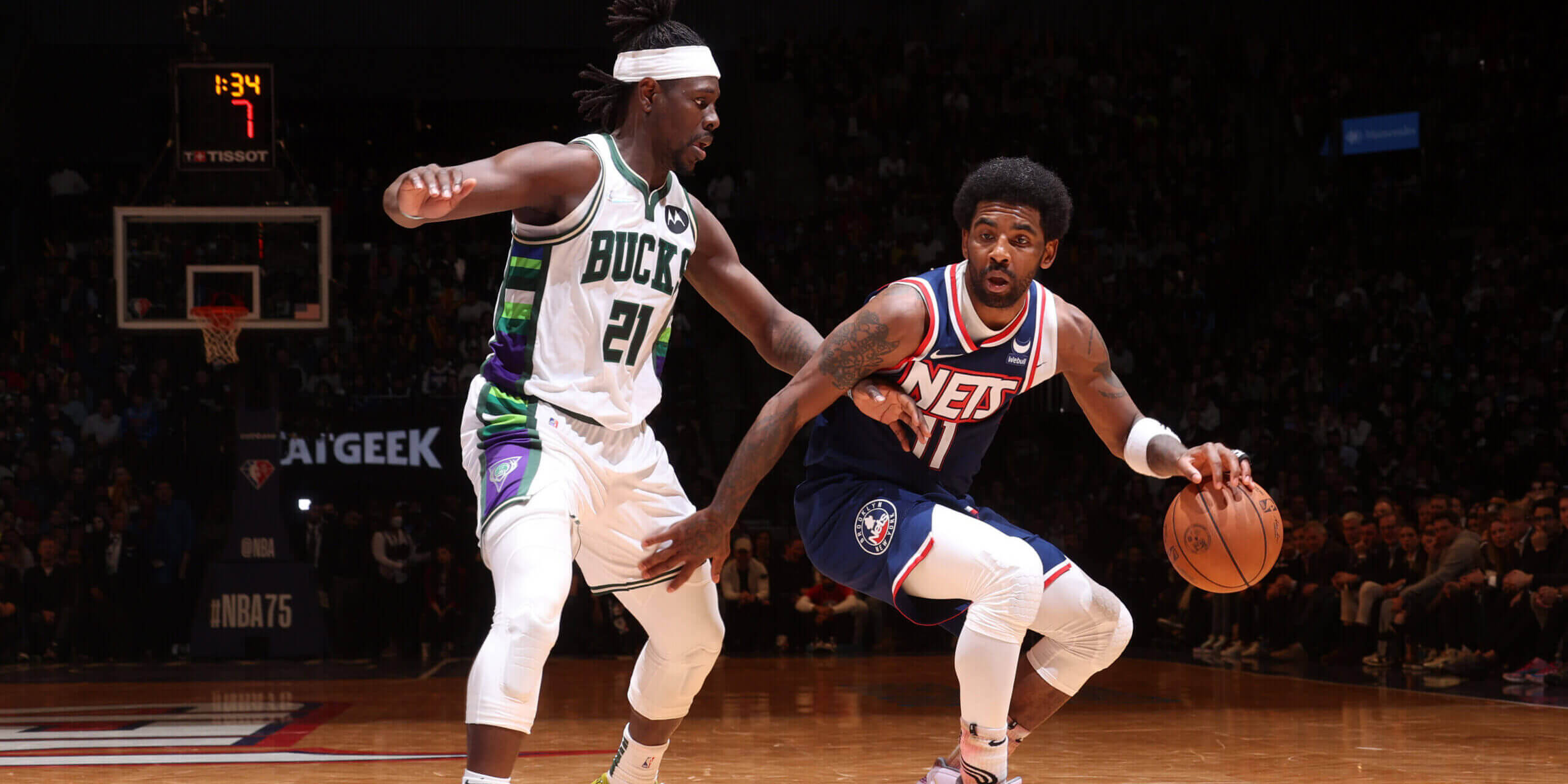
“You cannot win against a team of similar ability by using only one type of defense.”
The Challenge of Moving into Cadet Basketball
When players enter the cadet age group, teams suddenly begin to face many of the demands associated with senior basketball.
Opponents become:
- taller and physically stronger,
- faster,
- more effective from long range,
- stronger and quicker passers,
- capable of using the entire court,
- faster with the ball,
- more deliberate in identifying defensive weaknesses,
- and more dangerous at every position.
Positional play becomes increasingly important.
Teams also develop more ways to score. Games can no longer be decided consistently by one dominant player.
Alongside motion offense, isolation play and more controlled offensive systems begin to appear more frequently.
Every player becomes a greater offensive threat than at younger age levels.
Defensive Development Must Be Gradual
It is impossible to prepare players for every defensive situation within a single month.
For this reason, defensive teaching must follow a gradual and systematic progression.
Ideally, the teaching process should also be consistent across age groups.
In several previous Hungarian cadet national finals, compact zone defense had been the most commonly used defensive strategy.
This later began to change.
Using zone defense extensively at cadet level can sometimes reflect a philosophy in which the immediate result justifies the method.
The problem is that players may win games without learning defensive skills that will remain effective against stronger opponents later in their careers.
Our Responsibility as Coaches
Defensive development across age groups should be interconnected.
Each younger age group should prepare players for the requirements of the next.
The system must therefore be forward-looking.
Winning cannot become an isolated objective.
The goal should be to win while teaching principles that remain developable and transferable to higher levels of basketball.
For this reason, individual defensive fundamentals should already be taught consciously in the earliest age groups.
They form the foundation of everything that comes later.
What Should Cadet Players Know?
The objective here is not to present a complete series of drills or describe the entire teaching process.
Instead, the purpose is to identify the defensive knowledge and responsibilities that cadet players and teams should possess.
Before each drill, players should understand:
- what the coach wants to see,
- what the objective of the exercise is,
- and which defensive habits are being developed.
Start with Footwork
Defensive teaching begins with footwork.
The movement patterns required later in team defense must first be prepared individually.
Players must learn how to maintain balance, change direction, contain penetration and remain connected to their defensive responsibilities.
Fundamental Defensive Principles
Force the Offense Toward the Sidelines
One fundamental principle is to influence the direction of the ball handler.
The defense should not simply react.
It should attempt to dictate where the offense can go.
Contact
Players must learn how and when to use legal physical contact.
As players become older and stronger, avoiding contact is no longer a realistic defensive strategy.
Staying Attached
Defenders must learn to remain connected to offensive players through cuts, movement and screening actions.
Switching
Players must understand when switching is appropriate and how responsibility changes between defenders.
Defending Cuts
Off-ball cuts must be recognized early.
Players should understand both positioning and communication when defending cutters.
Help Defense
Help-defense principles should develop progressively from one age group to the next.
Players must learn how to help without completely abandoning their own defensive responsibility.
Important elements include:
- helping when strong pressure is applied to the ball,
- protecting passing lanes,
- helping and recovering,
- defending the first pass,
- and preventing easy reversals of the ball.
The degree of help and recovery should be introduced gradually according to the developmental level of the players.
Defending Ball Screens
Cadet players should begin to understand several possible solutions against the pick-and-roll.
These include:
Staying Attached
The defender stays with the ball handler and works around or through the screen while maintaining parallel defensive footwork.
Containment Away from the Three-Point Line
The defender and screener’s defender can influence the ball away from dangerous shooting areas.
Show and Recover
The screener’s defender temporarily steps toward the ball handler before returning to the original assignment.
Show, Switch Back
The defense temporarily changes responsibility and then returns to the original matchup.
Trapping
Two defenders aggressively attack the ball handler.
Players must also understand that ball-screen defense can change depending on the location of the screen:
- middle pick-and-roll,
- full-court situations,
- side pick-and-roll,
- and actions below the free-throw line.
Defending Consecutive Screens
Players must also learn how to defend more complex screening sequences.
An example is screen-the-screener action, where the player who sets one screen immediately receives another.
These situations require:
- communication,
- anticipation,
- recognition,
- and clearly defined switching or coverage rules.
Special Defensive Situations
Cadet players should gradually learn how to defend specific game situations.
These include:
- inbound plays,
- free-throw situations,
- transition after a quick basket,
- transition after a turnover,
- transition after a poor shot,
- disadvantage situations,
- and broken or unorganized defensive situations.
These moments are part of team defense just as much as organized half-court defense.
Defensive Rotations
Rotation responsibilities become increasingly important as team defense develops.
Players should understand rotations when:
Trapping a Ball Screen
The remaining defenders must rotate behind the trap to protect the most dangerous passing and scoring options.
Trapping the Low Post
Once a double-team is committed to the post, the other defenders must adjust their positioning and protect the next available offensive options.
Defending Interior Players
Cadet players should become familiar with different approaches to post defense.
These include:
- three-quarter fronting,
- full fronting,
- trapping,
- and defending interior players who roll or cut toward the basket.
Post defense should not be treated as the responsibility of centers alone.
Team positioning and help responsibilities are equally important.
Boxing Out and Transition
A defensive possession does not end when the opponent shoots.
Players must finish the possession with a rebound.
For this reason, boxing out is an essential part of team defense.
Players must also understand the transition between the two phases of the game:
- offense to defense,
- defense to offense.
Transition responsibilities should become automatic.
Principles of Zone Defense
Cadet players may also begin learning the principles of both even-front and odd-front zone defenses.
However, zone defense should not replace fundamental defensive development.
The same basic principles still apply.
Pressure the Ball
Zone defense does not mean allowing the ball handler to play comfortably.
Never Leave a Shooter Completely Open
Players must recognize dangerous shooters and adjust positioning accordingly.
Every Defender Must Have an Active Responsibility
No player should simply occupy an area without purpose.
Each defender must:
- read the ball,
- communicate,
- move,
- help,
- and take responsibility.
Pressing Zones and Defensive Transition
Players should also become familiar with pressing zone defenses.
After the press, the team must be capable of organizing into either:
- zone defense,
- or man-to-man defense.
This transition must be practiced rather than improvised.
Special Defensive Assignments
More advanced cadet defensive education can also include specific tactical tasks.
Examples include:
Defending a Weak Ball Handler
The defense may deliberately increase pressure or create trapping situations against an opponent with weaker ball-handling ability.
End-of-Game Defense
Late-game situations require special rules concerning:
- time,
- score,
- fouls,
- matchups,
- and shot selection.
Defending Elite Shooters
Extra attention may be required against outstanding shooters.
Players must understand how positioning, denial, switching and help responsibilities change when a particular opponent represents an exceptional shooting threat.
Building Defense Across Age Groups
Defensive concepts should develop progressively.
Players should first learn individual fundamentals and basic team positioning.
They can then progress toward:
- helping toward the ball,
- defending screens by staying attached,
- switching,
- trapping,
- defending positional play,
- and handling more complex team actions.
The development should continue into junior and U20 basketball, where players will encounter increasingly advanced situations such as:
- shooting over defenders,
- isolation offense,
- complex screening actions,
- and more sophisticated transition play.
Defensive Rules
As players progress, the team should establish increasingly clear defensive rules.
These may include:
- automatic switches in defined areas,
- principles for avoiding mismatches,
- predetermined trapping locations,
- rules for initiating traps,
- and rules governing switching defenses.
The objective is not simply to teach several defensive systems.
The objective is to develop players who can recognize situations, communicate, make decisions and execute different defensive solutions together.
At cadet level, this becomes one of the most important steps toward senior basketball.