
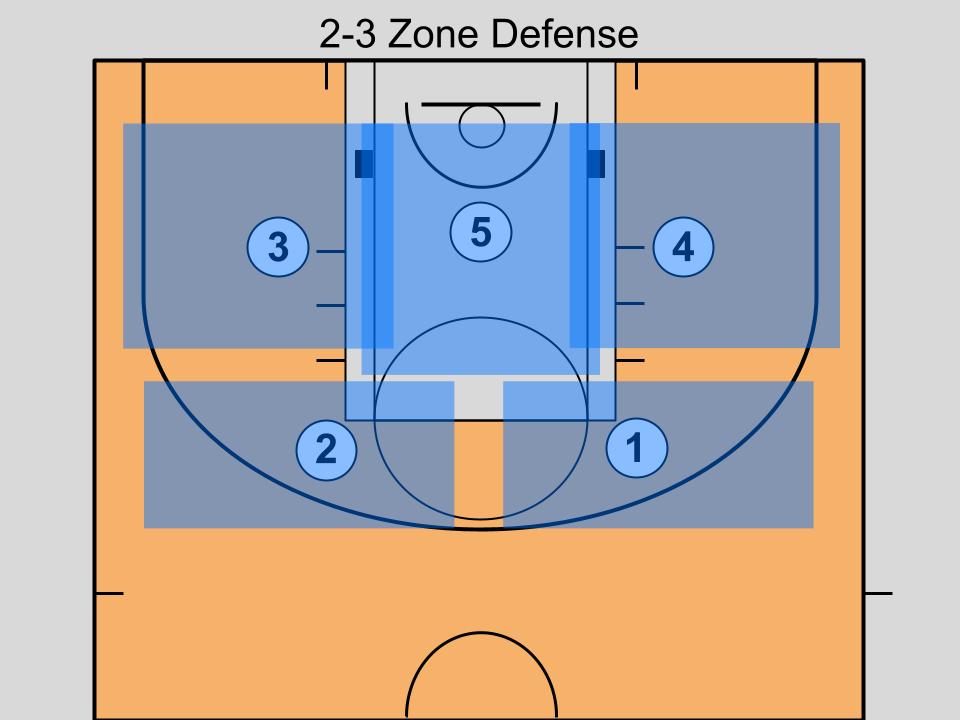
The following principles can be applied when teaching different types of zone presses.
Regardless of the exact alignment, an effective pressing zone depends on constant movement, pressure on the ball, communication and disciplined positioning.
Make the Ball Move
Always force the offense to move the ball.
Every pass changes the responsibilities and positions of the defenders.
The defense must adjust immediately.
If the players fail to react to the movement of the ball, the press will break down.
This is one of the most fundamental principles of zone pressure — and one of the easiest to forget.
Define the Type of Press
Players must clearly understand what type of zone press the team is playing.
Are you:
- trapping, or
- simply pressuring and containing?
If the objective is to trap, two defenders must consistently apply pressure to the ball after the appropriate passes.
If the objective is pressure without trapping, the defender on the ball must still apply enough pressure to prevent easy long passes that can immediately break the press.
The entire team must understand the objective of the system.
Force the Worst Pass
Do not allow the offense to make the easiest and most dangerous pass.
The defense should try to influence the ball toward less favorable passing options.
A successful press does not simply react to the offense.
It attempts to decide where the offense can go.
Force the Ball Handler to Pick Up the Dribble
Every defender should look for opportunities to force the offensive player to end the dribble.
Once the dribble has been picked up, the defense can increase pressure on the ball without the same danger of being beaten off the dribble.
This creates an important advantage for the press.
Use Active Hands
Teach continuous and purposeful hand activity around the ball.
Defenders should look for opportunities to:
- deflect passes,
- disrupt passing lanes,
- or create steals.
But active hands must remain disciplined.
Aggressiveness should not result in unnecessary fouls.
A Press Requires Sprinting
No team can play an effective zone press without running.
If even one defender is late reaching the correct position, the entire structure of the press may be compromised.
Players must sprint to their responsibilities.
Aggressiveness, however, does not mean uncontrolled play.
Running hard and playing with intensity are not excuses for committing fouls.
Get a Hand on Every Pass You Can
Encourage players to deflect every pass they can reach.
Even when the defense does not immediately gain possession, a deflection can:
- change the direction of the ball,
- slow the offense,
- disrupt timing,
- and create another opportunity for the defense.
Small disruptions can eventually create turnovers.
Keep the Ball Away from Dangerous Areas
An aggressive zone press should direct the ball away from the most dangerous areas of the floor.
In particular, the defense should try to keep the ball away from:
- the middle of the court,
- and dangerous passing or advancing lanes on the ball side.
Allowing the offense easy access to the middle often creates passing angles that can break the press.
The defense should therefore use positioning and pressure to influence the offense toward less favorable areas.
The Press Is a Team Defense
A zone press cannot function as five separate defensive actions.
Every pass changes:
- who pressures the ball,
- who protects the next pass,
- who covers behind the pressure,
- and where every defender must move.
That is why the press demands constant awareness and collective movement.
The basic principles are simple:
- move with every pass,
- know whether you are trapping or containing,
- force difficult passes,
- make the ball handler pick up the dribble,
- use active hands,
- sprint into position,
- deflect passes,
- and keep the ball away from dangerous areas.
When all five defenders follow these principles together, the zone press becomes more than pressure.
It becomes an organized defensive system.