Címke: player development

  • An Anxious Genius

    An Anxious Genius

    Kobe Bryant’s Return Did Not Go the Way We Expected

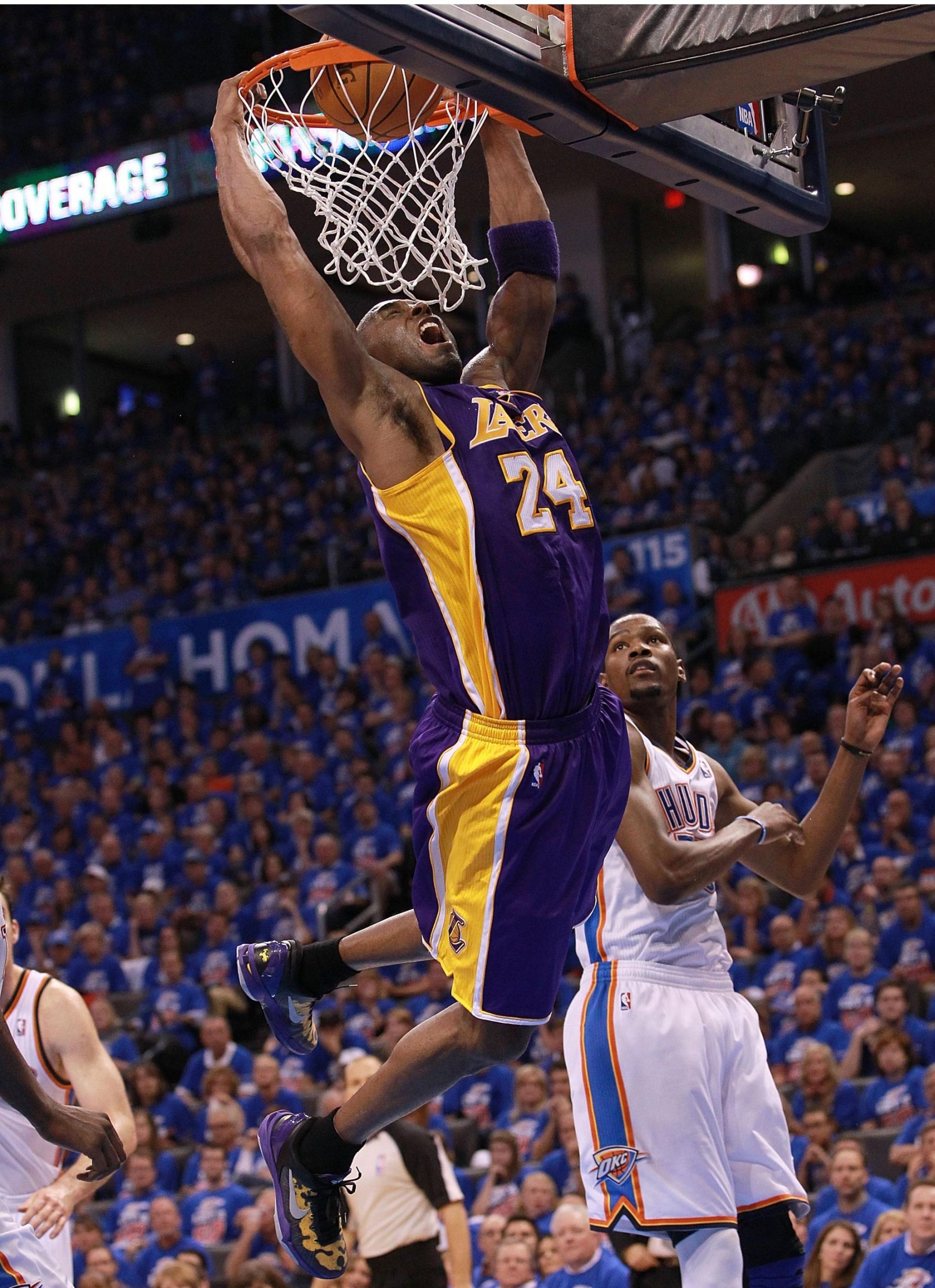
    As a youth basketball coach, I experienced a strangely familiar feeling when I stayed up that night to watch one of the greatest players of all time return to the court on NBA TV GameTime.

    Despite the 3:30 a.m. start, I was genuinely excited to see how the icon would perform.

    Just as millions of people had supported Derrick Rose during his comeback, millions were now hoping for Kobe Bryant to succeed — whether they were Lakers fans or not.

    Something Was Different

    Kobe’s body language made it obvious that he was fighting with himself.

    He desperately wanted to meet the expectations surrounding his return.

    For several minutes, he barely attacked the basket.

    Instead, he tried to contribute by creating opportunities for others.

    Defensively, he seemed to overcompensate.

    He frequently looked toward his teammates, searching for connection and reassurance.

    The familiar ease was missing from his game.

    He appeared to be forcing himself into the rhythm of the match.

    Even after creating assists, very little changed.

    Some of his passes — including one to Pau Gasol — showed flashes of his extraordinary vision, yet even while searching for safe solutions he occasionally drifted into risky decisions.

    One pass even seemed to surprise Jonas Valančiūnas so much that he almost forgot to raise his hands to intercept it.

    There was no real harmony in Kobe’s movement.

    The problems appeared most clearly on defense.

    During his limited minutes, he accumulated four relatively easy personal fouls, making it even harder for him to settle into the game and contribute at the level he expected from himself.

    When Confidence Begins to Shake

    There was hesitation on his drives.

    From my perspective, even his first field goal was more complicated than it needed to be. He finished with his left hand — something many people might interpret as skill rather than uncertainty.

    And of course, who am I to question Kobe Bryant?

    But he simply did not look like himself.

    You could sense it at the free-throw line.

    You could see it on some of his drives, where it was difficult to understand exactly what he intended to do at the end of the movement.

    At times, the ball almost seemed to hesitate in his hands.

    That uncertainty eventually resulted in turnovers.

    For a serious competitor, this can become one of the most stressful situations in basketball.

    And it is particularly difficult to reverse when mistakes begin to accumulate.

    Turnover.

    Foul.

    Missed shot.

    Another mistake.

    Then another.

    The Lesson

    Basketball can become a mental stress bomb.

    Every small detail can contribute either to success or failure.

    The level of expectation placed upon us — and the expectations we place upon ourselves — matter.

    So does the lack of recent competitive experience needed to meet those expectations.

    The quality of reinforcement matters.

    The number of actions and reactions experienced during practice and games matters.

    All of these impulses influence performance.

    Kobe Bryant was obviously not a youth player.

    And because he was an experienced professional, you could see him actively searching for solutions not only within the game itself but also in the way he managed the psychological conflict.

    He sought physical contact with teammates more frequently.

    He looked for encouraging expressions.

    He blew into his hands.

    He wiped his face and forehead repeatedly.

    During dead-ball situations, an uncomfortable smile occasionally appeared.

    His gestures, body language and movements reminded me of young players experiencing something new — perhaps playing in front of a larger crowd for the first time.

    As the game progressed, however, something began to change.

    His apparent tunnel vision slowly widened.

    The familiar Kobe Bryant court vision gradually seemed to return.

    Think About the Young Player

    We should therefore not be surprised when a beginner becomes anxious when entering the court.

    When a young player steps onto that four-line stage, he or she may feel as though everyone is watching.

    That feeling has to be managed.

    For coaches, this raises several important questions.

    What do we say after the player makes a mistake?

    How do we respond?

    What task do we give next?

    Can we give the player a responsibility that increases confidence?

    Can we create a situation in which successful execution provides positive reinforcement?

    These decisions matter.

    Responsibility Builds Confidence

    Kobe was also given responsibilities.

    Toward the end of the game, he even returned to his familiar role.

    His teammates trusted him with it.

    But the shots did not fall.

    Despite all his effort, he was not the player who could win the game that night.

    And that itself was instructive.

    After watching Derrick Rose return, I had now received another lesson from basketball’s strongest league.

    Everyone has to relearn the game.

    Every player needs the opportunity to perform a role.

    Every player needs meaningful responsibilities.

    They need situations in which they cooperate with teammates and experience for themselves:

    • where they currently stand in their preparation,
    • what kind of form they are in,
    • how reliable their technical skills are,
    • what their physical condition allows them to do,
    • and how they compare with the players and teams around them.

    Even the greatest players experience this process.

    In that sense, the biggest stars can sometimes look surprisingly similar to young beginners taking their first steps in organized basketball.

    Patience

    Development requires progression.

    It requires trust.

    It requires reinforcement.

    It requires practice.

    And it requires mental preparation.

    The environment surrounding the athlete also carries enormous responsibility.

    The coaching staff.

    The family.

    The media.

    The teammates.

    The broader environment.

    All of them can either help the player move forward or make the process more difficult.

    And if even Kobe Bryant needs time, confidence, repetition and patience when returning to competition, perhaps we should remember that the same is even more true for the young players we are trying to develop.

    Talent does not remove uncertainty.

    Experience does not eliminate stress.

    Greatness does not make a player immune to pressure.

    Sometimes even a genius needs time to feel like himself again.

  • Home Sweet Home

    Home Sweet Home

    Perhaps preparing for the game itself is not the hardest part of being a young basketball player.

    I can see it in my own players.

    It is difficult for me to remember exactly how I experienced these things when I was at the beginning of my own playing career, but there can be many reasons why young athletes sometimes struggle to redirect their attention toward everyday responsibilities after a game.

    A basketball game is a special event.

    It is not an ordinary experience, even if game day happens to fall on an ordinary Monday.

    Just imagine the stress young players experience when they cross the boundary line of the court and suddenly find themselves on the stage of competition.

    They try to perform successfully according to a script they have practiced over and over again.

    Sometimes it works.

    Sometimes it does not.

    The less seriously young athletes prepare for competition, the greater the risk of disappointment and failure.

    As coaches and parents, we have a responsibility to help them understand that defeat and frustration should not come as complete surprises.

    At the same time, we must encourage them to do everything they can to keep moving forward.

    And only forward.

    Greater Expectations Require Greater Commitment

    The higher the expectations become, the greater the commitment required from young basketball players.

    You have to begin thinking more professionally.

    You need to understand yourselves.

    You need to know how you react not only to defeat, but also to victory.

    The emotional impact of a game can be deep.

    After experiencing the intensity of competition, it is not always easy to return home, unpack your basketball bag and immediately open your schoolbooks.

    Yet as athletes, you must also try to give your best in your studies.

    Sport and education have to develop alongside one another.

    You cannot afford to lose sight of either path, because the consequences may affect your life far beyond the next practice or the next game.

    Everything Has Its Time

    I have often thought about this.

    Even when you were very young and first began to understand what competition meant, it was already possible to see a respect for certain values.

    I cannot say whether that came from discipline, attention, self-control, role models or the guidance of those who came before you.

    Perhaps it came from all of them.

    What matters is that, with very few exceptions, you have consistently followed one important principle:

    Everything has its time — and when the time comes, do everything you can to succeed.

    That is not always easy.

    School itself can place enormous demands on young people.

    Choosing basketball and seriously pursuing the goal of becoming a basketball player creates another layer of responsibility.

    That raises important questions.

    How do you carry all of it?

    When do you ask for help?

    Where do you find the places and people that allow you to recover your energy?

    Are victories alone enough to recharge you?

    Perhaps not.

    You Are Not Alone

    I hope you believe in what you are doing.

    But you should also know that you are not alone.

    The road toward becoming something greater is difficult.

    It requires sacrifice.

    Sometimes it will test you more than you expect.

    But it also prepares you for challenges that, at your age, you may not even be able to imagine yet.

    Keep going.

    Fight for your goals.

    Enjoy your successes.

    Enjoy every small moment, because those moments make you stronger.

    And remember the people around you who are walking that road with you.

    Your teammates.

    Your parents.

    Your coaches.

    The people who believe in you.

    And us.

  • How Can You Earn More Playing Time?

    How Can You Earn More Playing Time?

    If you want to spend more time on the court, there are several things you can improve that every coach values.

    1. Become a Better Rebounder

    Why not attack the basket every time a shot goes up?

    It does not matter how tall you are, how fast you are or how high you can jump.

    Rebounding is also about effort, anticipation and determination.

    Imagine how much more valuable you could become to your team if you collected just two or three more rebounds than before.

    2. Sprint Back on Defense

    A team cannot be successful without the mentality of getting back immediately every time possession changes.

    You should become almost obsessed with preventing easy baskets.

    Transition defense is not optional.

    If you consistently sprint back, protect the basket and stop the opponent from scoring easy points, your coach will notice.

    3. Help Your Teammates on Defense

    Do not think:

    “My teammates do not help me, so why should I help them?”

    Successful teams are built on the opposite mentality.

    Helping on defense is one of the most important forms of unselfish basketball.

    There is a great feeling in playing for a team where, the moment your defender beats you, a teammate is already there to help.

    That creates trust.

    You begin to think:

    “He helped me. Next time, I will help even more.”

    A strong team does not help occasionally.

    It helps every time.

    4. Make Accurate and Timely Passes

    This is extremely important in modern basketball.

    You do not have to lead the league in assists.

    But when a teammate is open, the pass has to arrive accurately and on time.

    A poor pass reduces the quality of the opportunity.

    Instead of immediately shooting, driving or making the next play, your teammate may first have to spend valuable time securing the ball.

    That can be enough for the defense to recover.

    If making an inaccurate pass does not bother you, then your attitude toward passing needs to improve.

    Passing should be treated with the same level of care as shooting.

    Every accurate pass helps the team play faster, more efficiently and with greater confidence.

    Do the Things That Help the Team Win

    More playing time does not always come from scoring more points.

    Coaches value players who consistently do the things that make the entire team better:

    • rebound,
    • sprint back,
    • help on defense,
    • make accurate passes,
    • and play with effort and discipline.

    Become reliable in these areas, and you give your coach more reasons to keep you on the floor.

  • Why do we play?

    Why do we play?

    Why?

    Over the years, basketball — the game itself — has become part of your lives.

    You have experienced success and failure. Both are temporary. The next morning, a new day begins, and new short-term goals have to be set.

    Most of the time, we do this together with the team.

    Because basketball is a team game.

    Those who have become some of the best young basketball players in their city but still think of practice, individual workouts and games simply as fitness, a hobby or a healthy way to spend their free time are making a serious mistake.

    For those of you who are more talented and more advanced than many of your peers, basketball has already become something more.

    You have to think about your own future.

    If you want to become successful, simply deciding to be successful is not enough.

    You need goals.

    And all of us have to work for them.

    That is how success is achieved.

    Sometimes the goals are small. Sometimes they are much bigger.

    It does not matter.

    Achieving them makes us happier.

    Failure and difficulty, meanwhile, teach us how to get back up after we fall.

    For most of us, that may become one of the most valuable lessons of all.

    Once you learn how to do it, overcoming difficulties becomes easier.

    What Comes Next?

    One thing we try to teach you — and remind ourselves of as coaches — is that situations are rarely simply good or bad.

    There is always something that could be better and something that could be worse.

    The real question is:

    What comes next?

    What are we going to do now?

    For you, basketball has become much more than a game.

    Those who think carefully about their future — and those who believe in the value of work — understand this.

    Basketball is an opportunity.

    It is a tool.

    And you should not waste it.

    The world has changed, and you should also understand what sport can give you beyond the enjoyment of playing.

    You need goals.

    Sometimes those goals will become ambitious and far-reaching.

    At other times they will be simple, everyday objectives.

    But they will continue to change.

    There is no final destination.

    Basketball must mean more than simply saying:

    “I played a good game today.”

    Enjoying the game is the minimum.

    It should bring you happiness.

    But competition will continually demand more from you.

    You have to move beyond your comfort zone.

    We are preparing to compete.

    For you, the time to do that is now.

    It is not too late.

    But a few years from now, those who allow today’s opportunities to pass may no longer have the same choices.

    Look Ahead

    There is nothing wrong with hoping that basketball might also create financial opportunities.

    Some young athletes already receive sports scholarships.

    There are many other opportunities and values worth making sacrifices for, and basketball may help you reach them.

    There is nothing wrong with that.

    Your life is a career path.

    Coaches should help you along that path as well.

    That is one of our shared objectives.

    If you succeed, that is also a success for us.

    And you are already successful.

    I mean that seriously.

    Where you are today and everything you have achieved so far already represent success.

    It is the result of many smaller successes.

    And none of them happened alone.

    They were achieved together with a much larger team.

    Your parents are part of it.

    Your friends.

    Your teachers.

    Your coaches.

    Everyone who has positively contributed to your journey.

    There have also been opponents and difficulties along the way.

    And yet you are still here.

    You can keep moving forward.

    You can decide what the next step will be.

    You Are Not Alone

    You are not alone on this journey.

    You have a team.

    And a team can become something very similar to a family.

    We have common goals.

    One of those goals is to help each other become better — to become more capable than we were yesterday.

    We achieve goals.

    We correct mistakes.

    We become more successful.

    That is in everyone’s interest.

    And we do it together.

    But you must also know what your own individual goal is.

    Dare to dream.

    Without dreams, achieving something truly significant becomes almost impossible.

    Some of you will go further in basketball than others.

    Some may eventually have to accept a smaller role in the game.

    There is nothing wrong with that either.

    If, along the way, you achieve many goals and basketball helps you become successful and happy people, then the journey has been worthwhile.

    Keep playing for as long as you can.

    And if possible, keep doing it together with teammates who mean something to you.

    Whatever happens — good or bad — remember that it is ultimately another situation that has to be solved.

    And you do not have to solve it alone.

    Trust

    Trust yourself.

    And trust the people beside you.

    That may mean your family.

    Your friends.

    Your teammates.

    Respect the people around you because they help make you better.

    Trust them.

    Teams need rules that protect and strengthen team spirit.

    Some of those rules exist to balance individual interests with the interests of the group.

    Our objective in competition is to win the right way — and to pursue that goal with everything we have.

    That requires sacrifice.

    It requires all of us.

    Together.

    Every day we challenge each other.

    Every day we push one another.

    Why?

    Because we want to discover what we are capable of.

    We want to show ourselves — and others — how far we can go.

    And if we truly commit to that process, there is no reason to fear what comes next.

    Because in the end, winning is not the most important thing.

    The most important thing is the road that leads toward it.

    For that journey, I wish all of us strength, health, perseverance, honesty, trust and, above all, joy.

    Joy may be the most important of all.

    It will help you through everything.

    You will see.

    The opportunity is there for everyone.

    What you receive from it will depend largely on how much you are willing to put into it.

  • Game Day Advice

    Game Day Advice

    Before the Game

    • Decide in advance that whatever happens, you will respect the game.
    • Allow your fellow coaches to give useful advice to the players.
    • Fill the players with positive emotions and confidence.
    • Appreciate great plays, no matter which team makes them.
    • Acknowledge the referees when they make good decisions.
    • Enjoy the day.

    After the Game

    • Thank the referees for handling a difficult game professionally.
    • Thank the coaches for their work.
    • Do not immediately evaluate your players unless they ask for feedback.

    Instead, ask open-ended questions such as:

    • What was the best moment of the game?
    • What did you enjoy the most?
    • What did you learn from this game?

    Encourage the players even if they did not perform well.

    Try to remain composed when refereeing decisions go against your team.

    Help calm down angry or frustrated parents.

    Be Positive. Set a Good Example.

    The way adults behave around the game has a strong influence on young players.

    Coaches, parents and other adults should help create an environment in which children can compete, learn and enjoy basketball while respecting teammates, opponents, coaches and referees.

  • How Do We Evaluate Talent?

    How Do We Evaluate Talent?

    The key to identifying talent is recognizing a player’s feel for the game.

    I believe we should pay close attention not only to the abilities of young players, but also to how they understand and experience the game.

    Feel for the Game

    One of the most important aspects of talent identification is recognizing basketball sense. This is much more than a simple instinct.

    A player must be able to make the best possible decision in a fraction of a second. He must understand the game, but he must also understand himself: what he can and cannot do on the court. At the same time, he needs to know what his teammates and opponents are capable of.

    How often do coaches become frustrated when their big men begin playing like point guards, pounding the ball and disrupting the offense?

    We also see defensive specialists trying to prove themselves by taking and missing shot after shot. Or a wing player keeps shooting threes despite being unable to make one, without realizing that the defense is leaving him open precisely because he is not a reliable outside shooter.

    For a scout and a coach, one of the key questions is whether a player is capable of playing within his own limitations. If not, can this be improved?

    Understanding the strengths, weaknesses and even the emotional state of teammates is extremely important, just as it is important to know what they can and cannot do on the court.

    Will the point guard pass the ball to the center posting up on the left block, even though he knows that the center is unable to attack effectively from that side?

    Or can he consistently find the wing player who simply cannot miss from outside?

    Especially in the NBA and at the highest levels of European basketball, the best players know the strengths and weaknesses of their opponents extremely well. They study them and try to use this information to their advantage.

    We may remember Chris Mullin, who could describe exactly how an opponent moved, where he preferred to shoot from, and whether he was more effective going left or right.

    A player such as Jason Kidd went even further. He also understood the defenders guarding his own teammates, which helped him recognize who might have an advantage and where the ball should go.

    Some players are also outstanding at recognizing mismatch situations and exploiting differences in size, speed or skill.

    It is essential that players understand offensive sets, the overall concept of the game and how to think ahead.

    They should not always search for the assist itself. Instead, they should recognize the pass that leads to the next pass and ultimately creates the scoring opportunity.

    They should know how to break down the defense from the perimeter so that interior players become open.

    They must understand which action should be used and when.

    Players should remember the plays, but they should not execute them completely automatically.

    This brings us to creativity.

    To develop creative players, we need to spend a great deal of time developing their abilities and helping them make correct decisions in situations that have not been predetermined.

    In these moments, timing changes. Shooting angles change. Responsibility changes. The game clock and possession situation also influence the decision.

    A player’s position obviously matters as well, because it affects his feel for the game and changes what we should expect from him.

    Point guards should function as the coach’s right hand on the court. They are required to make decisions very frequently, and they handle the ball more than most other players.

    They initiate the action that eventually leads to the basket.

    Big interior players are often the receivers. They must know when and how to ask for the ball, then decide which technique or movement is most appropriate in that particular situation.

    At the same time, they must also recognize whether another teammate is in a better position.

    Basketball sense should be developed through cognitive and creative decision-making.

    Part of this ability can be taught, while another part comes from natural talent.

    It develops through experience, age, basketball intelligence and the ability to understand situations.

    The more often a player experiences different game situations, the more quickly he can recognize and solve them.

    The speed of decision-making is extremely important.

    Young players often think for too long. You can see them searching for the correct solution, but by the time they find it, the opportunity has disappeared.

    Players moving up from lower-level competitions also need time to adjust to a faster game.

    The faster the game becomes, the more difficult it is for an inexperienced player to process what is happening.

    It is not easy to determine whether a player truly has basketball sense.

    Did he make the correct decision?

    Could he have made a better one?

    Does he possess real basketball intelligence?

    Were there other factors influencing the decision?

    These questions require much more observation than evaluating physical talent, which can often be assessed within seconds or minutes.

    We need to observe the player over a longer period and in many different situations.

    As professionals, we must truly understand the game and then try to place ourselves in the position of the player being evaluated.

    Would I have made the same decision?

    What was the result of the action?

    Could the player have performed better?

    Do his teammates understand what he is trying to do?

    What does his coach expect from him?

    Do referees influence his behavior?

    Does he repeatedly make the same mistakes?

    We must also consider external factors.

    What happened before the game?

    Is there something happening in the player’s private life?

    Has he received his salary?

    How much pressure is connected to the result of the game?

    The player’s personality is important as well.

    Is he shy?

    Does he take risks?

    Does he accept responsibility?

    Can he communicate effectively?

    Are there other factors influencing his decisions?

    How does he react when he comes to the bench during a timeout?

    Does he accept instructions from coaches and teammates?

    Does he cooperate with the coach?

    Does he explain possible solutions to his teammates?

    Does he watch basketball games?

    How does he behave in practice?

    Does he pay attention, or is he distracted?

    Does he ask the coach for help?

    Does he ever pick up the coaching board and draw something himself?

    All of these details can provide information about the player.

    Physical talent, mental talent and decision-making can all be developed to a certain extent, but improvement is not easy and requires time.

    Some players may never become strong decision-makers.

    Others can improve significantly.

    In general, however, almost everyone can become somewhat better.

    Experience is the key word.

    We should place players and teams in many different situations, ask them to think, question them about possible solutions, give them simple instructions, and show them both their own performances and examples from other games.

    There are many learning models, and I do not want to discuss all of them here.

    I will mention only one example: a cognitive computer program originally used in the training of fighter pilots in Israel and later adapted to basketball situations.

    In a very simple computer game, players learn to think ahead, make decisions in fractions of a second, recognize situations and process complex information.

    As the player improves, the program increases the level of difficulty.

    I mention this example not because of the program itself, but because of the learning concept behind it.

    How can we create more learning moments during the hours we spend practicing with a team?

    More importantly, this example highlights the fact that decision-making in basketball can be developed.

    Level of Technical Skill

    Evaluating the level of technical skill is more complicated than it may first appear.

    Some things are relatively objective.

    Is the player left-handed or right-handed?

    Can he perform a crossover?

    Can he make a three-point shot?

    Can he execute a bounce pass?

    Can he shoot a hook shot?

    Does he have proper lateral defensive footwork?

    Every scout and coach can observe these elements.

    However, the real challenge is not simply identifying whether a player possesses a skill.

    The important question is the level at which he can execute that skill and under what conditions.

    Are some basketball skills more important than others?

    We can probably all agree that the answer is yes.

    A player who cannot shoot will have limited opportunities.

    A player who cannot handle the ball will struggle to create in one-on-one situations.

    A player who cannot pass will have difficulty functioning within a team concept and may be responsible for many turnovers.

    On the other hand, a player who is not a great shot blocker or an outstanding rebounder may still become a very good basketball player.

    I do not know whether anyone has ever attempted to rank every offensive and defensive skill in basketball, but it would certainly be interesting to ask coaches how they would evaluate them.

    The answers would probably vary from country to country, just as coaching philosophies differ.

    However, there would likely be broad agreement about which technical skills are the most important.

    Mental and physical pressure have a major influence on technical execution.

    A young player may dominate everyone in his age group with a crossover move, for example.

    At the next level, however, he may no longer be able to use the same move successfully because defenders are stronger, quicker or technically better.

    The stakes also become higher.

    That added pressure may cause the player to hesitate and think twice before attempting a move, which can prevent him from executing it effectively.

    Regardless of the level of competition, imagine two players whom we evaluate as having similar abilities.

    One of them may still be a significantly more effective player than the other.

    As coaches and scouts, our task is to anticipate whether a young talent will be able to perform the same skills at the next age group or competitive level.

    Can the player improve?

    What is the definition of an attractive or technically beautiful movement?

    How should it look?

    And how effective does it need to be?

    Think of a wing player with an ugly shooting technique — a shot that may make a coach want to cry.

    But then we look at his three-point percentage and see that he shoots 40%.

    Suddenly, the technique does not seem quite so bad.

    The true level of a technical skill is more closely related to whether the player can execute the shot or pass effectively than to how the movement looks.

    The important questions are:

    Will changing the technique make the player more effective?

    Can we improve it?

    Can the player execute the same movement successfully at a higher level?

    When estimating whether a player can improve technically, two important areas must be considered.

    The first is physical limitations or physical advantages, as well as medical factors that influence the quality of execution.

    Shooting is a good example.

    If a player has poor coordination, it may take significantly longer for him to become a good shooter.

    A player with limited mobility in the shoulder joint may never shoot in the same way as a player with excellent shoulder mobility.

    The same may be true for a player with an excessively muscular upper body and shoulders who does not yet possess a clear understanding of the correct shooting motion.

    Coordination, strength, speed and flexibility all play major roles in learning and executing technical skills.

    The second area is the individual learning model for motor skills.

    Some players learn new techniques almost immediately.

    Many others need to repeat a movement again and again before they begin to use it successfully — if they ever use it at all.

    I remember one of my classmates at the University of Physical Education.

    After watching a gymnastic movement demonstrated once, he mentally rehearsed it, walked over to the apparatus and performed it.

    I needed several days to learn the same movement, even though I was certainly not among the least talented students.

    We can probably agree on several things.

    Technical skills can be learned and, in general, they can be developed to a high level.

    Technical learning cannot begin too early.

    Physical and mental training, on the other hand, should become increasingly important as players grow older.

    We also try to create automatic movement patterns and combine simple techniques into more complex actions.

    During a game, players cannot consciously think about every detail of dribbling, passing or shooting mechanics.

    They simply have to perform the movement.

    It is similar to driving a car.

    For a scout, it is also useful to understand where a player comes from.

    Which country?

    Which club?

    Who were his previous coaches?

    Basketball cultures, philosophies and playing styles have a major influence on a player’s technique and on the way he learns.

    The countries of the former Yugoslavia traditionally devoted much more time to true fundamentals, footwork and shooting mechanics than many Western European countries.

    They also placed greater emphasis on passing than was common in many American basketball schools.

    In Lithuanian basketball, practice has almost become a religion, with players spending hours developing technical skills.

    Unfortunately, in our environment, this type of technical work often becomes less common as players grow older.

    Ultimately, technical skill can be taught.

    This is where good coaching begins, together with the willingness to spend meaningful and effective time developing young players.