Címke: DEAC

  • Chapters for a Silent Night

    Chapters for a Silent Night

    Posted on December 25, 2014

    You probably think many years have to pass before a person begins looking back on Christmas Eve, searching for the feelings of the past — feelings connected to better times, to people who are no longer close to us, and to memories that once shaped our lives.

    Memories.

    On ordinary days, we do not always have the energy to remember.

    Sometimes there is simply not enough time.

    And sometimes a memory hurts so much that we prefer not to force the past back into the present.

    Then Christmas arrives.

    Old films return to our favourite television channels.

    And if they do not, we choose them ourselves.

    Christmas Eve

    For us, December 24 begins early in the morning.

    We bring the Christmas tree into the room and place it in its usual spot.

    Then, with the kind of excitement that has become part of our tradition, we head to the multiplex and try to watch one current film after another.

    Sometimes it is only us.

    At other times, a few similarly minded people join us.

    This year, there were far more people than usual.

    Apparently, the world is changing.

    Of course it is.

    At 3:45 p.m., after the final film, we left the cinema and headed home.

    Two years earlier, snow had covered the world outside the Plaza windows.

    This time, bright sunshine accompanied us on the short journey home.

    A Journey Through Music

    On one of the evenings of Christmas, I like to use one of the wonders of the modern age to bring back feelings that remind me why I am who I am.

    My iPhone is always close at hand for this purpose.

    I typed in the names of one or two songs after hearing Steve Tyrell’s On the Sunny Side of the Street during Father of the Bride.

    And suddenly the unstoppable journey through time began.

    It was exactly what my soul needed.

    Tyrell’s music led the way.

    Soon I found myself watching a short Paul Newman tribute set to Raindrops Keep Fallin’ on My Head.

    Scenes appeared from films that even my grandparents had watched.

    Some of them we had watched together.

    We had allowed those films to carry us away and become part of our memories forever.

    And what music.

    One Song Leads to Another

    With one click, I was listening to Dean Martin.

    There is something in the way he performs that makes you feel he knows something you do not want to miss.

    As if you have already lived the same moments.

    And while listening, images begin to return.

    Moments.

    Places.

    People.

    You do not want the music to stop.

    It is magical.

    From there, it was only a short step to Perry Como and Magic Moments.

    And while watching, long-forgotten films began appearing again in my mind.

    One of my favourite scenes returned too:

    Audrey Hepburn singing Moon River.

    For me.

    At least that is how it always felt.

    If Only We Had More Time

    I suddenly thought how wonderful it would be if we had more time for things like this.

    And then, from somewhere in the past, Gene Kelly appeared.

    Singin’ in the Rain.

    I remember when I could still feel that completely, carelessly happy.

    Watching the scene brought me back there almost immediately.

    And to see how timeless it still was, I watched another interpretation associated with Robin Williams.

    Then, as if I still needed proof of how beautiful the music was, I found a performance by the Three Tenors.

    There was something endlessly unrepeatable about the moment at the end when the older Gene Kelly and the tenors applauded one another.

    Christmas and Basketball

    I will not continue listing songs and films.

    I could never reproduce my Christmas mood as well as they did.

    Or, in a completely different but somehow equally fitting way, as the NBA does in its Christmas game broadcasts.

    The league has become remarkably good at weaving timeless melodies, familiar humour and festive imagery into basketball culture.

    Sometimes all it takes is a popular actor introducing the broadcast with a joke and suddenly the fantasy gives way to reality.

    The opponents may tease one another.

    The competition is still serious.

    There will still be hard contact.

    Someone will still lose.

    But the broadcasts somehow remain unmistakably festive.

    The colours.

    The music.

    The humour.

    The atmosphere.

    The beauty of Christmas surrounds the game.

    Back to the Court

    There were not many of us, but I still received my end-of-year gift.

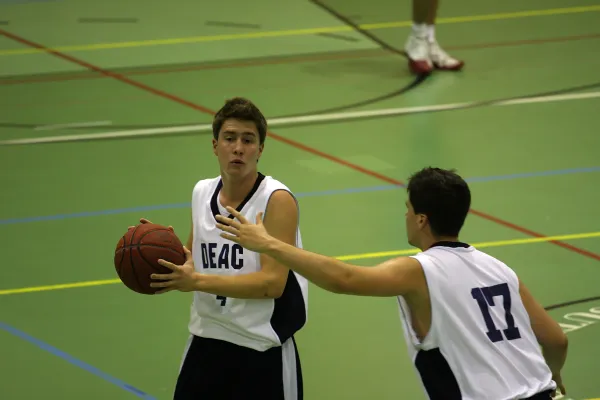
    After spending time wandering through old memories, I was brought quickly back into the present when I stepped onto the court to play in the Christmas evening game with some of DEAC’s finest players.

    It felt wonderful.

    And I was grateful that, even if only for a few moments, I had been able to relive memories that had once meant so much to me.

    The films.

    The songs.

    The actors.

    They felt so familiar and so powerful that it was almost as if the people who are no longer here were somehow present with us again.

    For a little while.

    On a silent Christmas night.

    I recommend it to everyone.

  • Kereszt — Our Pride

    Kereszt — Our Pride

    Posted on November 21, 2014

    If the University of Debrecen had its own Hall of Fame, Gergő Keresztes would surely receive thousands of votes to take his place among its most respected basketball players.

    At twenty-three years old, he was already a serious-minded yet permanently cheerful young man — and a DEAC basketball player whose story represented much more than sport alone.

    The Beginning

    Let us go back to around 1997.

    Together with fellow coaches and the basketball-obsessed members of my family, I spent day after day climbing the stairs of TÁG.

    One practice followed another.

    At the time, the basketball environment kept producing players.

    Some became outstanding competitors.

    Others became lifelong lovers of the game.

    Those were wonderful years.

    At the neighbouring early-afternoon practices, several distinctive young personalities regularly appeared.

    And among them was one small, blond, lightning-fast player who always seemed to have a basketball in his hands.

    You could always hear him when he was in the gym.

    And even then, the way he handled the ball made us think:

    this boy belongs on a basketball court.

    For a long time, I did not even know his name.

    Eventually, however, he made sure everyone noticed him.

    That was simply his nature.

    Sometimes it was his humour.

    Sometimes a sharp remark.

    Sometimes his exceptional fighting spirit.

    Sometimes one of his unusual finishes around the basket.

    One way or another, he always managed to find his way into the spotlight.

    2005: A New Chapter

    Then suddenly it was 2005, and the cadet team came to us.

    The most enthusiastic and fearless members of the 1991 generation — those who had remained — were hungry for success.

    They wanted to compete with the best players of their age group.

    They had enormous curiosity, a desire to learn and several significant talents within the group.

    Kereszt was there too.

    He never missed the team’s activities.

    He began as an intelligent young boy and, by the age of sixteen, had already become one of the leaders of the team.

    He set a strong example for the others because he succeeded in almost everything he did.

    On the court and away from it, he was one of the personalities who held the group together.

    At weekends, teammates often gathered at his home.

    Apparently, spending every day together was not enough.

    Sometimes they even spent Friday night at the Keresztes family home.

    Films.

    Games.

    Stories.

    Time together.

    That mattered too.

    It helped turn a group of players into a TEAM.

    Always Ready for the Next Challenge

    I remember that Kereszt was involved in everything.

    During one Easter ski camp, we were among the first to put skis on his feet.

    It was a pleasure to watch him progress from the early falls and awkward movements to growing confidence.

    Today, he has become an exceptional skier.

    That pattern seemed to repeat itself in almost everything he tried.

    He always wanted to become as good as possible.

    That determination still represents, for us, what a university sports career can mean.

    Basketball and University

    He won bronze medals at cadet and junior level.

    Later, he and his teammates helped launch the first NB I basketball team in DEAC’s history.

    His university years were not always easy from a sporting perspective.

    A shoulder injury created additional difficulties.

    Yet both on and off the court, he still played an important role in one of the historic periods of University of Debrecen basketball.

    The university team won the Hungarian University Championship twice.

    And Kereszt was part of that success.

    Excellence Beyond the Court

    After a long rehabilitation period, he returned to competitive basketball training this year.

    At the same time, his academic performance has been exceptional.

    Alongside outstanding results in his law studies, he received the Republic Scholarship and was recognised during the academic year as one of the University of Debrecen’s most outstanding students.

    It is difficult not to feel something when seeing an example like this.

    Because this is proof that it can be done.

    Sport and education do not have to compete with one another.

    They can strengthen each other.

    Of course, we miss him when he is not with us.

    As a university student, he had already begun working for a major multinational company.

    And perhaps what we miss even more is the shared past — the environment that once allowed such capable and determined young people to grow around us.

    What We Always Wanted to Represent

    I believe this is exactly the point.

    Kereszt represents something we have always believed in.

    This is how we believe young people should study.

    And this is how we believe they should compete in sport.

    They should try to make the most of whatever abilities and opportunities they have been given.

    They should move forward.

    They should try to become one of the best in whatever path they choose.

    And in doing so, they should create something valuable not only for themselves, but also for the generations that follow them.

    That is what gives meaning to our profession as coaches.

    Our work matters when sport helps develop people who can succeed far beyond the basketball court.

    It gives us enormous pride to say that Gergő Keresztes — Kereszt — is one of ours.

  • Whole Again

    Whole Again

    Posted on December 18, 2013

    My life entered another dimension in the summer of 2005, when I first met my new team: a group of boys born in 1991 who had just moved from the U14 level into the cadet age group.

    Together with my friend, B., I arrived at every practice excited.

    The players seemed almost hungry for knowledge, while every day brought adventures worthy of a novel — stories that affected them and therefore us as well, and which we still remember and talk about today.

    We went through a great deal together.

    Whatever happened, we somehow always managed to move forward and achieve something from the goals we had set.

    Because of them, our profession as youth coaches gained real meaning.

    Whenever we were close to questioning whether we were on the right path, those dozen or so mischievous boys with shining eyes were standing in front of us.

    They wanted to play.

    And they wanted to win.

    Nobody Missed Practice

    At the time, I did not keep an attendance sheet.

    There was no need.

    Nobody was absent.

    I can barely remember anyone being late either.

    One of the players travelled from Hajdúböszörmény, sometimes leaving home in the early hours of the morning and returning only after the evening practice.

    To this day, I do not completely understand how he managed to prepare for school the next day and still achieve excellent academic results.

    One thing is certain:

    he was among the leaders and became an example for all of us — and for the generations that followed.

    A Team Full of Stories

    We had ordinary weekdays and special game days.

    At times, we competed successfully in several championships simultaneously.

    We had injured players.

    We had players who struggled academically but eventually found their way in their studies.

    We had a bronze-medal hero who produced one final unforgettable performance against an opponent.

    We had a national-team player who travelled across Europe with the country’s best, later lost his way after leaving his original environment, and eventually found another place to continue his journey.

    We had an eternal scoring talent who probably should have been playing somewhere in a European league, but remained stuck at a level from which perhaps even today someone should grab him and sound the alarm.

    Several of these mischievous friends used to organise weekends together at their parents’ homes simply so that the teammates who had become almost inseparable could spend even more time together.

    One proudly stepped forward to lead the team during difficult times and introduced himself to the opposition as the happiest twelfth man in basketball.

    Another devoured life — and girls — before making his way to the University of Technology, where perhaps he slowed down a little. But he knows his own story.

    There were quiet madmen.

    There was also our sharp-eared inventor of words, who eventually became a referee while continuing to play excellent basketball as a lightning-fast ball magician.

    These boys have now become men.

    They are approaching graduation.

    And they have already made history.

    They were not only some of the defining figures of the golden era of DSI, but were also part of the group with which DEAC, founded in 1919, reached the first division for the first time in its history.

    And they still love basketball.

    Despite their problems and injuries, practice and competition remain in their minds and in their hearts.

    The Engine

    Among them was B.

    From the very beginning, he was the engine.

    He represented the style, the fighting spirit, the momentum and the irresistible passion that were essential to winning.

    We believed we could beat anyone.

    We prepared all day to find ways to succeed.

    We learned how to come back from behind, even when everyone else had already given up on us.

    And the engine grew.

    He became stronger.

    Eventually, B. became one of the leaders of the DEAC team that stepped onto the court for its first-ever NB I championship game.

    In the first quarter alone, he recorded a double-double.

    Then, when we least expected it, everything changed.

    In the ninth minute, after stealing the ball, he was hit from behind.

    Weeks later, it became certain that he had torn his anterior cruciate ligament.

    The First Return

    After an enormous amount of work and rehabilitation, B. returned one year later.

    He came back physically stronger, hungry to play and ready for competition.

    He immediately brought tremendous energy to the team.

    With him, it seemed possible to move to another level again.

    Then, in the final game of December, away from home, he was kicked from the side directly in the operated knee.

    The reconstructed ligament could not withstand it.

    And the familiar nightmare began again.

    But the world did not stop.

    With even greater determination — almost as if driven by pure defiance — B. decided to prove that there was a way back.

    Another year of work followed.

    Gradually, he returned first to specialised training and then eventually to basketball.

    Again

    When all of us finally believed that everything was right again, another unbelievable trauma struck.

    In Veszprém, it happened once more.

    B. was almost impossible to contain.

    He was incredibly quick.

    During a drive to the basket, he was pushed while in the air and crashed painfully to the floor.

    By the time I reached him, tears were already falling.

    He knew something was wrong.

    May 2013.

    Another chapter began.

    December 16, 2013

    On December 16, 2013, we wrote another chapter in this story.

    B.’s knee was repaired again.

    And the healing process began.

    For an injured athlete, surgery can represent a strange turning point.

    Until that moment, everything is uncertainty.

    Waiting.

    Delays.

    Questions.

    After the operation, the direction finally changes.

    Now the focus is no longer on waiting.

    It is on returning.

    On rehabilitation.

    On work.

    On moving forward.

    Because B.’s basketball and his role within the team are a little like basketball itself.

    You can live without it.

    But why would you want to?

    B.

    We are waiting for you.

    And we will not leave you alone.

  • Teaching Tactical Principles Through Integrated Offense and Defense

    Teaching Tactical Principles Through Integrated Offense and Defense

    MKOSZ Coaching Clinic at the University of Physical Education
    June 24–25, 2016
    Summary of a presentation by Dr. Ágoston Nagy

    Introduction

    The style of play we choose helps define our team.

    A clear playing style can make a team:

    • stronger,
    • more consistent,
    • easier to evaluate,
    • and more valuable as a collective unit.

    Every player has an important role within this structure.

    Players are connected like links in a chain. They complement one another and contribute to each other’s development.

    The strength of the team is therefore influenced by its weakest link.

    For this reason, individual technical and tactical development cannot be neglected, and a team cannot be built exclusively around its current key players.

    The objective is to teach an offensive and defensive style in which the principles are:

    • understandable,
    • attractive,
    • achievable,
    • consistent,
    • and available to every player.

    This is particularly important in university-age basketball, where players are still developing both as athletes and as people.

    Understanding the Team

    The composition of a university team presents particular challenges.

    There may not be large age differences, but players can have very different basketball backgrounds.

    Some have played together for years.

    Some are clearly talented.

    Others possess potential that still needs to be developed.

    The program must provide a place for all of them.

    Use Competition as Part of the Learning Process

    University players can practice only as much as their academic schedule allows.

    Because of their age, they may also participate in several competitions.

    Games should therefore not be viewed only as events that must be won.

    They can also become part of the preparation process.

    Competition gives players additional opportunities to:

    • apply what they have learned,
    • reinforce habits,
    • experiment with new ideas,
    • gain playing experience,
    • and prepare for the most important competitions.

    Playing time per athlete across the week can itself become part of the development program.

    Basketball Changes Constantly

    The game evolves rapidly.

    A team that does not adapt will eventually fall behind.

    Our philosophy is to teach creative basketball.

    That means developing players who can recognize situations rather than merely reproduce memorized movements.

    The teaching method must therefore evolve as well.

    Especially at university age, a more inclusive teaching approach can involve players more deeply in the learning process.

    The emphasis should be placed on positive development.

    This requires positive personalities both on and off the court.

    The objective is not only to help players progress in basketball.

    They should also learn to see possibilities for growth outside their sporting careers.

    Quality Matters More Than Numbers

    Sometimes eight fully committed players can create a better practice environment than twelve players when even one or two negative influences consistently slow the group down.

    The quality of the learning environment matters.

    Modern technological tools can also support teaching, feedback and understanding.

    The Offensive Principles of DEAC

    One of the key objectives of teaching is to save time without sacrificing understanding.

    Players should not always be forced to restart their learning from the lowest possible level.

    Some already understand certain movements and concepts.

    Their experience can help accelerate the learning of the entire team.

    Instead of repeating identical patterns every day, coaches can:

    • change the drill,
    • change the emphasis,
    • increase the decision-making demand,
    • or add defensive reads.

    The objective is increasingly creative knowledge.

    Ultimately, we want players to make decisions that are:

    • faster,
    • more accurate,
    • and more effective.

    1. Ball Movement

    The more often the ball is moved from one side of the floor to the other, the more the defense must:

    • rotate,
    • communicate,
    • and close out.

    Ball movement creates defensive movement.

    Offensive Rules

    On the weak side, players should remain ready to receive the ball.

    When the ball arrives:

    • attack an aggressive closeout,
    • shoot when the defender gives too much space,
    • pass when the next advantage is available.

    Do not hold the ball unnecessarily.

    Think ahead.

    Know what you are likely to do before the catch.

    Avoid meaningless dribbles.

    After receiving the ball, look first to:

    shoot, drive or pass.

    2. Player Movement and Spacing

    Do not simply stand.

    A stationary offensive player is easier to guard and often forces the offense toward isolated 1-on-1 play.

    There are moments when maintaining space is important, but most offensive situations require intelligent movement.

    Cut Hard

    Every cut should have a purpose.

    Read the defense and choose the appropriate movement.

    Possible options include:

    • backdoor cuts,
    • ball-side cuts,
    • hard basket cuts,
    • and relocations into open space.

    Before cutting, move the defender.

    Use a fake.

    Change from slow movement to explosive movement.

    Every cut should threaten the basket.

    Even when the cutter does not receive the ball, the movement may create a scoring opportunity for a teammate.

    3. Screens

    Set legal screens.

    The objective of the screen is to help a teammate create an advantage.

    Do not use unnecessary force.

    And never remain stationary after setting the screen.

    Once the screen has been set, read:

    • the defender,
    • the ball,
    • and the movement of your teammate.

    Then decide where to move next.

    Screen with Purpose

    If the defense anticipates the screen, fake the screening action and exploit its reaction.

    The screener and the player using the screen must work together.

    Spacing and timing are essential.

    Using a Screen to Get Open

    Before using a screen, move your defender.

    Do not simply run toward the screen.

    Read how the defender plays it and select the appropriate cut.

    Possible solutions include:

    • curl,
    • straight cut,
    • fade,
    • or a more complex change of direction.

    For example, when a defender goes over the top of a down screen, a fade away from the basket may create the better receiving angle.

    Hand-Off

    The hand-off can also be used to help a teammate create separation.

    If the defense aggressively attacks the hand-off, the ball handler should be prepared to fake the exchange and attack the defender.

    The hand-off is not merely a transfer of the basketball.

    It is a two-player tactical action that requires reading the defense.

    4. Penetration

    Drive-and-kick actions must be organized.

    Players without the ball should understand the intention of the penetrator.

    A good drive forces the defense to collapse.

    That collapse creates passing opportunities.

    But the penetration must be believable.

    Attack the basket with the shoulder and body position suggesting a genuine scoring attempt before looking for the kick-out.

    If the defense believes the drive is threatening the basket, help will come deeper.

    That creates better passing opportunities.

    Be Ready for the Kick-Out

    The receiver should be in a low, ready position.

    From the catch, the player should be prepared to:

    • shoot,
    • drive,
    • or make the extra pass.

    Do not hold the ball unnecessarily.

    If the ball stops, the defense has time to recover and the advantage disappears.

    Control the Drive

    Penetration does not mean driving blindly as deep as possible.

    Avoid:

    • offensive fouls,
    • uncertain passes,
    • and driving into areas where too many defenders can reach the ball.

    A controlled drive creates an advantage.

    An uncontrolled drive can destroy it.

    5. Passing Angles

    Receivers must create passing lanes.

    Do not stand still while a teammate penetrates.

    Move upward or downward along the perimeter to create a useful passing angle.

    One of the best moments to relocate is when the defender turns the head to help.

    The receiver should also look for visual connection with the passer, particularly when the ball is being passed inside.

    Receive in an Athletic Position

    Do not catch the ball with straight legs and an upright body.

    Receive in a position from which you can immediately act.

    Before the ball arrives, begin thinking:

    • Can I shoot?
    • Can I drive?
    • Where is my defender?
    • Is the next pass available?

    Good offense starts before the catch.

    6. Inside-Out Play

    Interior and perimeter play should support one another.

    Post Play

    Get the ball inside.

    When defenders help toward the post, look for the pass back outside.

    Perimeter players should establish visual contact with the post player and move into useful passing lanes.

    A hard weak-side cut can also create an open scoring opportunity when the interior player is a good passer.

    Pass Fakes

    Unselfish offense is not only about passing.

    Sometimes the best way to create an opportunity for a teammate is to fake the pass.

    Pass fakes can:

    • move defenders,
    • open driving lanes,
    • create hand-off opportunities,
    • or improve an interior passing angle.

    The fake must be believable.

    Use the eyes and body.

    Protect the basketball with the torso while manipulating the defender.

    7. Controlled Offense

    Controlled offense is used to organize the movement of:

    • the basketball,
    • and the players.

    This can take the form of:

    • a set play,
    • or a continuity/motion system.

    But structure should never eliminate decision-making.

    Read the Defense

    Do not execute offense blindly.

    Do not perform a movement only because that is what the diagram says.

    If the defense overplays the intended action:

    punish the overplay.

    The system provides structure.

    The defense determines the final decision.

    8. Unselfish Basketball

    Make the Extra Pass

    Do not settle merely for a good shot.

    Search for a great shot.

    The extra pass often transforms an acceptable opportunity into a clean one.

    This mentality is contagious.

    Once players begin creating better shots for one another, the quality of the entire offense improves.

    Create Opportunities for Teammates

    Attack with the intention of creating an easier opportunity for someone else.

    This responsibility does not belong only to the point guard.

    Every player can create an advantage for a teammate.

    Celebrate Correct Basketball

    Recognize unselfish actions.

    Value the player who makes the correct pass.

    Value the screen that creates the shot.

    Value the cut that opens space for someone else.

    Everything should ultimately serve the team.

    Teaching Offense and Defense Together

    Offensive principles become more meaningful when they are learned against defensive principles.

    A player cannot truly understand spacing without understanding help defense.

    A player cannot understand the value of a closeout attack without learning what a good closeout looks like.

    A player cannot fully understand pick-and-roll offense without also understanding pick-and-roll defense.

    For this reason, tactical teaching should connect the two sides of the game.

    Main Areas of Offensive Practice

    The offense can be divided into several practical areas:

    • penetration,
    • cutting,
    • pick-and-roll,
    • transition,
    • 5-on-5 offense,
    • out-of-bounds situations,
    • and zone offense.

    These should not simply be memorized as separate plays.

    They should be connected through common principles.

    Daily Defensive Work

    Defensive elements can also appear continuously within the teaching process.

    Examples include:

    • closeouts and 1-on-1 defense,
    • transition defense,
    • pick-and-roll defense,
    • post defense,
    • rebounding,
    • and defending numerical advantages.

    The objective is to develop players who understand both sides of every tactical situation.

    Progressive Teaching

    Teaching can progress through different numerical situations.

    For example:

    1-on-1 → 3-on-1 → 5-on-3 → 5-on-5

    or:

    4-on-0 → 5-on-0 → 5-on-5

    The purpose is to gradually increase:

    • information,
    • pressure,
    • decision-making,
    • and tactical complexity.

    Constraint-Based Games

    Rules can be added to scrimmages to emphasize the desired behavior.

    Instead of simply playing 5-on-5 and hoping the correct habits appear, the coach can manipulate the scoring system.

    Defensive Emphasis Game

    Examples of defensive scoring conditions include:

    • +1 for a steal,
    • +1 for stopping transition without fouling,
    • −1 for allowing a three-point attempt.

    The offense can also receive rewards such as:

    • +1 for an offensive rebound,
    • +3 for successful transition offense.

    The scoring system tells players what matters.

    3-on-3 Stay-on-the-Court

    A competitive 3-on-3 format can require the winning team to remain on the floor.

    Additional tactical conditions can be introduced, such as:

    • pick-and-roll actions,
    • playing to two points,
    • no long outlet passes,
    • three-quarter-court pressure,
    • rewarding charges,
    • or requiring consecutive defensive stops.

    Such constraints connect tactical learning to competition.

    Accelerating the Game

    A scrimmage can also be scored to encourage faster basketball.

    For example:

    Defense

    • +1 for stopping the ball in transition without fouling.
    • +3 if the offense is prevented from attempting a shot from inside the free-throw area during the fast break.
    • −1 if the offense generates a three-point attempt in transition.

    Offense

    A basket scored from transition can count double.

    The objective is to make the tactical emphasis visible in the scoring.

    From Drills to Decisions

    The purpose of these exercises is not to create players who can reproduce drills perfectly.

    The purpose is to develop players who understand:

    • spacing,
    • ball movement,
    • timing,
    • screening,
    • penetration,
    • passing angles,
    • inside-out play,
    • defensive reactions,
    • and team responsibility.

    A drill is only a teaching tool.

    The game is the final test.

    Offense and Defense Are One Learning Process

    Basketball is not divided into two completely separate subjects called offense and defense.

    One creates the problem.

    The other provides the response.

    Then the first must adapt again.

    That interaction is the game.

    When players learn offensive and defensive principles together, they begin to understand not only what to do, but also why the action works.

    That is the foundation of tactical intelligence.

    And tactical intelligence gives players the freedom to play creatively without abandoning the principles of the team.

  • Not Just One Thought Troubles Me…

    Not Just One Thought Troubles Me…

    Let me tell you what I have noticed.

    And what has been troubling me.

    I want to talk about how people’s outlook is changing, why so much energy seems to be wasted these days, and — in my own way — answer a question that often comes up:

    Do people from our neighboring countries really have a different mentality?

    The thought returned to me strongly tonight.

    After coming home from a late practice following the Regional University Cup, I turned on Sport1 and watched Slovakia produce an impressive victory over Spain’s elite national football team.

    It immediately made me wonder what might happen to our own team on Saturday.

    And from there, my thoughts continued.

    Too many things had happened recently to ignore them.

    An Opportunity That Has Never Been Greater

    Perhaps the most important thing to say first is that I believe the opportunities available to high-school and university basketball players at DEAC have rarely been as open as they are today.

    That does not mean these young people do not face the same everyday challenges as their peers in Debrecen.

    Of course they do.

    But at DEAC, we try to make sure our players feel that someone is looking after them — both on and off the court.

    That requires everything from us as coaches.

    Tamás Széchy once described his own work in a way that captures this feeling perfectly: when sport becomes something more than work, sacrifice or fatigue, it becomes a form of love.

    That is how I understand it as well.

    Respect for sport.

    Respect for athletes.

    And, yes, affection for the people we work with.

    That is what keeps us moving forward when new problems appear every single day.

    This is the challenge.

    We have to meet the expectations placed upon us.

    Players expect help.

    They expect encouragement.

    They expect to be taught.

    They expect something new.

    Teaching Players to Win

    And this is where the real difficulty begins.

    Not everyone starts from the same point.

    Not everyone is equally competitive.

    Not everyone possesses the same fighting spirit.

    Not everyone is naturally a winner.

    That is exactly why we have to work every day to teach our players how to win.

    Some players first have to learn that they should want to win.

    Others already want it, but have to learn how to win.

    And there are many more stages beyond that.

    It can therefore be painful when someone simply turns away from what the program can offer, both now and in the future.

    At DEAC, we tried to build basketball in a way that would allow the game to become a lifelong part of our players’ lives.

    We wanted them to remain connected to their roots.

    We wanted the club and the basketball program to represent something deeper than simply another team they once played for.

    Naturally, there will always be people who do not want that.

    Even when they receive support every day that they may struggle to find elsewhere.

    Because within a club, players can collect experiences, relationships and values through the game itself.

    And those things are not insignificant.

    Nor are they free.

    Something Different

    But lately I have noticed something else.

    There seems to be something different driving some of the international students who have recently joined us.

    Why do I think so?

    Come to one of our practices.

    The difference is difficult to miss.

    Let me give a few examples.

    Palli

    We decided that, if possible, we would arrange a playing license for Palli, our Icelandic medical student.

    There is a great deal we can learn from him about the mental side of basketball.

    His values and competitive spirit can contribute significantly to our team, and he is an extremely likable personality.

    As an international student, he is investing a considerable amount of money in becoming a doctor at the University of Debrecen.

    This is already his second year with both our senior team and our university squad.

    It is therefore a pleasure for us to recognize and appreciate the example he sets through his work.

    Giovanni

    Then there is another story.

    On the very first day of the university teaching semester, we were practicing in the sports hall when a young man — clearly an international student — asked if he could come in and watch.

    At the end of practice, he approached me.

    He explained that he would be studying at our university for five or six months.

    He had arrived from Sardinia and normally played basketball in the Italian Serie C.

    And there was one detail that stayed with me:

    He had not even spent a single night in Debrecen yet.

    He had arrived in a completely new city and somehow found us immediately.

    He found his way because basketball was already somewhere inside him.

    Since then, he has practiced with us regularly.

    Sometimes he even joins the most ambitious players for morning workouts.

    We offered him opportunities to compete in U21, NB II and the University Championship.

    His excitement was unmistakable.

    He told us:

    This is where I belong.

    His attitude is so positive that sometimes his presence alone makes preparing for practice worthwhile.

    From a coaching perspective, integrating a player like this also creates an interesting challenge.

    How can we save time?

    How can we teach him our team concepts quickly?

    How can we bring someone into an established system efficiently?

    But it is worth the effort.

    Giovanni deserves it.

    Anže

    And the story does not end there.

    On that same day, I received an email from a Slovenian basketball player asking whether he could join our program as a fifth-year medical student.

    He would be spending an entire year in Debrecen.

    That meant we had a whole season in which we could teach him — and in which his presence might teach us something as well.

    The 23-year-old did not miss a practice after joining us.

    And then today, something happened that left a particularly deep impression on me.

    His first university game started slowly.

    He struggled to find his rhythm.

    But as the game continued, he began to show what we had already seen in practice.

    By the end of the day, he had become one of the leaders of our team.

    His positive attitude had influenced the players around him from the very beginning.

    After our second game, there was a ninety-minute break.

    At 8 p.m., approximately ninety percent of the university team also turned up for the combined senior and U23 practice.

    Before practice started, he walked over to me.

    He said he needed to apologize.

    He did not yet know what the next few days would look like.

    His parents were already travelling from Slovenia to pick him up and take him home.

    Between the games that day, he had learned that his grandfather — the central figure of his family — had passed away.

    He told me that he did not want to miss anything.

    He simply did not yet know whether the funeral would be on Monday or Tuesday.

    His parents would take him home the following day.

    And still, while dealing with the loss of someone he loved, he was thinking about basketball.

    He desperately wanted to be here for his first NB II game.

    He just did not know whether he would be able to return in time for Tuesday’s match.

    I struggled to find the right words.

    What could I possibly say?

    The loss of someone we love overrides everything else.

    Anže Bobek had been playing with us for only about a month.

    After beginning his medical studies, he had continued basketball only as a hobby.

    Essentially, he had not competed seriously for approximately seven years.

    But nobody watching him would believe that.

    He could step into the senior team at any time.

    What They Brought With Them

    These young men brought something different into our gym.

    Something that I personally need almost as much as food.

    Their attitude helps me renew myself.

    It makes me happy that, without asking for anything in return, they give us both moral and physical motivation.

    I know that energy will help our team through difficult periods.

    And I know I am not the only person within the group for whom these unspoken things matter.

    Perhaps this is the example we need.

    Perhaps this is the secret.

    Not nationality.

    Not some mystical difference between countries.

    But values.

    Commitment.

    Initiative.

    Gratitude.

    The desire to belong.

    And the willingness to work for something simply because it matters to you.

    Sometimes the best lessons arrive without anyone formally teaching them.

    You simply have to recognize them when they walk into your gym.

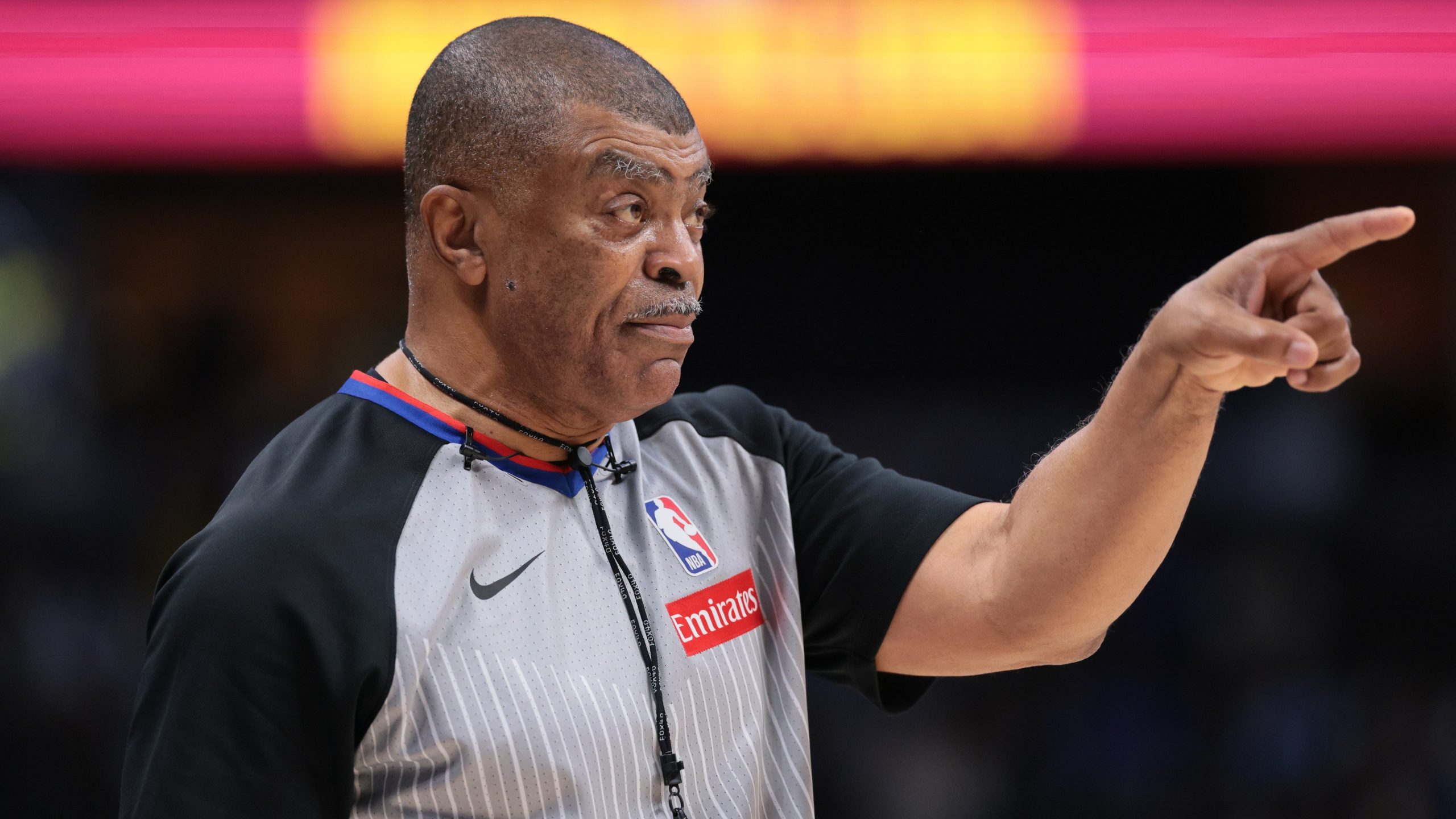
  • A Lesson from the Referees

    A Lesson from the Referees

    The strongest men’s and women’s university teams arrived for the MEFOB Final, the first championship played under the new competition format.

    A refereeing crew selected to match the level of the event also joined the two-day tournament.

    And then, during the exciting but still very much university-level games of the opening day, those who watched carefully — and understood what was happening — received a lesson.

    For me personally, it was a particularly thought-provoking one.

    It was a lesson in morality, respect and sporting etiquette.

    One day, in a sports pedagogy class, I will probably present these events objectively and allow everyone to decide for themselves which side they support.

    But at this moment, I cannot simply ignore what happened.

    Something about it continues to bother me.

    It raises a much broader question:

    What is this game really about, and where can we make mistakes that we later have to answer for to our own conscience?

    Our emotions and intuitions are never simple.

    They are influenced by prejudices, previous experiences and personal history.

    So I will describe what happened.

    This is, of course, my perspective.

    But I believe the problem itself is worth discussing honestly.

    What Happened?

    The incident occurred during the men’s game between DEAC and Szeged.

    The atmosphere was competitive but friendly.

    After the final whistle, the lead referee refused to shake the Debrecen coach’s hand because of a remark made toward one of his colleagues late in the game.

    We had described a missed call as:

    “Pathetic.”

    The remark referred to the fact that the official had failed to notice what had happened in the particular situation.

    The lead referee took offense.

    He also chose to stand alongside his colleague over what we believed to be an obvious mistake.

    He had every right to do so.

    But the situation became more interesting because during the game he repeatedly emphasized the difference between the level from which he came and the level at which we were playing.

    Apparently, some of the things that were called at our level would not necessarily be called where he normally officiated.

    For example, travelling violations might not always be interpreted in exactly the same way.

    Very well.

    Let that be the case.

    But then another question arises.

    If a coach believes that referees have acted unfairly toward his players, should he also refuse to close the game with the traditional handshake?

    Because that was the lesson being demonstrated to us.

    That was the example presented in the name of protecting the culture and dignity of referees.

    What Does the Handshake Mean?

    The post-game handshake is not supposed to mean:

    I agreed with every decision you made.

    It does not mean:

    You were perfect.

    And it certainly does not mean that coaches and referees suddenly share the same interpretation of everything that happened during the previous forty minutes.

    The handshake means that the game is over.

    It means that competition has ended and mutual respect remains.

    That is part of fair play.

    Coaches are expected to accept criticism.

    Players are expected to accept criticism.

    We are disciplined when our behavior crosses certain limits.

    Sometimes that discipline is formal.

    Sometimes the sport itself teaches us the lesson.

    And sometimes we simply have to look at ourselves critically if we genuinely want to improve.

    Referees should not be excluded from that principle.

    Respect Works Both Ways

    We are fortunate that many referees remember where they started.

    They do not become overwhelmed by their own authority.

    They respect the game with the same humility that coaches and players are expected to show.

    Some are even capable of self-criticism.

    That is important.

    We have also seen coaches who have refused to thank officials after games.

    We know these examples exist.

    Sometimes we have heard about them.

    Sometimes we have witnessed them ourselves.

    I do not consider that behavior acceptable.

    Perhaps referees are justified when they describe such coaches as disrespectful.

    But respect cannot function in only one direction.

    If we demand sporting behavior from coaches, we should also expect it from officials.

    If the handshake is part of the culture of the game, it should remain part of that culture even after disagreement, criticism or conflict.

    Otherwise, we are teaching exactly the opposite lesson.

    Authority Is Not the Same as Moral Superiority

    One of the dangers of sport is that authority can easily be confused with moral superiority.

    A referee has authority during a game.

    A coach has authority over a team.

    But neither role automatically makes the person occupying it morally superior to everyone else.

    The game belongs to all of us.

    Players.

    Coaches.

    Officials.

    Spectators.

    And everyone who gives time, energy and years of work to basketball.

    People operating at different levels of the sport may possess different experience, status or opportunities.

    But professional knowledge is also built through decades of work, mistakes, study and sacrifice.

    That deserves mutual respect as well.

    The Real Lesson

    Perhaps the official wanted to demonstrate how people at the highest level respond to an insult.

    If that was the lesson, I am afraid I interpreted it differently.

    In my view, refusing the final handshake did not solve the conflict.

    It simply created another one.

    And that is precisely why the situation is worth thinking about.

    What do we teach through our reactions?

    What values do we reinforce?

    Do we make the game better?

    Do we help the people involved learn from the situation?

    Or do we simply prove that we have the power to respond?

    There is a difference.

    Fair Play After the Final Whistle

    Basketball is full of emotional situations.

    Coaches make mistakes.

    Players make mistakes.

    Referees make mistakes.

    There will be arguments.

    There will be frustration.

    There will be moments when someone says something they should perhaps have expressed differently.

    But the final whistle gives everyone an opportunity to close the competition.

    The handshake is one of the simplest expressions of that.

    You do not have to agree.

    You do not have to like what happened.

    You do not even have to change your opinion.

    But you can still show respect.

    That, to me, is part of sport.

    And perhaps this particular refereeing lesson ultimately reminded me of something valuable:

    authority should never replace humility.

    I am glad that I still have a conscience that forces me to think about these things.

    And I am also glad that I still have the right to form an opinion about what I see.