Címke: closeout

  • Teaching Defensive Fundamentals Through 3-on-3

    Teaching Defensive Fundamentals Through 3-on-3

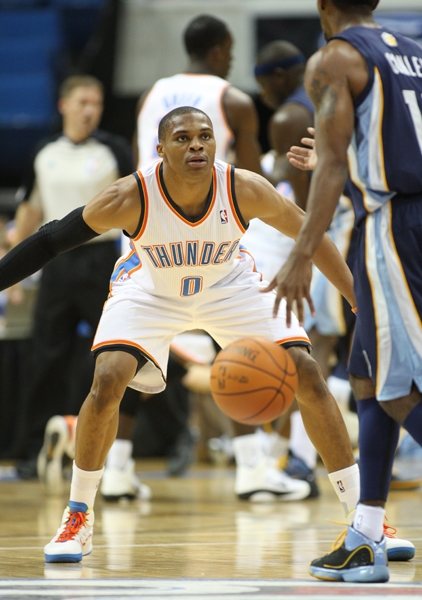
    Many successful basketball programs are built on strong defensive fundamentals.

    Players who understand and consistently execute these principles can provide a team with a foundation that remains valuable throughout an entire season.

    The following progression uses 3-on-3 situations to teach and reinforce basic defensive habits.

    The main objectives are:

    • defensive stance and positioning,
    • stopping penetration,
    • helping and recovering,
    • defending cuts,
    • defending screens,
    • protecting against weak-side cuts,
    • closing out on shooters,
    • and finishing the possession with a box-out.

    These concepts should be practiced repeatedly until they become part of the players’ defensive behavior.

    General Coaching Points

    Each sequence can be performed for approximately one minute, with players alternating between offense and defense.

    Throughout every drill, emphasize:

    • proper defensive stance,
    • communication,
    • aggressiveness,
    • and correct positioning.

    The details of each action may change, but these principles should remain constant.

    1. Defensive Stance and Positioning

    Place three offensive players on the perimeter:

    • one at the top,
    • one on each wing.

    Each offensive player has a defender.

    Start with the ball at the top.

    The offense passes the ball around the perimeter while remaining stationary.

    The defenders adjust their positions according to the movement of the ball.

    Emphasize the correct defensive stance in three situations:

    • guarding the ball,
    • playing in help position,
    • denying or pressuring the next pass.

    Defenders should react to the pass, not simply to ball fakes.

    The purpose of the drill is to teach players that defensive positioning constantly changes as the ball moves.

    2. Stop the Drive — Help and Recover

    The offense now attempts to penetrate through the gaps between defenders.

    The first objective is for the on-ball defender to contain the drive.

    If penetration occurs, an off-ball defender must help.

    Once the penetration has been stopped, the helper must recover quickly to the original assignment.

    The sequence becomes:

    contain → help → stop the drive → recover

    Players should understand that help defense does not replace individual defense.

    The first responsibility is still to stop the ball.

    3. Defend the Cut

    Pass the ball from the top to a wing.

    After passing, the offensive player cuts toward the basket.

    The defender of the passer must immediately adjust position in the direction of the ball and prevent the cutter from receiving an easy pass.

    Emphasize:

    • pressure on the ball,
    • movement into the passing lane,
    • seeing both ball and player,
    • and preventing a clean catch near the basket.

    Once the action is completed, rotate an offensive player back to the top and reverse the ball.

    4. Defend the Screen

    Pass the ball from the top to a wing.

    The passer then moves to set an off-ball screen for the opposite wing.

    The defender guarding the screener must move in the direction of the pass and create enough space for the teammate to navigate the screen.

    At the same time, the defender must remain aware that the screener may:

    • roll toward the ball,
    • slip the screen,
    • or become available after contact.

    The defender guarding the cutter must find a path around the screen and regain a functional defensive position.

    The exact screen-defense technique can vary according to the team’s system.

    The objective remains the same:

    do not allow the screen to create an uncontested scoring opportunity.

    5. Defend the Weak-Side Cut

    When an offensive player cuts from the weak side toward the basket, the help-side defender should position between the ball and the assigned player.

    The defender should make the cut difficult and influence the offensive player away from the basket.

    At the same time, there must be pressure on the ball.

    If the ball handler is allowed to see the entire floor comfortably, weak-side cuts become much more dangerous.

    As the weak-side player cuts toward the middle, the other offensive players rotate accordingly.

    The defense must adjust with them.

    6. Close Out and Box Out

    The final phase emphasizes finishing the possession.

    When the coach calls:

    “Shot!”

    the offensive player takes the shot.

    The defender guarding the shooter should also communicate:

    “Shot!”

    All three defenders must immediately find their players, make contact and box out.

    The defensive sequence is not complete when the shot leaves the hand.

    It is complete when the defense secures possession.

    After the rebound, the player makes an outlet pass to the coach and the repetition ends.

    Why 3-on-3 Works

    Three-on-three basketball creates an excellent teaching environment because every player is involved.

    There is enough space for players to recognize:

    • positioning,
    • penetration,
    • help,
    • recovery,
    • cuts,
    • screens,
    • and rebounding responsibilities.

    At the same time, the situation remains simple enough for the coach to stop the action and make corrections.

    Progressions and Variations

    These drills can easily be modified.

    For example:

    • place one offensive player in the low post and work on post defense,
    • allow direct wing-to-wing passes,
    • introduce more aggressive denial,
    • change the type of screen,
    • allow live penetration,
    • or add different offensive movements.

    The number of possible variations is almost unlimited.

    The important point is that every variation should reinforce the same defensive principles.

    Build Habits Before Building Systems

    The value of 3-on-3 defense is not the drill itself.

    The value is the opportunity to teach habits.

    Players learn to:

    • move when the ball moves,
    • communicate,
    • protect the basket,
    • help teammates,
    • recover,
    • defend cuts,
    • negotiate screens,
    • close out,
    • and finish possessions with rebounds.

    Once these habits become automatic in 3-on-3, they can be transferred into 4-on-4 and eventually full 5-on-5 team defense.

    Strong team defense begins with simple situations performed correctly again and again.
  • 30 Minutes of Defense

    30 Minutes of Defense

    Here is a practical framework for building a defensive segment of practice.

    Before selecting drills, the coach must first answer a more important question:

    What kind of defense do we want to play?

    The defensive style of the team must be clearly defined before it can be trained effectively.

    Define Your Defensive Identity

    Before designing the practice, answer the following questions.

    What Is the Main Objective of the Defense?

    Do we want to:

    • force turnovers?
    • protect the paint?
    • influence the ball toward the sideline?
    • influence the ball toward the middle?

    There is no meaningful defensive drill without first understanding what the defense is trying to accomplish.

    How Do We Transition Back on Defense?

    Decide:

    • how many players sprint back,
    • which players are responsible for transition defense,
    • and what their priorities are.

    Transition defense must be organized rather than left to chance.

    How Do We Defend the Post?

    Decide how the team will guard an interior player.

    Possible approaches include:

    • fronting,
    • playing on the high side,
    • playing behind,
    • changing the position according to the location of the ball,
    • or trapping the post.

    Whatever method is selected, the entire team must understand how to react when the post receives the ball.

    How Do We Defend the Ball Handler?

    Determine:

    • whether the ball is influenced in a particular direction,
    • whether the defender sends the ball toward the sideline or middle,
    • whether the defender plays square,
    • and how high on the floor pressure begins.

    The on-ball defender must know exactly what the team expects.

    How Do We Defend Away from the Ball?

    The off-ball defense may include:

    • denial,
    • help positioning,
    • and help-and-recover responsibilities.

    The player without the ball is still involved in defending the ball.

    How Do We Defend Screens?

    Decide:

    • whether the defense switches,
    • when switching is allowed,
    • and when defenders remain with their original assignments.

    These decisions must be established before the team can execute them consistently.

    Defensive Practice Priorities

    Once the defensive philosophy has been defined, practice can be built around the following areas.

    1. Pressure the Ball

    Do not allow the ball handler to play comfortably.

    The defender should influence what the offensive player can do rather than simply reacting.

    2. Deny the Pass

    Disrupt the offense.

    Prevent or make difficult:

    • passes,
    • cuts,
    • catches,
    • and other offensive actions.

    When playing denial defense, the objective is simple:

    Do not allow your player to receive the ball easily.

    When contesting rather than fully denying, force the offensive player to receive the ball farther away from the three-point line or from the preferred attacking area.

    3. Defend the Post

    The defense must have a clear plan for post play.

    Possible approaches include:

    • fronting,
    • playing high side,
    • adjusting according to whether the ball is above or below the free-throw line,
    • playing behind,
    • or trapping with different defenders.

    The specific choice matters less than the fact that the entire team reacts together.

    If the post catches the ball, the defense should know exactly what happens next.

    When possible, force the interior player toward a more difficult shot, such as a fadeaway.

    4. Help and Recover

    A defender does not only guard an individual opponent.

    Every defender also helps guard the ball.

    Because containing the ball is one of the most difficult defensive responsibilities, off-ball defenders must be prepared to help and then recover to their own assignments.

    5. Box Out

    A defensive possession is not finished until the defense secures the rebound.

    Force a difficult shot.

    Then box out.

    Then rebound.

    Then run.

    Practice Competitively

    Competitive drills help maintain defensive intensity.

    Instead of allowing the drill to continue without consequence, establish clear defensive objectives.

    For example:

    • require a weak-side box-out,
    • require two consecutive defensive rebounds,
    • or demand a certain number of defensive stops before the defense can leave the floor.

    The defensive team should have something to earn.

    Defensive Scoring

    Another method is to create a scoring system.

    For example:

    • 3 points for forcing an offensive foul,
    • 2 points for a defensive rebound or steal,
    • 1 point for a deflection.

    A competitive scoring system rewards the defensive behaviors the coach wants to develop.

    Part 1 — Defensive Fundamentals

    Use small-sided drills to teach individual and small-group defensive fundamentals.

    Possible formats include:

    • 1-on-1,
    • 2-on-2,
    • 3-on-3.

    The original plan suggests four short drills of approximately three minutes each.

    1-on-1: Defending the Ball

    Objective

    Teach the defender to:

    • contain the ball handler,
    • influence the drive,
    • contest the shot,
    • and finish the possession with a box-out.

    1-on-1: Defending the Post

    Objectives

    Teach the defender to:

    • defend the post position,
    • deny or disrupt the entry pass,
    • maintain the selected defensive position,
    • and force a difficult shot if the ball is received.

    1-on-1: Defending Away from the Ball

    Practice off-ball defense from different locations:

    • on the wing,
    • on the ball side,
    • on the weak side.

    The coach may take the shot so the defender must finish the possession by boxing out.

    Combination Drill

    Combine several defensive responsibilities in one sequence.

    Possible teaching points include:

    • sprinting into help position,
    • ball-side positioning,
    • defending cuts,
    • preventing backdoor cuts,
    • forcing catches farther away from the basket,
    • and boxing out.

    2-on-2: Sprint to Help

    The objective is to teach defensive positioning according to the movement of the ball.

    Players should practice:

    • helping on a baseline drive,
    • recovering to their own player,
    • denying a ball-side cutter,
    • and boxing out.

    A possible progression is:

    1. help position,
    2. baseline penetration,
    3. weak-side cut.

    3-on-3: Closeout and Box-Out

    Objective

    Teach defenders to finish every defensive possession.

    Emphasize:

    • closeouts,
    • containing penetration,
    • contesting shots,
    • and boxing out in every situation.

    3-on-3: Defending Screens

    Objective

    Teach the defense to:

    • disrupt catches,
    • defend screening actions,
    • defend cuts after screens,
    • and execute the team’s chosen screen-defense rules.

    4-on-3: Communication, Help and Recovery

    Playing at a temporary numerical disadvantage forces defenders to communicate and cooperate.

    Emphasize:

    • communication,
    • closeouts,
    • help positioning,
    • recovery,
    • and defending penetration.

    This type of drill teaches players that team defense is based on collective movement rather than isolated individual matchups.

    Part 2 — Shell Drill

    The Shell Drill can be used to develop team defensive positioning.

    The main focus is:

    • ball-side positioning,
    • help-side positioning,
    • movement with the ball,
    • communication,
    • and collective responsibility.

    A possible progression includes:

    1. Sprint to help.
    2. Defend penetration.
    3. Defend cuts.
    4. Defend guard-to-wing screens.
    5. Defend guard-to-guard screens.
    6. Defend off-ball screens.
    7. Allow only the post player to operate inside.
    8. Defend every offensive intention and anticipate the next action.

    The final goal is not simply reacting.

    The defense should begin to think one action ahead.

    Part 3 — Earn the Right to Play Offense

    A powerful competitive method is to require the defensive team to achieve a specific objective before it can switch to offense.

    Possible conditions include:

    • three steals,
    • three defensive rebounds,
    • three offensive fouls forced,
    • three consecutive defensive stops,
    • or two consecutive stops.

    The exact condition can change according to the emphasis of the practice.

    The principle remains the same:

    defense must earn possession.

    Build Defense from the Inside Out

    A strong defensive practice should not be a random collection of drills.

    It should progress logically:

    individual defense → small-group defense → team defense → competitive execution

    First define the defensive philosophy.

    Then teach the individual responsibilities.

    Next connect players through help, recovery and communication.

    Finally, place those principles into competitive situations.

    Thirty focused minutes of defense can be extremely valuable when every drill reinforces the same defensive identity.

  • Help and Switch: Defending the Three-Point Shot

    Help and Switch: Defending the Three-Point Shot

    Basketball is a constant tactical duel.

    Whenever the offense develops a new weapon, the defense must understand it and find an appropriate response.

    The same process then begins again in the opposite direction.

    One of the offensive developments that changed this relationship was the three-point shot.

    As teams learned to use penetration followed by a kick-out pass to the perimeter, defenses had to find new ways to protect both the basket and the three-point line.

    The Problem with Drive-and-Kick Offense

    A common offensive action is simple:

    penetrate toward the basket, force defensive help, then pass the ball back outside to an open three-point shooter.

    The traditional defensive response is help and recover.

    A defender leaves his own player temporarily to stop penetration, then attempts to recover back to the original assignment.

    This can work.

    But it creates an important problem.

    If the offense and defense execute at approximately the same level, the offense often has the advantage.

    The help defender must travel toward the basket.

    Then, after the kick-out pass, that same defender must cover a much greater distance to return to the perimeter.

    That recovery can be too long.

    Since the Introduction of the Three-Point Shot

    The three-point line increased the distance a defender must cover when recovering to an outside shooter.

    Before the three-point shot, imagine a player making 40% of long two-point attempts.

    That would produce:

    0.40 × 2 = 0.80 points per attempt

    A shot from the same distance worth three points produces:

    0.40 × 3 = 1.20 points per attempt

    The same shooting percentage therefore creates a much more valuable offensive result.

    That changes the defensive calculation.

    Allowing a clean kick-out shot to a strong three-point shooter can be extremely costly.

    Help and Switch

    One possible solution is Help and Switch.

    The principle is simple.

    When a defender helps stop penetration, that defender stays with the ball handler instead of trying to recover immediately to the original assignment.

    The defender who was beaten on the drive then rotates toward the basket and picks up the offensive player who was left open by the helper.

    In other words:

    help does not automatically mean recover.

    Sometimes help should lead directly into a switch.

    How the Rotation Works

    Imagine Player 1 drives toward the basket.

    Defender A is beaten.

    Defender B leaves Player 2 and helps stop Player 1.

    Under a traditional help-and-recover system, B would then attempt to return to Player 2.

    Under Help and Switch, B remains on Player 1.

    Defender A, instead of chasing the original matchup, rotates toward the open Player 2.

    This can shorten the defensive recovery distance and provide a better chance of contesting the perimeter shot.

    Help and Double Switch

    There are situations in which even the first switch may not be fast enough.

    Suppose:

    • Player 1 is an excellent passer,
    • Player 2 is a dangerous quick-release shooter,
    • and the offense can immediately exploit the first defensive rotation.

    In this case, the defense can use a Help and Double Switch.

    A third defender rotates outward toward the dangerous shooter as soon as the pass leaves the ball handler’s hands.

    The remaining defenders then reorganize the other matchups behind the play.

    This option may be especially useful when the coaching staff has identified a specific perimeter player as a major three-point threat.

    The System Looks Simple — Execution Is Not

    Help and Switch may appear easier than Help and Recover.

    Conceptually, it is.

    Executing it correctly is much more difficult.

    Several rules must be followed.

    Rule 1: Allow as Few Penetrations as Possible

    Help and Switch is a solution to penetration.

    It should not become an excuse for allowing penetration.

    If the on-ball defender is beaten repeatedly, the defense will eventually break down regardless of how sophisticated the rotations are.

    The first responsibility remains:

    contain the ball.

    Rule 2: Communicate

    Communication is essential.

    When the on-ball defender realizes help is needed, the defender must communicate.

    When the helper commits to the ball and a switch occurs, that information must also be communicated loudly and clearly.

    If a third defender initiates the Double Switch, the same rule applies.

    Every player involved must know that the defensive assignments have changed.

    Silent switching produces confusion.

    Rule 3: Put Immediate Pressure on the Ball

    Once the helper takes over the ball handler, there must be immediate pressure on the ball.

    The offensive player should not be allowed to:

    • shoot comfortably,
    • make an easy pass,
    • or calmly read the next defensive rotation.

    The purpose of the help is not merely to stand in front of the penetration.

    It is to disrupt the offense.

    Rule 4: Sprint to the Open Player — but Under Control

    The defender who has been helped should immediately rotate toward the newly open offensive player.

    This must be done quickly.

    But the defender should not simply sprint blindly toward the perimeter.

    The recovery angle matters.

    The defender should protect against the most dangerous immediate action.

    Protect the Basket First

    The recovering defender should not run directly toward the outside shooter if that creates an open driving lane to the basket.

    Instead, the defender should take a path that protects the paint and intersects the offensive player’s potential drive.

    This is an important principle.

    An uncontested three-point shot is dangerous.

    But an uncontested layup is even more damaging.

    The defense must therefore close the space while still protecting the basket.

    Know the Opponent

    The Help and Switch system becomes more effective when the defense knows the tendencies of the offense.

    Before the game, coaches should identify:

    • the best penetrators,
    • the best passers,
    • the quickest-release shooters,
    • the most dangerous three-point shooters,
    • and the players the defense is willing to help away from.

    Not every offensive player represents the same threat.

    The rotation can therefore be adjusted according to personnel.

    Defense Is a Chain Reaction

    Drive-and-kick offense forces the defense to make consecutive decisions.

    The first defender must contain.

    The helper must decide when to commit.

    The beaten defender must rotate.

    A third defender may need to switch again.

    All of this must happen in a very short period of time.

    That is why three-point defense is not simply the responsibility of the defender guarding the shooter.

    It is a team defensive problem.

    The quality of the closeout often depends on what happened several actions earlier.

    Help, Switch and Recover with Purpose

    The introduction of the three-point shot changed the geometry of basketball.

    Defenders now have greater distances to cover.

    Offenses can punish late help more severely.

    For that reason, the traditional instruction to simply “help and recover” may not always be enough.

    Sometimes the better solution is:

    help and switch.

    Against especially dangerous shooters, the answer may be:

    help and double switch.

    Whatever system is used, the principles remain the same:

    • contain penetration,
    • communicate,
    • pressure the ball,
    • rotate quickly,
    • protect the basket,
    • and know which shooters cannot be left open.

    Good defense is not merely reacting to the offense.

    It is understanding what the offense is trying to create — and arriving at the next solution first.

  • Help Defense

    Help Defense

    How to Improve Your Team’s Help Defense

    Everything starts with proper footwork.

    A defender must react quickly and correctly. The goal is to attack the path of the ball while staying in a low stance with bent knees, positioned about one step away from the passing lane.

    Take one strong step toward the ball handler.

    If the defender is on the weak side, two or three passes away from the ball, that generally means being positioned two or three large steps away from the offensive player being guarded.

    Proper technique also means keeping the foot closest to the ball slightly forward, with the ball-side shoulder and arm in an active position. This can make the passer less comfortable and more hesitant.

    Never turn both shoulders completely toward the help position.

    If you do, it becomes much more difficult to recover to your own player.

    While helping, always remember that you still need to be able to recover.

    Develop the mindset:

    “I will help, but I will never give up my own player.”

    This is one of the most important principles of good team defense.

    Otherwise, the defense can quickly find itself in a 5-on-4 disadvantage — which is exactly what dribble penetration is trying to create.

    Help across, not upward.

    As Dick DeVenzio emphasized, proper help defense requires intelligent positioning. However, if you are guarding a smart offensive player, he may immediately relocate and move behind you the moment you leave to help.

    Use your head, not your hands, to stop penetration.

    If you can get your body between the drive and the basket early enough, you can force the ball handler to stop or pass.

    At the same time, this keeps you in a much better position to recover to your own player.