Címke: work ethic

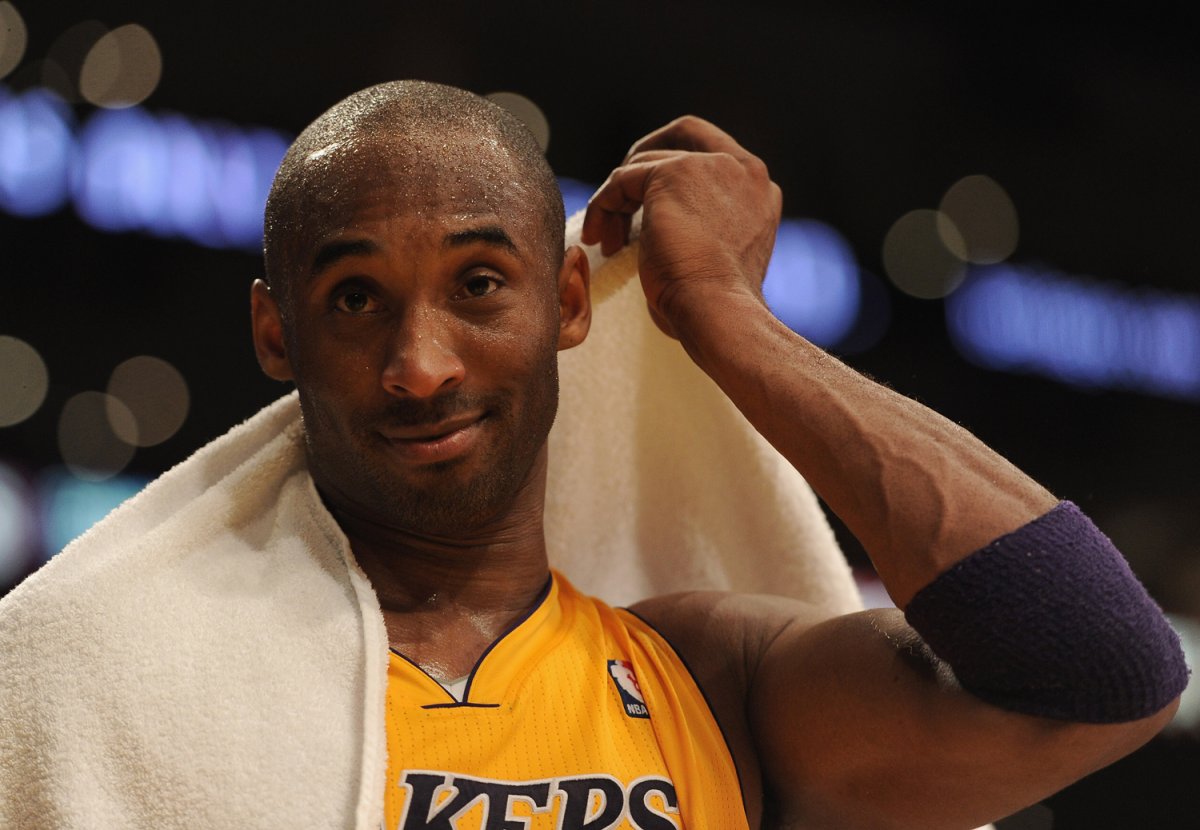
  • A World Without Kobe

    A World Without Kobe

    Budapest, January 28, 2020

    For three days, I have been quiet.

    I have been trying to accept something I know will not be easy to accept — something that makes me feel as if I will never be entirely whole again.

    A part of me had already died when Kobe stopped playing and we knew there was no way back.

    For our family, basketball has never been simply a pastime.

    It has become one of the central themes of our everyday lives.

    Because of that, we do not have to search for the people and things that complete our lives. Somehow, we are naturally drawn toward them.

    Toward what makes life more beautiful.

    Toward what makes us better.

    We found that in the game — and in the sacrifice and work required to pursue it.

    From Jordan to Kobe

    Michael Jordan developed as a player in a way that established a standard for all time.

    Eventually, that era had to end.

    That is the natural order of things.

    But fortunately, Kobe was there.

    In many ways, he continued from exactly where the very best had stopped.

    With Kobe, we were able to experience that same process of development again.

    And as technology advanced, he somehow became increasingly close to us.

    Without exaggeration, Kobe gradually became part of our everyday lives almost like a member of the family.

    At practice, we would often mention both Jordan and Kobe.

    Certain movements were measured against them.

    Certain standards were explained through them.

    The benchmark they established for basketball players around the world became part of our own thinking as well.

    They are always somewhere in our minds.

    Perfection.

    Humility.

    The desire to win.

    Persistence.

    Passion.

    These values made what they represented impossible to ignore.

    Only One Day Earlier

    On January 25, we watched Jordan’s press conference in Paris live.

    Then we watched Kobe embrace LeBron after LeBron had passed him on the all-time scoring list.

    A thought crossed my mind:

    how fortunate I was to have seen them play.

    To have experienced their greatness.

    A greatness that still permeates basketball and the lives of athletes around the world.

    On Friday, before leaving home, I walked over to the bookshelf and pulled out The Mamba Mentality for a moment.

    I even ran my hand across the cover.

    It is a beautiful edition, slightly embossed so that you can almost feel the book rather than simply read it.

    Then I checked the latest news on my phone.

    And of course, among the first things I saw were Kobe and several new videos and posts about him.

    Two days later, while travelling, we received the incomprehensible news.

    At first, we simply hoped it was not true.

    Then confirmation began arriving minute by minute.

    And with every new confirmation came more tears.

    Even now, I cannot stop them.

    That is what his absence means.

    Pain.

    As if someone from the family had gone.

    More Than a Player

    I know we had not seen him on the court for some time.

    But he had created a world beyond playing basketball — a world that continued to reinforce what we ourselves believe in and live for.

    We all learn.

    We mature.

    We search for ways to contribute something meaningful to our existence.

    Perhaps nowhere more than in sport do we find individuals who can provide examples that people genuinely try to follow.

    There are athletes we support.

    There are others with whom we identify.

    And there are some to whom, in a figurative sense, we feel that we somehow belong.

    Not everyone will completely understand what Kobe represented.

    Perhaps you have to try walking some distance along the path he showed us before you can truly understand it.

    We cannot see everything about another person’s life.

    And even if we could, perhaps we would not find perfection.

    But what Kobe represented week after week was not hypocrisy or empty talk.

    It was a direction.

    Something that has to be understood as a whole.

    Away from the Court

    That is why it was such a gift to see that the person we watched on the court also existed beyond it.

    A father who adored his children.

    Perhaps it could not have been any other way.

    That was who he was.

    Sport had taught him how to love.

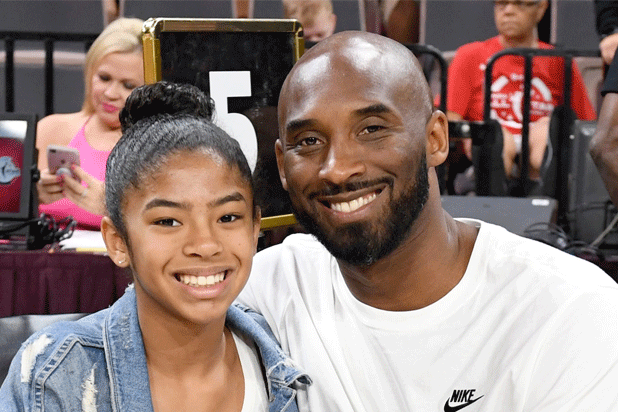
    And then there was that little girl who had been beside him so often during those final months.

    She had almost become familiar to us too.

    There are no words for the pain of losing her.

    I almost feel it myself.

    For two days, I have been watching the videos and feeling that something inside me has broken because of her as well.

    The Void

    We have already lost many people from the basketball community.

    For many of them, we have said that they left too soon.

    Unexpectedly.

    Inexplicably.

    And those of us who remain are left with our questions and our feelings.

    The loss of Kobe leaves a global emptiness.

    Everyone who knew what he represented will carry some trace of it for the rest of their lives.

    At the same time, that loss connects us.

    He helped create a shared language.

    A language with words that will continue to represent permanence.

    And with signs, gestures and movements that will continue to mean the same things.

    It feels good to belong to the people who understand what I mean.

    What Remains

    I hope the values that became part of our shared knowledge through the Kobe legend will now show even more young people a direction.

    I am deeply grateful that Kobe meant the same thing to my children and to the people around me.

    His death has created a new meaning for us as well.

    From now on, we will finish every practice by shouting his name.

    Because that name contains almost everything for which we play basketball.

    And because:

    “…those who are remembered through their deeds become immortal.”

    That is not the only thing we can do with the legacy he left behind.

    But perhaps even this small ritual can help us continue something of what Kobe Bryant represented to the world.

    A world in which we now have to learn to live without him.

    And slowly, very slowly, the tears will begin to dry.

    Dr. Ágoston Nagy
    Budapest, January 28, 2020

  • Five Keys to Maximizing Your Talent

    Five Keys to Maximizing Your Talent

    Posted on January 13, 2014

    Most of us have an inner desire to become excellent at something — to become special.

    The question is:

    How can we maximize our talent?

    How can we make the best possible use of our abilities both on and off the court?

    We do not all begin from the same starting point.

    Some people are naturally given more physical or athletic tools than others. LeBron James, for example, was born with physical gifts far beyond those of the average person.

    But maximizing our abilities has very little to do with where our talent begins.

    There are countless stories of players who were considered exceptional talents but never reached a meaningful level because of:

    • poor work habits,
    • lack of discipline,
    • attitude,
    • or personal choices.

    Daniel Coyle, author of The Talent Code, summarizes the idea well:

    Talent is shaped less by what we are born with than by what we repeatedly do.

    The following five principles can help players move closer to the limits of their potential.

    1. Great Players Know Their Why

    Great players have a purpose.

    They have a mission.

    They understand who they are and what they want to achieve.

    They know what will be required to turn their dreams into reality.

    Most importantly, they understand why they play.

    They know why they get out of bed in the morning.

    Players who live and work with a clear sense of purpose are less likely to give up after a few failures because they understand the larger picture.

    Purpose gives direction.

    It becomes a compass for the journey.

    And when purpose creates passion, it becomes easier to remain committed to the dream.

    Great players understand their why.

    2. Great Players Have an Action Plan

    Once you understand why you want something, the next question is:

    How are you going to achieve it?

    How will you reach your goals?

    How will you move from good to better?

    Great players understand that what brought them to their current level may not be enough to take them to the next one.

    They need a detailed plan.

    That plan should address both:

    • strengths that can become even more effective,
    • and weaknesses that may limit future development.

    Major success rarely happens without preparation.

    Just as a team needs a game plan, an athlete needs a development plan.

    Great players have clearly defined goals and an action plan for achieving them.

    And ideally, they put those goals in writing.

    3. Great Players Turn Everything into a Challenge

    When it comes to work ethic and competitive mentality, Kevin Garnett provides a powerful example.

    Despite already building an extraordinary career, Garnett was known for approaching everyday practice with exceptional intensity.

    He competed constantly.

    Whether it was:

    • a shooting competition before practice,
    • a regular training session,
    • or Game 7 of the NBA Finals,

    the objective was the same:

    compete.

    Doc Rivers described how Garnett’s intensity did not appear only during practice.

    It shaped his entire day.

    On the court and away from it, his attitude influenced the atmosphere of the team.

    Great players find ways to compete.

    They turn ordinary situations into challenges.

    4. Great Players Believe in Themselves

    This may be the most important of the five principles.

    Great players expect a high standard from themselves because they have worked for the right to expect it.

    Kobe Bryant consistently represented this mentality.

    The best players believe they can succeed regardless of who is standing in front of them.

    They do not begin competition by wondering whether the opponent might be better.

    Their preparation has created confidence.

    But self-belief is not simply arrogance or positive thinking.

    It is supported by mental discipline.

    Great players understand that they must control:

    • their actions,
    • their reactions,
    • their habits,
    • and their behaviour.

    Confidence becomes powerful when it is built on preparation.

    5. Great Players Are Lifelong Learners

    Great players understand that they cannot reach the limits of their potential completely alone.

    They need:

    • teammates,
    • coaches,
    • mentors,
    • and people willing to challenge them.

    One of the lessons associated with Doc Rivers expresses this idea well:

    If you want to go fast, go alone. If you want to go far, go together.

    Great players understand the value of becoming wiser.

    They listen to the experience of:

    • coaches,
    • mentors,
    • teammates,
    • and other people who can help guide them.

    They continue learning.

    They remain curious.

    They understand that development never truly finishes.

    At the same time, nobody else can do the learning for them.

    The responsibility remains their own.

    Maximizing Talent

    Natural ability matters.

    But ability alone does not determine how far a player will go.

    Potential must be developed.

    That requires:

    1. knowing your purpose,
    2. creating a plan,
    3. competing every day,
    4. believing in yourself,
    5. and continuing to learn.

    Talent may determine where the journey begins.

    What you do with it determines much more.


    Original source: Alan Stein, Hardwood Hustle Blog
    Original Basket Clinic publication: January 13, 2014

  • Kobe Bryant and Work Ethic

    Kobe Bryant and Work Ethic

    Kobe Bryant and Work Ethic

    Posted on December 19, 2013

    The following Kobe Bryant story was originally shared by a member of the staff working with the United States national team during the London Olympics. It was translated and republished on Basket Clinic in 2013.

    It was around 3:30 in the morning.

    I was lying in bed, slowly drifting off to sleep, when my phone rang.

    I answered, slightly annoyed.

    “Hello, Rob. I hope I’m not disturbing you?”

    “What’s up, Kobe?”

    “I was just wondering if you could help me with a workout. That’s all.”

    I looked at the clock.

    It was 4:15 a.m.

    “Sure. Meet me at the gym.”

    It took me about twenty minutes to get dressed, put on my shoes and leave the hotel.

    By the time I arrived and opened the main gym, Kobe was already there.

    Alone.

    He was soaked in sweat, as if he had just stepped out of a swimming pool.

    It was not even five o’clock in the morning.

    The Workout

    We spent approximately the next 75 minutes working through conditioning exercises.

    After that, we went to the weight room, where Kobe completed another 45-minute strength workout.

    Then we said goodbye.

    He went back onto the court to shoot.

    I returned to the hotel and collapsed.

    Later That Morning

    I had to be back at the gym by 11 a.m.

    I woke up tired and exhausted, exactly as you would expect after so little sleep.

    Thanks, Kobe.

    I grabbed something to eat and headed back to the gym.

    I remember what happened next very clearly.

    Every member of the national team was there.

    The atmosphere was great.

    LeBron was talking with Carmelo.

    Coach K was explaining something to Kevin Durant.

    And on the other side of the court was Kobe.

    Alone.

    Still shooting.

    I walked over and patted him on the back.

    “Good workout this morning.”

    “What?”

    “The conditioning session,” I said.

    “Oh. Thank you. I really appreciate it, Rob.”

    “So when did you finish?”

    “Finish what?” Kobe asked.

    “Your shooting. When did you leave?”

    “Oh, that. Just now.”

    He had wanted to make 800 shots.

    And he had only just finished.

    What the Story Represents

    It is easy for players to talk about wanting to improve.

    It is easy to tell other people how serious you are.

    It is easy to show everyone how hard you supposedly work.

    Actually doing the work is different.

    Kobe Bryant’s work ethic helps explain why he became one of the defining players of his generation.

    This story is not really about waking up at four o’clock in the morning.

    It is about commitment.

    It is about continuing after most people would already consider the work finished.

    It is about setting a standard for yourself that does not depend on anybody watching.

    For basketball players, that may be the most important lesson.

    Before telling the world how hard you are working, ask yourself:

    How much are you actually doing to become better?

    Sometimes the answer is worth more than anything you could post about yourself.


    Original Basket Clinic publication: December 19, 2013
    Original format: translated quotation/story
    Hungarian translation: Dr. Ágoston Nagy

    Original sources listed with the 2013 article:
    Reddit / NBA discussion featuring the story
    Kobe Bryant’s Twitter profile

  • Before the First Practice

    Before the First Practice

    For Players Who Want to Become Excellent

    1. Keep a Training Journal

    Record every important event, experience and piece of information related to your development.

    2. Rules of Basketball Practice

    • Be on time. The team will not wait for you.
    • If you have to miss a practice for any reason, let your coach know as early as possible.
    • When you hear the whistle, stop immediately and give the coach your full attention.
    • Once you step onto the court, you are expected to work at 100 percent. We can only become successful if we perform at a high level. Work hard.
    • Do not play dirty or unnecessarily rough. It is dangerous and damages team unity.
    • There is no place for offensive language at practice. An educated person should be able to express themselves clearly without it.
    • Do not be careless or lazy.

    3. Take Responsibility for Your Equipment

    Your equipment belongs to you, and you are responsible for it.

    How well it is maintained depends on how seriously you take care of it.

    4. Our Goal

    Our goal is to prepare ourselves mentally, physically and technically, both individually and as a team, so that every day we are capable of giving the best performance we can on the basketball court.

    5. Our Philosophy

    The essence of sport is simple:

    Give everything you have.

    There is nothing revolutionary about this idea.

    A basketball player should always be a Happy Warrior — someone who accepts challenges with energy, determination and a positive mindset.

    This philosophy is about the way we respond to difficult situations during games.

    Our Motto

    “Let’s play basketball to the very best of our ability. Let’s give everything we have, both individually and as a team. If we do that, the result will take care of itself, and we can be proud of our work regardless of the final score.”

    Henry Ford once said:

    “Coming together is a beginning; keeping together is progress; working together is success.”