Lessons from the Hungarian U18 Men’s National Team at the European Championship
Ágoston Nagy
University of Debrecen, Héraklész Coach
Donát Barna
Bárdos Lajos Primary School, Basketball Coach
Abstract
Analyzing national team programs can make an important contribution to both the theoretical and practical development of youth basketball.
Coaches and professionals often follow different philosophies and professional approaches. For this reason, a comprehensive evaluation of international youth competitions can help identify the everyday challenges of player and team development and provide direction for future work.
This study examines the experiences of the Hungarian U18 men’s national basketball team at the European Championship, focusing on preparation, tactical planning, performance evaluation, psychological assessment and emerging trends in international youth basketball.
The Importance of the U18 Age Group
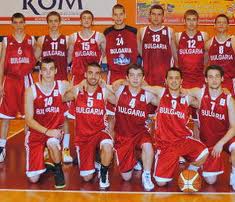
The Hungarian national team composed of players born in 1993 and 1994 competed at the 2011 European Championship in Varna and finished eighth.
When examining U18 national team rosters from previous years, it became clear that this age group plays an extremely important role in long-term player development.
A significant proportion of the athletes who represented their countries at this level later became important players in senior basketball.
Learning Through Preparation Games
We had six weeks to teach and develop the offensive and defensive concepts of the Hungarian team.
Based on eight preparation games, we aimed to identify individualized tactical responsibilities for the players. These responsibilities served as operational objectives for both the coaching staff and the athletes.
The central idea was to prepare the team to respond effectively to the expected playing styles of our European Championship opponents.
A New Approach to Positional Evaluation
We evaluated the effectiveness of our concepts and their execution through game analysis.
Preparation-game statistics were compared with the accumulated statistics from the European Championship.
Video analysis allowed us to determine how successfully the position-specific plans had been implemented.
An important element of this approach was that players performing similar positional roles were evaluated collectively rather than only as individuals.
Psychological Assessment
We also wanted to determine whether relationships existed between the results of psychological evaluations and actual team performance.
We were particularly interested in:
- the concentration abilities of individual players and the team,
- the point at which attention began to decline,
- the identification of team leaders,
- the level of team cohesion,
- the strongest possible starting lineup,
- and which five-player combination could perform most effectively during difficult periods of a game.
The matches supported several of the findings obtained from the earlier psychological assessments.
Keywords
Forward-thinking coach, supervision, decision-making, evaluation, basketball trends
Introduction
Looking Ahead
A coach’s responsibility is to make the sports organization or team under their direction successful and to introduce the measures and rules necessary to improve the effectiveness of the entire program.
In this sense, coaches — and especially national team coaches — also function as sports managers whose responsibilities involve thinking ahead.
As Albert-László Barabási argued, the future can, to some extent, be predicted.
This is what we prepare for during practices, games and longer-term developmental programs.
We therefore developed a system that allowed us to plan ahead while simultaneously evaluating the team, the individual players and ourselves.
The two most important elements of this system were goal orientation and current performance.
Among other factors, the system defined:
- individual responsibilities,
- methods of evaluation,
- the success of cooperation,
- mental factors,
- statistical indicators,
- learning ability,
- substitution strategies,
- positional possibilities,
- tactical knowledge,
- technical ability,
- and the required physical condition.
Effective anticipation relies heavily on successful heuristic decisions, and such decisions require information.
That means constant learning.
The resulting need for knowledge prevents coaches and sports managers from relying entirely on fixed assumptions.
Basketball constantly changes.
For this reason, coaches must continually ask the fundamental questions described by Rudyard Kipling and later emphasized in a basketball context by Tex Winter:
I keep six honest serving men
(They taught me all I knew);
Their names are What and Why and When
And How and Where and Who.
In evaluating coaching performance, competitiveness is one of the most important considerations.
However, coaches cannot always follow familiar learning algorithms step by step.
Innovation is necessary, and one of its major purposes is to gain time.
This is where both selection and supervision become important.
Supervision, in this context, represents a complex learning process aimed at developing competence, improving cooperation and increasing effectiveness.
Within the national team program, we followed a characteristic planning algorithm that we called the Master Program.
Trends in Basketball
We considered it important to examine the broader professional and management trends in basketball that may influence the future direction of the sport.
Coaches work in a constantly changing environment. They must continuously adjust their teams and programs to remain competitive while also keeping long-term development in mind.
One noticeable trend at the European Championship was that teams generally used all 12 players.
Most teams included athletes who were already playing for major European clubs, while some were also being monitored through NBA youth development programs.
Teams also regularly included younger players.
In other words, national teams were not composed exclusively of one birth year. Younger players were deliberately integrated because they could later become the core of the next generation.
This represents an important element of talent development.
Successful basketball nations also appeared to rely on long-term national team programs.
Coaching staffs often remained together for extended periods.
Rather than thinking in three- to five-year cycles, some programs effectively connected 10–15 years of development.
Their objective was not simply to reach a certain level, but to remain there.
This approach differed fundamentally from the shorter-term three-year perspective that was more common in our environment.
Several professional trends also challenged common assumptions.
Teams used zone defense extensively. Contrary to popular belief, man-to-man defense did not dominate every situation.
The use of the so-called foul for profit — an early tactical foul intended to prevent a more dangerous scoring opportunity — was not universally preferred throughout entire games.
The most common offensive sequence appeared to prioritize:
fast break → motion offense → controlled offense → isolation
rather than:
fast break → controlled offense → motion offense → isolation
A coach’s offensive and defensive concepts are ultimately products of innovation.
They reflect the philosophy and perspective of the coach or sports manager and therefore differentiate one system from another.
The effectiveness of these concepts depends on how well the players can execute them.
A concept becomes increasingly valuable and competitive when it does not merely reproduce traditional solutions but is also willing to take calculated risks and move beyond familiar patterns.
To make effective heuristic decisions, a coach must use a wide range of abilities.
This applies not only during practices and games but also during planning and implementation.
A heuristic decision is one based largely on previous experience and the ability to recognize useful patterns.
Supervision, meanwhile, is a learning process aimed at improving competence, cooperation and effectiveness.
Such a program can be implemented in many different ways.
Scientific Evaluation
Beyond the usual post-tournament evaluation, we wanted to examine our European Championship experience from a more scientific perspective.
The need for this approach was clear.
Experiences must be shared, especially when domestic basketball contains misconceptions and strategies that may not produce positive long-term results.
The more information we are able to process and share, the more effectively we can improve our youth development system.
The professional level of a European Championship can be examined from many perspectives.
Both objective and subjective interpretations are possible when we search for the causes of a team’s performance.
Scientific post-competition analysis, however, can provide a much clearer picture of where we stand compared with others and in which direction development should continue.
That was one of the most important objectives of our work.
Material
Preparation for the national team program began in the autumn of 2010.
Following two short training camps, the program resumed on June 6, 2011, with a six-week preparation period that included eight games.
The main competition took place between July 21 and July 31, 2011.
Table 1. Career tracking of players who appeared for Hungarian U18 national teams between 2007 and 2011.
Performance Objectives
The 1993-born national team finished seventh in 2009, while the 1994 generation finished sixth in Estonia in 2010.
Among our group opponents at the 2011 U18 European Championship, host nation Bulgaria was considered capable of winning the tournament.
Following their victory in Portugal, they had competed in Division A the previous year.
Georgia also had a physically mature and highly competitive roster. Their team even included a player with EuroLeague experience.
Georgia had finished behind Hungary two years earlier, as had Luxembourg.
Because both of our previous age groups had reached the top eight, we identified a top-eight finish as the minimum objective for this team as well.
Preparation Games
During the final preparation period, we were able to play fewer games than originally planned.
Nevertheless, we had an opponent every week, which allowed us to evaluate our work continuously.
In this respect, we were probably at a disadvantage compared with some of our opponents.
Luxembourg, for example, had preparation games against Serbia, Spain, Croatia, England and Belgium.
The Master Program
In this planning model, preparation is largely determined by the next game.
The central question is:
What do we want to achieve by the next game?
From that answer, the required material is divided into weekly and daily objectives.
The optimal structure of individual practices can then be defined.
Situation analysis and the adjustment — or rather refinement — of goals remain continuous throughout the entire process.
The central principle of the Master Program is therefore:
What do I ultimately want to achieve by the end of the program, and where do I want the team to arrive?
Position-Specific Concept
Our scoring objective was approximately 20–25 points per positional group per game.
Based on preparation games, 20 points appeared to be the more realistic target.
This also made clear that we could not simply rely on outscoring opponents.
We had to defend effectively as well.
Using the concept of supervision, we emphasized cooperation.
The actions that helped create scoring opportunities therefore became just as important as the final shot itself.
This helped reduce overly individualistic thinking and discouraged opportunistic play.
Within the offensive system, every player learned where his own scoring opportunities could appear.
Because the possible endings of our offensive actions depended on decisions, improving decision-making became one of the central elements of the program.
We believed this was essential for long-term development.
However, good decision-making is effective only when it is supported by:
- proper positioning,
- appropriate technique,
- correct timing,
- and accuracy.
Players were encouraged to avoid mechanical execution.
They had to read the defense and react to what they saw.
For this reason, practices also included exercises designed to encourage originality, creativity and even virtuosity while keeping risk-taking purposeful.
The concept also emphasized opportunities that could increase scoring efficiency.
At the beginning of quarters, for example, we wanted to create high-percentage scoring opportunities.
Drawing early fouls could help us reach the bonus more quickly, and the resulting free throws could make it easier to achieve the desired scoring level.
Second-chance opportunities were also important.
Offensive rebounds could compensate for the negative effect of missed shots.
Players knew that approximately 80 possessions could occur during a game.
In theory, scoring one point on every possession would represent 100 percent efficiency within that simplified model.
Increasing the pace of the game could also increase the number of possessions.
At the same time, our defense had to remain effective.
We could not allow the opponent to score on every possession.
Every three-pointer allowed was considered especially significant.
If we made a three-pointer, we wanted to avoid immediately conceding one at the other end.
If the opponent made one, our next offensive possession needed to be controlled and purposeful rather than rushed.
Ideally, we wanted to respond with another positive possession and, where possible, score three points ourselves.
Regaining possession as quickly as possible was one of our primary defensive objectives.
Whenever we did not have the ball, our thinking was directed toward getting it back.
This differed from a more passive approach in which the defense simply waits for the opponent to make a mistake.
We wanted to force mistakes.
We were looking for continuity not only in offense but also in the transition back to defense.
Efficiency
Against physically strong and tactically disciplined opponents, truly open scoring opportunities occurred relatively rarely.
For that reason, we had to value the good opportunities we created.
Recognizing those moments was difficult because an offensive possession could be completed either early or later in the shot clock.
In delayed situations, the objective was to create higher-percentage shots during critical periods.
These moments often occurred at the beginning of games and quarters and during end-of-quarter situations.
During these periods, high-level cooperation and technical and tactical discipline were essential.
At the same time, we still wanted the players to remain creative.
The European Championship appeared to make the players more mature and deliberate in their decisions.
Their greatest difficulties occurred when they were forced to make decisions faster than they were accustomed to in domestic competition.
Table 2. Comparison between European Championship games and preparation games.
Qualitative Evaluation of the Program
Shared Objectives
Based on the work completed during preparation, we succeeded in building a strong and accountable group.
Throughout the program, we emphasized that players had to complement one another.
They were expected to fulfill the position-specific roles assigned to them.
This required significant adaptation.
Most of these players were dominant performers for their clubs and were accustomed to playing close to maximum minutes in domestic competition.
We tried to regulate their individualistic tendencies by encouraging them to complement one another and genuinely enjoy their teammates’ success.
A great deal of work also had to be completed with the players outside normal practice sessions.
This was planned and structured as part of the program.
Rotation Concept
Our substitution system generally worked well.
Players coming from the bench were able to add quality and entered the game with the intention of contributing.
We did not play enough games to establish clear long-term patterns.
Nevertheless, one particular five-player lineup that had performed well during preparation could consistently be trusted.
Whether we needed to reduce a deficit or extend a lead, this group worked effectively together.
That represented an important advantage.
Defense
Many of the players were not accustomed to the large number of defensive responsibilities required in our system.
We continually changed defensive schemes while maintaining an aggressive, pressing mentality.
Players therefore had to remain constantly alert.
This created difficulties because most members of the team were naturally offensive-minded players who were not accustomed to investing the same level of attention in defense.
We improved in this area.
At the same time, it is possible that the increased defensive workload reduced the amount of energy the players could devote to offense.
Performance of the Shooters
The primary problem among our better shooters was technical.
Some were unable to execute a strong jump shot from longer range.
Others were limited in the ways they could create their own shooting opportunities.
Because of these limitations, they were unable to display the confidence we had expected.
Our weaker rebounding performance also affected their decisions.
Several players attempted to attack in predetermined, mechanical directions based on familiar movement patterns.
At European Championship level, those patterns were often ineffective.
This led some players to force their actions.
More preparation games against European Championship-level opponents might have helped address these problems.
Key Players
The players expected to become the leaders of the team were unable to produce consistently balanced performances across:
- scoring,
- defense,
- general court contribution,
- concentration,
- and physical condition.
At times, they themselves may not have fully believed how close the team was to success.
Their emotional reactions to difficult situations were also a reminder that these were still young players.
Physical Characteristics
The core of the team was primarily formed by players from Nyíregyháza, Debrecen and Újbuda.
Overall, our physical profile was relatively average, although one player was 222 cm tall and gave us the possibility of using an extremely tall lineup.
Our shortest point guard was 177 cm.
Most other players were at least around 190 cm.
Almost every opposing team also had an important smaller guard.
The stronger teams tended to be taller than us primarily at the small-forward and power-forward positions.
The most significant physical difference, however, concerned body mass and muscular development.
Our opponents placed considerably greater emphasis on physical preparation.
Based on conversations with opposing teams, we learned that players were gradually developed through gymnastics-based programs before progressing to weight training.
As a result, opponents often appeared approximately 10 kg stronger than our players.
This represented a significant advantage in physical contact situations.
In speed, endurance and general conditioning, however, we were able to compete.
Mental Factors
We also observed a significant difference in mental preparation.
The attitude toward winning was different.
Opposing teams used numerous methods to reinforce team unity, while such methods were less familiar in our environment.
Attention, decision-making, individualism, willingness to cooperate, competitive spirit, willingness to take risks, creativity and readiness to accept challenges are all qualities that must be developed over a long period.
These factors should become an important part of coaching in addition to the usual daily routine.
Players must also understand their roles.
Some roles are general, while others are highly specific.
Psychological Results
The preliminary psychological analysis largely agreed with the observations of the coaching staff.
We believed that inviting these players to the national team preparation program had been the correct decision.
Representing the national team was an honor for them, and they wanted to make the most of the opportunity.
Following the European Championship, the behavior of several players provided even stronger confirmation of their psychological profiles.
It was reasonable to expect that many of them would eventually justify their selection and later become important players in senior basketball.
Example of Individualized Responsibilities
How? What? When? Why? Who?
20 rebounds, 40 points, 60% shooting, 80 minutes, 100% energy
These numbers represented our combined expectations for players occupying the power-forward and center positions.
Their roles were highly versatile because they were often required to play both facing and with their backs to the basket.
Several offensive actions were specifically designed to pull taller defenders away from the basket and create finishing opportunities.
Players were not allowed to rush.
They had to trust the techniques practiced during the previous weeks.
They were encouraged not to be afraid of complex movements and fakes.
Cooperation between interior players was emphasized.
A successful high-low connection could create the same psychological boost as a well-timed back cut or a successful three-point shot.
We expected the interior players to be aggressive.
They had to understand that a second opportunity might not always appear.
For this reason, we expected purposeful finishing around the basket.
They were encouraged to use the backboard.
Strong interior attacks could also create free throws and possible three-point plays.
At the same time, they could not forget the points created through cooperation.
They were expected to contribute more as facilitators.
They had to attack the offensive glass so that perimeter shooters could feel supported.
Their rolls and cuts toward the basket had to remain dangerous.
When they wanted the ball, they needed to use proper techniques deliberately enough that their teammates trusted them with the pass.
They also needed to position themselves correctly during penetration.
The spacing principles of our drive-and-kick offense had to be followed.
Offensive rebounds could create unexpected easy baskets, while fast breaks and transition situations provided additional scoring opportunities.
They also had to support off-ball movement.
Good screens could benefit both the teammate using the screen and the screener himself.
Specialized on-ball and off-ball offensive footwork was required.
We expected these players to be confident and reliable.
Offensive Strategy and Tactical Concepts
Our basic offensive system was built around the motion principles of the triangle offense.
This allowed us to attack in multiple ways and place effective players in scoring positions around the basket.
The players also needed to understand the rules of drive-and-kick basketball, including penetration from:
- the corner,
- the wing,
- the middle,
- the lane,
- and other relevant areas.
These spacing principles were connected to the possible endings of pick-and-roll actions.
The team also learned three basic set plays that could provide greater control over the final action when necessary.
One of our most important offensive objectives was to force the opponent into foul trouble early in each quarter, regardless of the defensive system being used against us.
We taught several inbound plays so opponents could not easily prepare for every special situation.
Different players were assigned finishing and facilitating roles, meaning the same player did not always have to become the central figure.
Our press offense followed many of the same fundamental principles as our triangle offense against organized half-court defense.
The players learned two or three offensive actions against both even-front and odd-front zone defenses.
Several of our man-to-man offensive concepts could also be used effectively against zones.
In advantage situations, we standardized our finishing principles.
The first objective was always to create a layup.
We did not initially search for a quick jump shot or three-pointer.
Those became secondary options, often after an extra pass.
We also prepared every pick-and-roll action so that a third player could become involved in the solution.
Defensive Strategy and Tactical Concepts
The foundation of our defensive concept was maintaining continuity.
We could alternate between tighter and looser positioning depending on whether we wanted to regain possession earlier or later in the opponent’s possession.
Successful full-court defense required every player to be capable of defending multiple positions.
The main objective was to keep constant pressure on the ball handler.
Opponents should not be allowed to play comfortably.
We increased this pressure by switching many off-ball screens through physical contact.
Our basic defensive stance generally forced the offense toward the outside.
Active hands were constantly used to challenge and attack the ball.
Against low-post players, our default strategy was to front the post.
We wanted to make early physical contact, push the post player away from the low block and, when necessary, trap from the inside.
When using zone defense, our goal was first to slow the opponent with an extended alignment.
This reduced the time available to organize and prepare shots.
Late traps were then used to increase pressure further.
Typical Strategies of Our Opponents
We prepared notes and obtained video material on every team participating in the European Championship.
Our goal was to create a comprehensive picture of their characteristic playing styles.
We also identified the key players for each national team.
This analysis helped us determine where our generation stood internationally and which areas required further development.
Results
Analysis of the official European Championship statistics produced several straightforward observations.
These numbers showed our position relative to the rest of the field.
However, traditional statistics mainly measure individual box-score contributions and shooting success.
Scoring Contribution Table and Net Player Performance
One of the most innovative elements of our program was the evaluation of cooperation and decision-making.
These concepts were emphasized throughout practice sessions and collective video analysis.
They became the foundation of an evaluation system that was completely new to the players.
Through personal notes and game-video analysis, we were able to examine player cooperation and their contribution to the outcome of possessions.
In other words, we attempted to evaluate their actual roles in both points scored and points conceded.
Combining this information with traditional statistics produced a more rational assessment of team and player performance.
This method incorporated player contributions to failed offensive possessions and successful defensive possessions when estimating what could be considered a player’s net performance.
The approach made the activity of the national team more purposeful and effective.
Player behavior changed.
They increasingly operated as teammates rather than competitors for individual recognition.
We also examined the number and efficiency of our offensive possessions in each game and compared these results with other teams.
This made it possible to connect observations from personal game notes with quantitative statistical evidence.
Positional Contribution to Team Performance
We organized the planned player rotation according to positional groups.
This allowed us to evaluate how much players performing similar roles contributed to the overall performance of the team.
Naturally, several adjustments became necessary during the tournament.
During preparation games, one particular lineup had consistently performed extremely well in the third quarter.
This group also functioned effectively during difficult periods of games, with the exception of the final game against Israel.
Table 3. Positional contribution based on cumulative European Championship statistics.
Analysis of Opponents’ Offensive and Defensive Concepts
We collected notes and video material for every team.
The objective was to create a comprehensive picture of the characteristic styles of play and to identify current trends at U18 international level.
One clear observation was that defenses increasingly prioritized forcing mistakes.
Teams placed significant pressure on the ball handler for large portions of games.
Defensive schemes were changed frequently to maintain this pressure, especially against opponents of similar ability.
The central question was often not whether a team would change its defense, but when during the game the change would occur.
Several specialized and relatively uncommon zone defenses were also observed.
Traps were often introduced at unexpected moments and in unusual situations.
Some teams also used match-up zone concepts.
Motion offense was generally more common than highly controlled set offense, with a few national teams representing exceptions.
Pick-and-roll execution was particularly advanced.
Teams showed variety in:
- how the screen was prepared,
- the direction of the roll,
- how the roller was used,
- and how the action was defended.
What Was Required to Reach the Top Four?
We identified 39 characteristics that contributed to the success of the four highest-performing teams.
Among them, we highlighted the areas in which we believed the Hungarian team needed the greatest improvement.
In full-court defense, every player had significant responsibilities.
Successful teams also had specialists who could perform at an exceptionally high level in one-on-one situations and break down defenses individually.
Each team had several secure ball handlers who were willing and able to take responsibility in difficult situations.
They also had multiple confident, high-scoring shooters who were found by their teammates at the appropriate moments.
Rebounding remained one of the most important and frequent ways of gaining possession.
Successful teams included players with clearly defined rebounding responsibilities, including perimeter players.
Leadership and organizational responsibility could also be performed by players with different physical profiles and playing styles.
The best of these players were true leaders who appeared capable of thinking ahead not only for themselves but also for their teammates.
Mental preparation was extremely important.
Both the quality and the frequency of successful decisions were generally high.
Physically, the leading teams were characterized by strong body structures.
Their level of preparation was evident across conditioning and coordination abilities.
The best teams also possessed a wider-than-average offensive and defensive repertoire and were able to execute those options reliably.
Our Future Tasks
High-quality preparation games must become an important part of the developmental process.
Shooting consistency should not be developed only through traditional repetition.
A shot should be the result of a well-prepared decision.
We must also select competitive players with a genuine desire to win.
Another major issue is that every player must be capable of attacking while facing the basket.
Rebounding is closely connected to this problem and must also be approached differently.
For some reason, many players arrive with an insufficient understanding of its importance.
Fast, movement-based offense with limited dribbling remains unfamiliar to many Hungarian players.
In the domestic environment, young players are often prepared primarily for what is considered senior basketball, where slower and more static offense with longer possession times is common.
Internationally, teams increasingly try to attack before the defense becomes fully organized.
Our post play is also insufficiently developed.
Perimeter players are not accustomed to interacting effectively with post players, while our interior players are often less technically developed and physically weaker than international opponents.
This area must become more competitive.
Improving post play is also closely connected to another essential element: the pick-and-roll.
Communication is another major weakness.
Standardized signals, verbal commands and other forms of communication can significantly improve cooperation between players and between the coach and the team.
This communication system must be rebuilt.
We must also improve our precision in end-game situations.
These moments created problems for many players because their tactical discipline and confidence were not yet strong enough.
Finally, two fundamental areas require far more systematic preparation:
physical development and a unified technical foundation.
Without these two elements, sustained success at international level is extremely difficult.