Posted on November 21, 2014
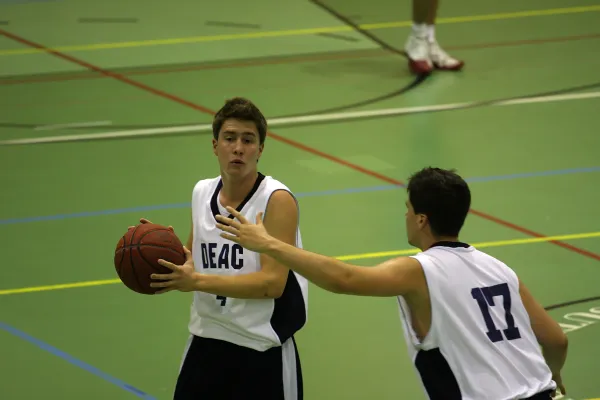
If the University of Debrecen had its own Hall of Fame, Gergő Keresztes would surely receive thousands of votes to take his place among its most respected basketball players.
At twenty-three years old, he was already a serious-minded yet permanently cheerful young man — and a DEAC basketball player whose story represented much more than sport alone.
The Beginning
Let us go back to around 1997.
Together with fellow coaches and the basketball-obsessed members of my family, I spent day after day climbing the stairs of TÁG.
One practice followed another.
At the time, the basketball environment kept producing players.
Some became outstanding competitors.
Others became lifelong lovers of the game.
Those were wonderful years.
At the neighbouring early-afternoon practices, several distinctive young personalities regularly appeared.
And among them was one small, blond, lightning-fast player who always seemed to have a basketball in his hands.
You could always hear him when he was in the gym.
And even then, the way he handled the ball made us think:
this boy belongs on a basketball court.
For a long time, I did not even know his name.
Eventually, however, he made sure everyone noticed him.
That was simply his nature.
Sometimes it was his humour.
Sometimes a sharp remark.
Sometimes his exceptional fighting spirit.
Sometimes one of his unusual finishes around the basket.
One way or another, he always managed to find his way into the spotlight.
2005: A New Chapter
Then suddenly it was 2005, and the cadet team came to us.
The most enthusiastic and fearless members of the 1991 generation — those who had remained — were hungry for success.
They wanted to compete with the best players of their age group.
They had enormous curiosity, a desire to learn and several significant talents within the group.
Kereszt was there too.
He never missed the team’s activities.
He began as an intelligent young boy and, by the age of sixteen, had already become one of the leaders of the team.
He set a strong example for the others because he succeeded in almost everything he did.
On the court and away from it, he was one of the personalities who held the group together.
At weekends, teammates often gathered at his home.
Apparently, spending every day together was not enough.
Sometimes they even spent Friday night at the Keresztes family home.
Films.
Games.
Stories.
Time together.
That mattered too.
It helped turn a group of players into a TEAM.
Always Ready for the Next Challenge
I remember that Kereszt was involved in everything.
During one Easter ski camp, we were among the first to put skis on his feet.
It was a pleasure to watch him progress from the early falls and awkward movements to growing confidence.
Today, he has become an exceptional skier.
That pattern seemed to repeat itself in almost everything he tried.
He always wanted to become as good as possible.
That determination still represents, for us, what a university sports career can mean.
Basketball and University
He won bronze medals at cadet and junior level.
Later, he and his teammates helped launch the first NB I basketball team in DEAC’s history.
His university years were not always easy from a sporting perspective.
A shoulder injury created additional difficulties.
Yet both on and off the court, he still played an important role in one of the historic periods of University of Debrecen basketball.
The university team won the Hungarian University Championship twice.
And Kereszt was part of that success.
Excellence Beyond the Court
After a long rehabilitation period, he returned to competitive basketball training this year.
At the same time, his academic performance has been exceptional.
Alongside outstanding results in his law studies, he received the Republic Scholarship and was recognised during the academic year as one of the University of Debrecen’s most outstanding students.
It is difficult not to feel something when seeing an example like this.
Because this is proof that it can be done.
Sport and education do not have to compete with one another.
They can strengthen each other.
Of course, we miss him when he is not with us.
As a university student, he had already begun working for a major multinational company.
And perhaps what we miss even more is the shared past — the environment that once allowed such capable and determined young people to grow around us.
What We Always Wanted to Represent
I believe this is exactly the point.
Kereszt represents something we have always believed in.
This is how we believe young people should study.
And this is how we believe they should compete in sport.
They should try to make the most of whatever abilities and opportunities they have been given.
They should move forward.
They should try to become one of the best in whatever path they choose.
And in doing so, they should create something valuable not only for themselves, but also for the generations that follow them.
That is what gives meaning to our profession as coaches.
Our work matters when sport helps develop people who can succeed far beyond the basketball court.
It gives us enormous pride to say that Gergő Keresztes — Kereszt — is one of ours.