
Címke: rehabilitation

  • Whole Again

    Whole Again

    Posted on December 18, 2013

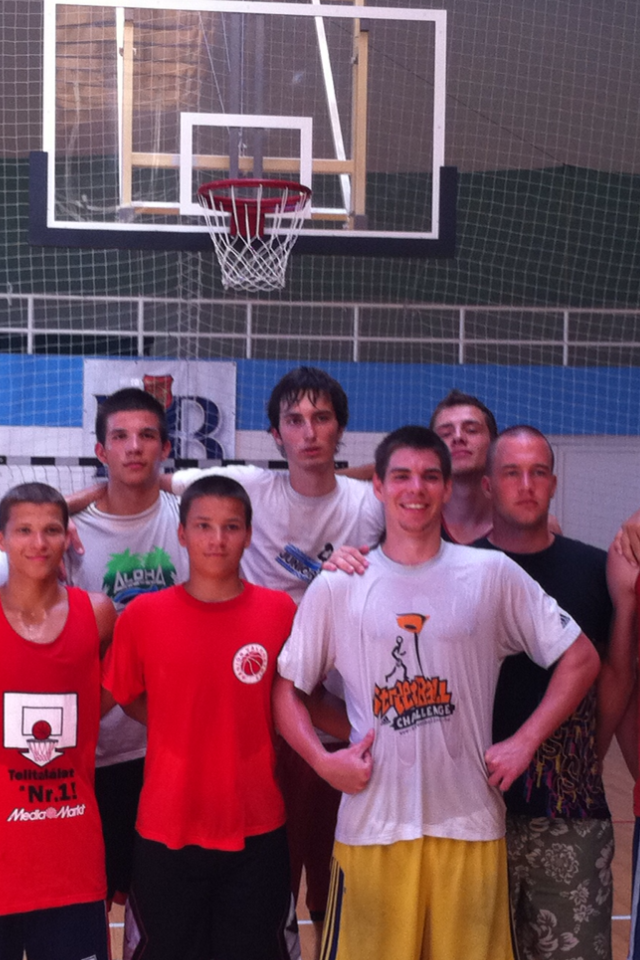
    My life entered another dimension in the summer of 2005, when I first met my new team: a group of boys born in 1991 who had just moved from the U14 level into the cadet age group.

    Together with my friend, B., I arrived at every practice excited.

    The players seemed almost hungry for knowledge, while every day brought adventures worthy of a novel — stories that affected them and therefore us as well, and which we still remember and talk about today.

    We went through a great deal together.

    Whatever happened, we somehow always managed to move forward and achieve something from the goals we had set.

    Because of them, our profession as youth coaches gained real meaning.

    Whenever we were close to questioning whether we were on the right path, those dozen or so mischievous boys with shining eyes were standing in front of us.

    They wanted to play.

    And they wanted to win.

    Nobody Missed Practice

    At the time, I did not keep an attendance sheet.

    There was no need.

    Nobody was absent.

    I can barely remember anyone being late either.

    One of the players travelled from Hajdúböszörmény, sometimes leaving home in the early hours of the morning and returning only after the evening practice.

    To this day, I do not completely understand how he managed to prepare for school the next day and still achieve excellent academic results.

    One thing is certain:

    he was among the leaders and became an example for all of us — and for the generations that followed.

    A Team Full of Stories

    We had ordinary weekdays and special game days.

    At times, we competed successfully in several championships simultaneously.

    We had injured players.

    We had players who struggled academically but eventually found their way in their studies.

    We had a bronze-medal hero who produced one final unforgettable performance against an opponent.

    We had a national-team player who travelled across Europe with the country’s best, later lost his way after leaving his original environment, and eventually found another place to continue his journey.

    We had an eternal scoring talent who probably should have been playing somewhere in a European league, but remained stuck at a level from which perhaps even today someone should grab him and sound the alarm.

    Several of these mischievous friends used to organise weekends together at their parents’ homes simply so that the teammates who had become almost inseparable could spend even more time together.

    One proudly stepped forward to lead the team during difficult times and introduced himself to the opposition as the happiest twelfth man in basketball.

    Another devoured life — and girls — before making his way to the University of Technology, where perhaps he slowed down a little. But he knows his own story.

    There were quiet madmen.

    There was also our sharp-eared inventor of words, who eventually became a referee while continuing to play excellent basketball as a lightning-fast ball magician.

    These boys have now become men.

    They are approaching graduation.

    And they have already made history.

    They were not only some of the defining figures of the golden era of DSI, but were also part of the group with which DEAC, founded in 1919, reached the first division for the first time in its history.

    And they still love basketball.

    Despite their problems and injuries, practice and competition remain in their minds and in their hearts.

    The Engine

    Among them was B.

    From the very beginning, he was the engine.

    He represented the style, the fighting spirit, the momentum and the irresistible passion that were essential to winning.

    We believed we could beat anyone.

    We prepared all day to find ways to succeed.

    We learned how to come back from behind, even when everyone else had already given up on us.

    And the engine grew.

    He became stronger.

    Eventually, B. became one of the leaders of the DEAC team that stepped onto the court for its first-ever NB I championship game.

    In the first quarter alone, he recorded a double-double.

    Then, when we least expected it, everything changed.

    In the ninth minute, after stealing the ball, he was hit from behind.

    Weeks later, it became certain that he had torn his anterior cruciate ligament.

    The First Return

    After an enormous amount of work and rehabilitation, B. returned one year later.

    He came back physically stronger, hungry to play and ready for competition.

    He immediately brought tremendous energy to the team.

    With him, it seemed possible to move to another level again.

    Then, in the final game of December, away from home, he was kicked from the side directly in the operated knee.

    The reconstructed ligament could not withstand it.

    And the familiar nightmare began again.

    But the world did not stop.

    With even greater determination — almost as if driven by pure defiance — B. decided to prove that there was a way back.

    Another year of work followed.

    Gradually, he returned first to specialised training and then eventually to basketball.

    Again

    When all of us finally believed that everything was right again, another unbelievable trauma struck.

    In Veszprém, it happened once more.

    B. was almost impossible to contain.

    He was incredibly quick.

    During a drive to the basket, he was pushed while in the air and crashed painfully to the floor.

    By the time I reached him, tears were already falling.

    He knew something was wrong.

    May 2013.

    Another chapter began.

    December 16, 2013

    On December 16, 2013, we wrote another chapter in this story.

    B.’s knee was repaired again.

    And the healing process began.

    For an injured athlete, surgery can represent a strange turning point.

    Until that moment, everything is uncertainty.

    Waiting.

    Delays.

    Questions.

    After the operation, the direction finally changes.

    Now the focus is no longer on waiting.

    It is on returning.

    On rehabilitation.

    On work.

    On moving forward.

    Because B.’s basketball and his role within the team are a little like basketball itself.

    You can live without it.

    But why would you want to?

    B.

    We are waiting for you.

    And we will not leave you alone.
  • Ice Age in Practice: Managing Sports Injuries

    Ice Age in Practice: Managing Sports Injuries

    This article looks at the basic principles behind sports injuries, the healing process and the traditional use of rest, ice, compression and elevation.

    Important: This is an archival educational resource. Sports injuries vary greatly in type and severity, and significant or persistent injuries should be assessed by an appropriately qualified healthcare professional.

    Types of Injury

    Sports injuries can broadly be divided into two groups.

    Injuries Caused by Internal Forces

    These may result from sudden or repeated forces generated within the body.

    Examples include:

    • muscle strains,
    • muscle tears,
    • overuse injuries,
    • stress-related injuries,
    • and changes caused by repeated loading.

    Some develop suddenly.

    Others appear gradually as repeated stress exceeds the ability of the tissue to recover.

    External or Traumatic Injuries

    These occur when the body is exposed to an external force.

    Examples include:

    • collisions,
    • falls,
    • direct blows,
    • bruises,
    • fractures,
    • and dislocations.

    External stresses can also contribute to smaller repetitive problems such as blisters.

    What Happens After a Soft-Tissue Injury?

    When soft tissue is injured, some of the affected tissue and small blood vessels may also be damaged.

    The amount of bleeding and swelling depends on:

    • the type of tissue involved,
    • the severity of the injury,
    • and the circulation within the injured area.

    The body then begins a complex healing response.

    The Stages of Healing

    It is impossible to predict an exact recovery time for every injury.

    Recovery is influenced by factors such as:

    • severity,
    • age,
    • tissue involved,
    • general physical condition,
    • rehabilitation,
    • and the way the injury is managed.

    The original framework divides healing into three overlapping phases.

    1. Acute or Inflammatory Phase

    This begins immediately after injury and continues for the first several days.

    2. Repair Phase

    This begins relatively early after injury and may continue for several weeks.

    3. Remodeling Phase

    This develops later in the recovery process and may continue for many months.

    These phases are not completely separate.

    They overlap as the body moves from the initial response toward repair and eventually toward stronger, more functional tissue.

    The Acute Phase

    The first stage begins immediately following injury.

    Typical signs may include:

    • pain,
    • warmth,
    • redness,
    • swelling,
    • and loss of normal function.

    Bleeding into damaged tissues may contribute to swelling and sometimes visible discoloration.

    The body responds rapidly to the injury.

    Blood vessels, inflammatory cells and damaged tissues all participate in the early healing process.

    Inflammation is therefore not simply an unwanted event.

    It is part of the body’s response to tissue damage.

    During this period, however, the injured area may be vulnerable to further stress.

    Early Tissue Repair

    As the healing response progresses, an early structural framework begins to form across the damaged tissue.

    Initially this new material is relatively weak.

    This is one reason why excessive stress immediately after an injury may interfere with recovery.

    Muscle spasm can also occur as part of the body’s protective response.

    Although this may restrict movement around the injured area, it can also contribute to discomfort.

    The early management of an injury therefore aims to protect the damaged area and avoid unnecessary additional trauma.

    Traditional Management During the Acute Phase

    The original article uses the classic principles of:

    • Rest
    • Ice
    • Compression
    • Elevation

    These principles have traditionally been used to help manage pain and swelling following acute soft-tissue injury.

    Rest

    Immediately after an injury, stop the activity that caused or aggravated the problem.

    The injured area should be protected from further unnecessary stress.

    Rest, however, does not necessarily mean complete inactivity for the entire body.

    Depending on the injury and professional advice, an athlete may sometimes continue appropriate training for unaffected parts of the body.

    The objective is to protect the injury without losing all physical conditioning unnecessarily.

    Ice

    Cold treatment has traditionally been used after acute injuries, particularly to help manage pain.

    If ice is used:

    • do not place it directly against the skin,
    • wrap the cold pack in a suitable cloth,
    • avoid excessive exposure,
    • and stop if the skin reacts abnormally or the treatment becomes painful.

    Reduced pain after cooling should not be interpreted as proof that the athlete is ready to return immediately to activity.

    Pain relief and tissue recovery are not the same thing.

    When Extra Caution Is Needed with Ice

    Cold treatment should be used carefully.

    Particular caution is appropriate when:

    • sensation in the area is reduced,
    • circulation is impaired,
    • the athlete has an unusual reaction to cold,
    • or there is uncertainty about the nature of the injury.

    When in doubt, seek professional medical advice.

    Compression

    A supportive compression bandage has traditionally been used to help control swelling.

    Compression should be firm but never so tight that it interferes with circulation.

    If the athlete experiences:

    • numbness,
    • tingling,
    • unusual discoloration,
    • increasing pain,
    • or loss of sensation,

    the bandage should be reassessed immediately.

    Elevation

    Elevating an injured limb may also help manage swelling.

    The injured area should be comfortably supported rather than placed in a position that creates additional pain or tension.

    First Aid Matters

    Early decisions after an injury may influence the recovery process.

    The first priority is always safety.

    If the athlete remains in danger, move them away from that danger when it is safe to do so.

    More serious injuries require appropriate medical assessment.

    Coaches should understand the limits of their own role.

    The job of the coach is not to diagnose every injury.

    The job is to recognize when a player needs professional care.

    The Repair Phase

    As the initial inflammatory response settles, the body begins repairing the damaged tissue.

    New connective tissue develops and gradually becomes stronger.

    However, newly repaired tissue does not immediately possess the same strength or function as healthy tissue.

    For this reason, rehabilitation must progress gradually.

    Too little loading may fail to prepare the tissue for sport.

    Too much loading too early may aggravate the injury.

    The challenge is finding the appropriate progression.

    Returning to Movement

    During the repair phase, carefully selected movement can gradually become part of rehabilitation.

    The objective is eventually to restore:

    • range of motion,
    • strength,
    • coordination,
    • flexibility,
    • and sport-specific function.

    Progression should be controlled.

    Pain or significant worsening of symptoms should not simply be ignored.

    The athlete must gradually earn the ability to perform increasingly demanding tasks.

    Returning to Basketball

    Feeling better is not the same as being ready to compete.

    Basketball requires much more than pain-free walking.

    A returning player may need to tolerate:

    • running,
    • acceleration,
    • deceleration,
    • jumping,
    • landing,
    • cutting,
    • contact,
    • defensive movement,
    • repeated high-intensity efforts,
    • and basketball-specific decision-making.

    The final objective is therefore not simply the disappearance of pain.

    It is the restoration of the physical and functional ability required to play basketball safely and effectively.

    The Coach’s Responsibility

    Coaches should understand basic injury-management principles.

    But they should also understand when responsibility must pass to medical and rehabilitation professionals.

    A player should not return simply because:

    • an important game is approaching,
    • the team needs them,
    • the pain temporarily disappears,
    • or the athlete insists that everything is fine.

    The long-term health of the player must remain more important than one practice or one game.

    Ice, compression and elevation may be tools.

    But the most important tool is good judgment.