Címke: practice planning

  • Key Factors in Building an Offensive System

    Key Factors in Building an Offensive System

    When we want to improve a team’s offense, we cannot begin simply by choosing a set play or offensive system.

    The structure of the team, the abilities of the players, the available practice time, physical condition, individual roles and even the environment around the team all influence what kind of offense can be played successfully.

    The offense should fit the team.

    The following factors should therefore be considered when building or developing an offensive system.

    Team Structure

    The balance between taller and smaller players has a major influence on the style a team can play.

    At senior level, players in each position should be capable of meeting the basic demands of that role.

    Ideally, a team has strong and athletic interior players who can operate around the basket but are also mobile enough to support a faster style of play.

    Perimeter players should provide:

    • reliable outside shooting,
    • ball handling,
    • passing,
    • and versatility.

    Lineup flexibility is also valuable.

    If a team can successfully play with three or four bigger players in one situation and three or four smaller players in another, the coach can pursue different tactical objectives at both ends of the floor.

    Number of Reliable Ball Handlers

    The more players who can safely handle the ball, the greater the freedom of the offense.

    Reliable ball handlers allow other players to move without the ball and create:

    • cuts,
    • screening actions,
    • close-range opportunities,
    • and quality perimeter shots.

    Ball security makes the offense more flexible.

    Outside Shooters

    Without reliable perimeter shooting, the defense has an easier task.

    It can defend a smaller area of the court and concentrate more players around the offense’s strongest weapons.

    Outside shooting creates space.

    Spacing then creates opportunities for penetration, cutting and interior play.

    Dominant Rebounders

    Strong rebounding can support an offensive philosophy based on creating easier scoring opportunities.

    Defensive rebounds can start transition offense.

    Offensive rebounds can create second possessions.

    A team capable of controlling the boards can build an offensive identity around those advantages.

    Strong Individual Defenders

    Offense is also influenced by defense.

    Strong individual defenders can:

    • pressure opponents,
    • create steals,
    • force mistakes,
    • and generate easier scoring opportunities in transition.

    A team that can create offense from its defense does not have to manufacture every score against an organized half-court defense.

    Interior Players Who Can Shoot

    A post player who is dangerous only directly around the basket allows the defense to stay compact.

    If that same player can consistently score from farther away, the defender must move away from the basket.

    This can create additional space for perimeter players to:

    • penetrate,
    • cut,
    • and attack open areas.

    Bigs with Three-Point Range

    Modern basketball increasingly includes interior players who can shoot from three-point range.

    If the roster, team discipline and offensive structure can support it, this ability can create valuable scoring balance.

    A big player who can make an open three also creates a psychological and tactical problem for the defense.

    The paint becomes more open because the opposing big cannot simply remain near the basket.

    Free-Throw Percentage

    An aggressive attacking style often produces fouls.

    That advantage only becomes fully valuable if the team can convert from the free-throw line.

    Games can be won from the line.

    Free-throw shooting must therefore be considered part of the offensive system rather than an isolated technical skill.

    Speed

    Speed means more than running speed.

    A fast team also needs:

    • quick passing,
    • quick decisions,
    • quick recognition,
    • and fast execution.

    An offense can only play at the speed at which its players are able to make good decisions and perform the required skills.

    Slower Key Players

    Not every important player will be fast.

    If a key scorer is slower because of physical characteristics, age or playing style, the offense should find situations in which that player’s advantages become more important than the lack of speed.

    A historical example is Sejo Bukva, whose size, experience and intelligent play around the basket could compensate for limited quickness.

    The principle is broader:

    do not judge a player through one weakness when another quality can create a major advantage.

    The Position of Creative Players

    Where is the team’s most creative player?

    The offensive possibilities are different depending on whether that player is:

    • a point guard who creates for others,
    • a tall wing who can attack from multiple positions,
    • or an interior player who attracts double-teams and traps.

    A player who can both create an individual scoring opportunity and create opportunities for teammates gives the coach many tactical possibilities.

    Individual Size and Physical Characteristics

    Height, body mass, width and general physical characteristics influence the strengths and weaknesses of every player.

    These characteristics must be considered when designing the offense.

    The system should make use of the physical advantages of the roster rather than constantly placing players in situations that expose their limitations.

    Number of Practices Per Week

    The number of weekly practices determines how often the coach can teach and reinforce the offense.

    Repetition is a basic principle of learning.

    A complex system requires enough opportunities to practice it.

    Duration of Practice

    The total time available for training matters as well.

    Teaching an offensive system requires both physical and tactical work.

    The coach must realistically evaluate how much practice time can be devoted to offense.

    Individual Training Opportunities

    Individual development sessions allow coaches to improve specific strengths and weaknesses.

    They also give motivated players additional opportunities to develop the skills their roles require.

    The effectiveness of the team offense is ultimately limited by the individual abilities of the players executing it.

    Length of the Preparation Period

    A longer preparation period provides more time to:

    • establish roles,
    • teach principles,
    • introduce the system,
    • and build the required habits.

    More preparation time usually creates better conditions for developing a sophisticated offense.

    Amount of Preseason Competition

    During the preseason, practice games and tournaments become increasingly important.

    The team needs opportunities to test what has been taught.

    There must be something to:

    • practice,
    • evaluate,
    • correct,
    • and develop.

    Preseason Tournaments

    Tournament games provide valuable feedback.

    They show which offensive ideas work under competitive pressure and which do not.

    The actual characteristics of the team must remain the deciding factor.

    Exhibition Games

    Practice games are not played simply to increase the number of competitions.

    They provide opportunities to evaluate new offensive elements.

    They can also give important minutes to players who may later need to fill replacement or supporting roles during the season.

    Capacity to Handle Training Load

    The physical condition developed during preparation — and the ability to maintain it — affects the offense.

    A demanding style requires players capable of sustaining the required workload.

    Physical Condition

    Health and recovery are fundamental.

    A tired team cannot be expected to run for forty minutes.

    The offensive philosophy must match the actual physical condition of the players.

    Injuries and Player Availability

    Injuries are part of the reality of a season.

    The offense should therefore be playable by more than one specific lineup.

    For example, a team cannot continue forcing an interior-oriented offense designed around a 210 cm center if that player is injured and the remaining available players are around 190 cm.

    The system must be adaptable.

    Tactical Discipline

    Players must recognize the desired style during competition and remain disciplined enough to execute it.

    A conscious offense requires players to understand:

    • what the team wants,
    • when it wants it,
    • and why.

    Technical Ability

    The speed of the offense must match the technical ability of the players.

    If players cannot correctly execute:

    • running,
    • passing,
    • stopping,
    • ball handling,
    • or shooting

    at high speed, then the pace must be reduced.

    Speed without technical control does not create good offense.

    Age Structure

    The balance between younger and older players can influence:

    • roles,
    • cohesion,
    • responsibility,
    • and the style of play.

    An experienced coach can often recognize these relationships quickly.

    Motivation

    Daily effort is difficult to maintain without goals.

    Players need both:

    • short-term objectives,
    • and long-term objectives.

    Motivation influences how consistently the offensive system is learned and executed.

    Financial Background

    At some levels of basketball, financial stability influences whether committed players can focus on the work required from them.

    It is worth remembering, however, that even when basketball becomes serious work, it is still a game.

    Players need an environment in which they can enjoy playing.

    Family Background

    With younger players, personal and family circumstances may influence development.

    Emotional and psychological maturation cannot be separated completely from performance.

    When a player is struggling away from the court, demanding increasingly complex basketball solutions may not always be realistic.

    Relationships Within the Team

    Friendship, trust and healthy relationships can move a team forward.

    Jealousy and conflict can move it in the opposite direction.

    Offense depends heavily on cooperation.

    Passing the ball, accepting roles and creating opportunities for teammates all require trust.

    Integrating Young Players

    Introducing younger players can give a team new energy.

    However, young players must understand:

    • the principles of the system,
    • their responsibilities,
    • and their roles.

    Technical and physical expectations should remain appropriate for their stage of development.

    At the same time, receiving a genuine opportunity can produce rapid improvement.

    Foreign Players

    Creative players can be expensive.

    Recruit foreign players to strengthen a weakness or add something the team genuinely needs.

    The original principle is important:

    do not build the entire offensive system around one imported player.

    The player should strengthen the system rather than become the system.

    National-Team Players

    High-level players require appropriate attention and management.

    The best players are valuable resources and should be developed and protected accordingly.

    Club Expectations

    The goals of the club influence offensive philosophy.

    A team expected to win immediately may make different tactical choices from a developmental team.

    A more controlled offense may be reliable but easier to scout.

    A faster, more aggressive style may offer greater potential but also involve more risk.

    The key question is:

    What does the club expect from the team?

    Major Competitions

    The offense must be prepared for the most important competitions of the season.

    The coach should plan when additional offensive variations are introduced and when the team should be capable of using its full tactical repertoire.

    Goals

    Short-term and long-term goals define where the team wants to go.

    The offensive process should support those objectives.

    Defining Roles

    Players may have different responsibilities, such as:

    • primary scorer,
    • creator,
    • supporting player,
    • substitute,
    • or sixth man.

    These roles influence how the team plays.

    Accepting Roles

    Roles should be clear and understood.

    When responsibilities are transparent, it also becomes easier to identify where the team is missing a particular type of player or skill.

    Weaknesses

    Technical and physical weaknesses must be identified.

    If, for example, the center is a poor free-throw shooter, the team must recognize that weakness and prepare for its consequences.

    Ignoring weaknesses does not make them disappear.

    Strengths

    The same applies to strengths.

    When the coach knows exactly what the team does well, those advantages can be emphasized deliberately.

    Maintaining Creativity

    Structure and freedom should exist together.

    Controlled offensive work should be combined with situations that allow players to find their own solutions.

    These situations help players develop and can reveal:

    • natural creators,
    • dominant personalities,
    • and unexpected offensive possibilities.

    Individual Needs and Goals

    The offense should also consider the needs of individual players.

    If a strong perimeter shooter rarely receives quality shooting opportunities, the system is probably not using that player effectively.

    Playing time is another factor.

    An older interior player may require more frequent substitutions if the style demands constant running.

    Likewise, in a fast system, interior players still need to receive the ball in useful positions. Otherwise, frustration may develop.

    The team system and individual needs must therefore remain connected.

    Reward the Right Behaviors

    When players execute their roles well and use creativity within the structure, those actions deserve recognition.

    Players should understand which behaviors contribute to the team’s offensive identity.

    Hold Players Accountable

    If something has been taught, it can also be demanded.

    The coach should hold players accountable for the principles that have been established.

    Otherwise, individual ego can gradually pull the team away from the style the group is trying to build.

    Build the Offense Around Reality

    An offensive system should never exist only in the coach’s imagination.

    It must reflect:

    • the players available,
    • their technical abilities,
    • their physical characteristics,
    • the time available for teaching,
    • team relationships,
    • competition demands,
    • and the goals of the club.

    The best offense is not necessarily the most complicated one.

    It is the offense that allows the actual players on the roster to use their strengths, manage their weaknesses and play together with a clear purpose.
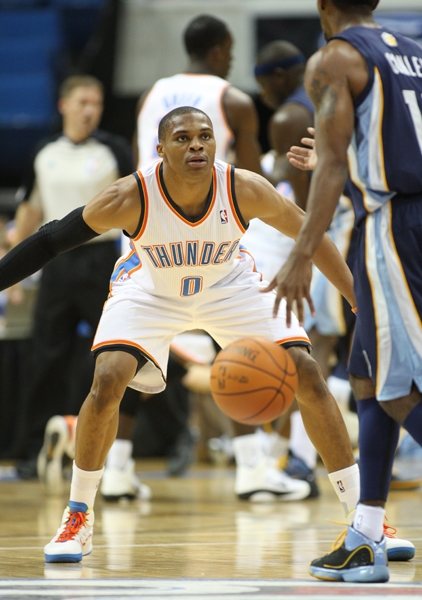
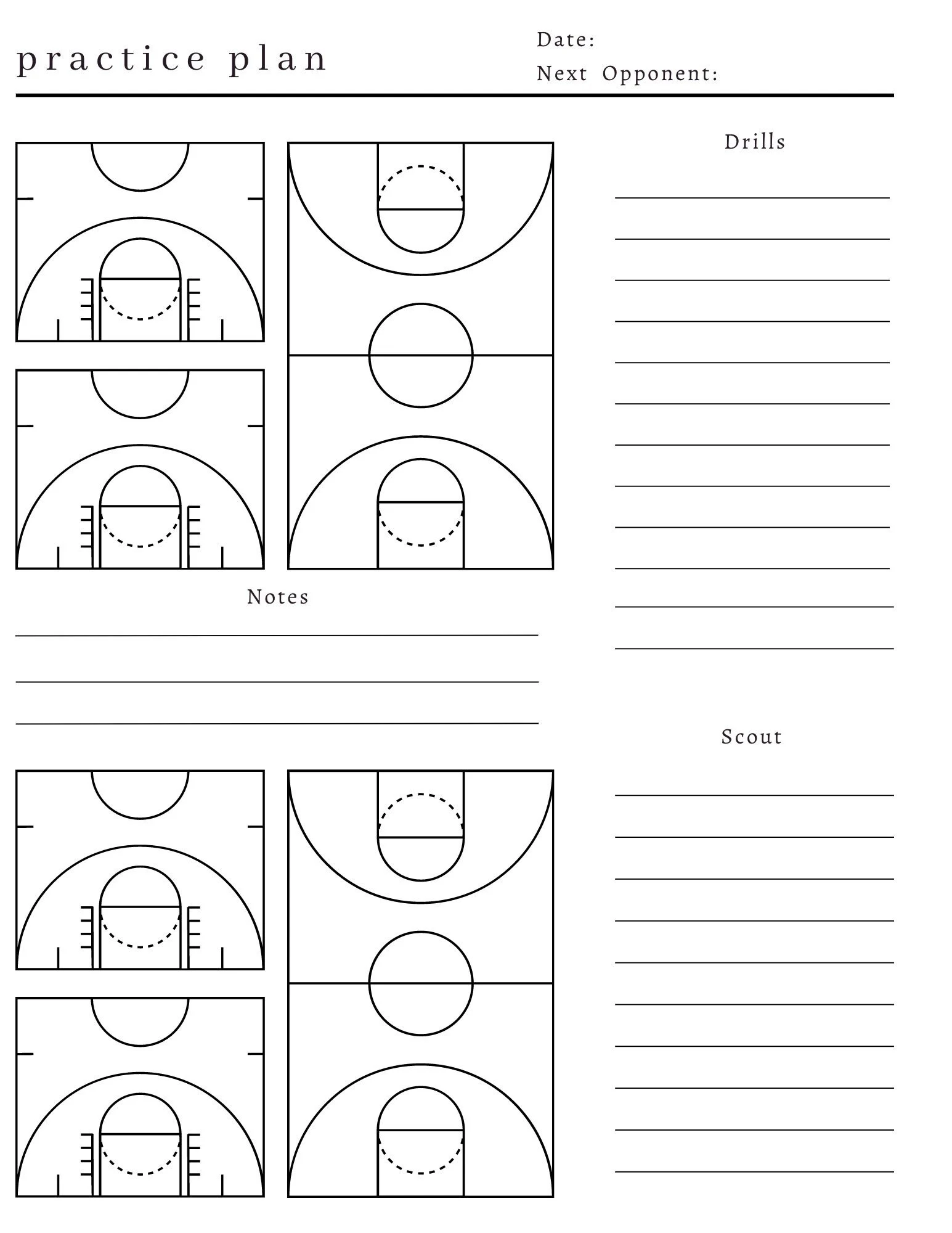
  • 30 Minutes of Defense

    30 Minutes of Defense

    Here is a practical framework for building a defensive segment of practice.

    Before selecting drills, the coach must first answer a more important question:

    What kind of defense do we want to play?

    The defensive style of the team must be clearly defined before it can be trained effectively.

    Define Your Defensive Identity

    Before designing the practice, answer the following questions.

    What Is the Main Objective of the Defense?

    Do we want to:

    • force turnovers?
    • protect the paint?
    • influence the ball toward the sideline?
    • influence the ball toward the middle?

    There is no meaningful defensive drill without first understanding what the defense is trying to accomplish.

    How Do We Transition Back on Defense?

    Decide:

    • how many players sprint back,
    • which players are responsible for transition defense,
    • and what their priorities are.

    Transition defense must be organized rather than left to chance.

    How Do We Defend the Post?

    Decide how the team will guard an interior player.

    Possible approaches include:

    • fronting,
    • playing on the high side,
    • playing behind,
    • changing the position according to the location of the ball,
    • or trapping the post.

    Whatever method is selected, the entire team must understand how to react when the post receives the ball.

    How Do We Defend the Ball Handler?

    Determine:

    • whether the ball is influenced in a particular direction,
    • whether the defender sends the ball toward the sideline or middle,
    • whether the defender plays square,
    • and how high on the floor pressure begins.

    The on-ball defender must know exactly what the team expects.

    How Do We Defend Away from the Ball?

    The off-ball defense may include:

    • denial,
    • help positioning,
    • and help-and-recover responsibilities.

    The player without the ball is still involved in defending the ball.

    How Do We Defend Screens?

    Decide:

    • whether the defense switches,
    • when switching is allowed,
    • and when defenders remain with their original assignments.

    These decisions must be established before the team can execute them consistently.

    Defensive Practice Priorities

    Once the defensive philosophy has been defined, practice can be built around the following areas.

    1. Pressure the Ball

    Do not allow the ball handler to play comfortably.

    The defender should influence what the offensive player can do rather than simply reacting.

    2. Deny the Pass

    Disrupt the offense.

    Prevent or make difficult:

    • passes,
    • cuts,
    • catches,
    • and other offensive actions.

    When playing denial defense, the objective is simple:

    Do not allow your player to receive the ball easily.

    When contesting rather than fully denying, force the offensive player to receive the ball farther away from the three-point line or from the preferred attacking area.

    3. Defend the Post

    The defense must have a clear plan for post play.

    Possible approaches include:

    • fronting,
    • playing high side,
    • adjusting according to whether the ball is above or below the free-throw line,
    • playing behind,
    • or trapping with different defenders.

    The specific choice matters less than the fact that the entire team reacts together.

    If the post catches the ball, the defense should know exactly what happens next.

    When possible, force the interior player toward a more difficult shot, such as a fadeaway.

    4. Help and Recover

    A defender does not only guard an individual opponent.

    Every defender also helps guard the ball.

    Because containing the ball is one of the most difficult defensive responsibilities, off-ball defenders must be prepared to help and then recover to their own assignments.

    5. Box Out

    A defensive possession is not finished until the defense secures the rebound.

    Force a difficult shot.

    Then box out.

    Then rebound.

    Then run.

    Practice Competitively

    Competitive drills help maintain defensive intensity.

    Instead of allowing the drill to continue without consequence, establish clear defensive objectives.

    For example:

    • require a weak-side box-out,
    • require two consecutive defensive rebounds,
    • or demand a certain number of defensive stops before the defense can leave the floor.

    The defensive team should have something to earn.

    Defensive Scoring

    Another method is to create a scoring system.

    For example:

    • 3 points for forcing an offensive foul,
    • 2 points for a defensive rebound or steal,
    • 1 point for a deflection.

    A competitive scoring system rewards the defensive behaviors the coach wants to develop.

    Part 1 — Defensive Fundamentals

    Use small-sided drills to teach individual and small-group defensive fundamentals.

    Possible formats include:

    • 1-on-1,
    • 2-on-2,
    • 3-on-3.

    The original plan suggests four short drills of approximately three minutes each.

    1-on-1: Defending the Ball

    Objective

    Teach the defender to:

    • contain the ball handler,
    • influence the drive,
    • contest the shot,
    • and finish the possession with a box-out.

    1-on-1: Defending the Post

    Objectives

    Teach the defender to:

    • defend the post position,
    • deny or disrupt the entry pass,
    • maintain the selected defensive position,
    • and force a difficult shot if the ball is received.

    1-on-1: Defending Away from the Ball

    Practice off-ball defense from different locations:

    • on the wing,
    • on the ball side,
    • on the weak side.

    The coach may take the shot so the defender must finish the possession by boxing out.

    Combination Drill

    Combine several defensive responsibilities in one sequence.

    Possible teaching points include:

    • sprinting into help position,
    • ball-side positioning,
    • defending cuts,
    • preventing backdoor cuts,
    • forcing catches farther away from the basket,
    • and boxing out.

    2-on-2: Sprint to Help

    The objective is to teach defensive positioning according to the movement of the ball.

    Players should practice:

    • helping on a baseline drive,
    • recovering to their own player,
    • denying a ball-side cutter,
    • and boxing out.

    A possible progression is:

    1. help position,
    2. baseline penetration,
    3. weak-side cut.

    3-on-3: Closeout and Box-Out

    Objective

    Teach defenders to finish every defensive possession.

    Emphasize:

    • closeouts,
    • containing penetration,
    • contesting shots,
    • and boxing out in every situation.

    3-on-3: Defending Screens

    Objective

    Teach the defense to:

    • disrupt catches,
    • defend screening actions,
    • defend cuts after screens,
    • and execute the team’s chosen screen-defense rules.

    4-on-3: Communication, Help and Recovery

    Playing at a temporary numerical disadvantage forces defenders to communicate and cooperate.

    Emphasize:

    • communication,
    • closeouts,
    • help positioning,
    • recovery,
    • and defending penetration.

    This type of drill teaches players that team defense is based on collective movement rather than isolated individual matchups.

    Part 2 — Shell Drill

    The Shell Drill can be used to develop team defensive positioning.

    The main focus is:

    • ball-side positioning,
    • help-side positioning,
    • movement with the ball,
    • communication,
    • and collective responsibility.

    A possible progression includes:

    1. Sprint to help.
    2. Defend penetration.
    3. Defend cuts.
    4. Defend guard-to-wing screens.
    5. Defend guard-to-guard screens.
    6. Defend off-ball screens.
    7. Allow only the post player to operate inside.
    8. Defend every offensive intention and anticipate the next action.

    The final goal is not simply reacting.

    The defense should begin to think one action ahead.

    Part 3 — Earn the Right to Play Offense

    A powerful competitive method is to require the defensive team to achieve a specific objective before it can switch to offense.

    Possible conditions include:

    • three steals,
    • three defensive rebounds,
    • three offensive fouls forced,
    • three consecutive defensive stops,
    • or two consecutive stops.

    The exact condition can change according to the emphasis of the practice.

    The principle remains the same:

    defense must earn possession.

    Build Defense from the Inside Out

    A strong defensive practice should not be a random collection of drills.

    It should progress logically:

    individual defense → small-group defense → team defense → competitive execution

    First define the defensive philosophy.

    Then teach the individual responsibilities.

    Next connect players through help, recovery and communication.

    Finally, place those principles into competitive situations.

    Thirty focused minutes of defense can be extremely valuable when every drill reinforces the same defensive identity.

  • Practice Planning

    Practice Planning

    Organizing Practice

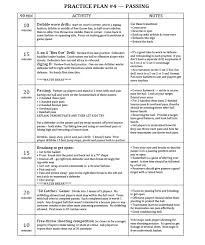
    One of the most important responsibilities of a coach is organizing and planning practice.

    The method used to structure training has a major influence on the successful development of the team.

    A good plan gives direction to the work.

    At the same time, it must remain flexible enough to respond to what actually happens on the court.

    From the Curriculum to the Daily Practice Plan

    A useful planning process can be built in three stages:

    1. Develop the overall curriculum or long-term training plan.
    2. Use that plan to create the weekly practice schedule.
    3. From the weekly schedule, prepare the individual daily practice plans.

    The daily plan should therefore never exist in isolation.

    Each practice should be part of a larger developmental process.

    Developing the Daily Plan

    1. Calculate the Number of Practices Available

    First, determine how many practices are available before the first game.

    Every planned day without practice should also be identified, together with the reason for the break.

    This gives the coach a realistic picture of the time available.

    2. Calculate the Total Training Time

    Multiply the total number of practices by the expected duration of each session.

    For example, if practices last 1.5 hours, the total number of practices multiplied by 90 minutes gives the total amount of available training time.

    This step is important because coaches often overestimate how much can realistically be taught before competition begins.

    Time is limited.

    Planning must therefore involve priorities.

    3. Divide the Available Time Among the Main Phases

    The total training time should then be distributed among the different phases of the curriculum.

    This provides an approximate amount of time available for each area.

    Not every topic deserves the same amount of attention.

    Some elements will be more important than others.

    For that reason, time may sometimes need to be taken from one phase and reassigned to another.

    The important point is that these decisions should be deliberate.

    Plan the Period Leading to the Next Game

    Use a planning sheet covering the period between the first practice and the next competition.

    Mark all days without practice.

    At the top of each daily plan, write the main objective of the session.

    This gives the practice a clear identity.

    Every drill and activity should then contribute to that objective.

    Connect Time and Training Content

    The available time and the planned training material must fit together.

    Each practice should build upon the previous one.

    The next session should continue the developmental process.

    This progression should continue until the first game.

    Practice planning should therefore not consist of a collection of unrelated drills.

    It should resemble a sequence.

    Each day has a purpose.

    Each day prepares the next one.

    Follow the Plan — but Record Every Change

    Once the plan has been created, it should be followed.

    However, any changes should be recorded.

    After each practice — but before the following session — the coach should review what happened and make any necessary adjustments to the next practice plan.

    This process should continue until competition begins.

    The coach therefore works in a continuous cycle:

    plan → practice → evaluate → adjust → practice again

    The Plan Is a Guide, Not a Law

    Changes should be expected.

    A training program should never become excessively rigid.

    What happens on the court must remain the most important source of information.

    The practice plan is a guide.

    It is not a law.

    But even when the coach changes the route, the final destination must remain clear.

    Every modification should answer the question:

    Does this change help us move toward our objective?

    Flexibility without direction becomes improvisation.

    Structure without flexibility becomes rigidity.

    Effective coaching requires both.

    Do Not Plan the First Practice After the Game in Advance

    The first practice following the opening game should not be completely predetermined.

    The game itself should decide what needs greater emphasis next.

    The coach cannot know that before evaluating the performance.

    Competition provides information that practice cannot always provide.

    For example, the game may reveal that the team needs considerably more work against full-court pressure.

    Or perhaps defensive transition becomes the priority.

    Maybe rebounding, spacing or decision-making becomes the most urgent issue.

    The next practice should respond to what the game has shown.

    Planning Is a Continuous Process

    Good practice planning is not simply writing exercises on a sheet of paper.

    It means connecting:

    • long-term objectives,
    • weekly priorities,
    • daily practice goals,
    • available training time,
    • competition,
    • evaluation,
    • and continuous adjustment.

    The coach needs a plan.

    But the coach must also be willing to change it.

    The most effective plan is therefore not necessarily the one that is followed exactly.

    It is the one that consistently keeps the team moving toward the desired goal.

  • Basket Clinic Tips for Planning Practice

    Basket Clinic Tips for Planning Practice

    How to Avoid Wasting Practice Time

    Effective practice planning begins with one simple principle:

    Do not try to accomplish too much in a single practice.

    Trying to cover too many topics usually reduces the quality of the work.

    A lack of planning wastes valuable practice time.

    So does a lack of discipline.

    Good practices require clear organization, clear expectations and efficient use of every available minute.

    Key Principles

    • Do not try to do too much in one practice.
    • Always have a clear practice plan.
    • Maintain practice discipline.
    • Organize drills and transitions efficiently.
    • Make full use of the facilities, time and resources available.
    • Use the knowledge and expertise of the entire coaching staff.

    The objective is simple:

    Every minute of practice should have a purpose.

  • Master Program for a Youth Team

    Master Program for a Youth Team

    Experience as Feedback

    Games in a youth championship provide valuable feedback on the quality and effectiveness of the preparation process.

    Competition shows:

    • whether the training work is appropriate,
    • whether players are developing,
    • which elements are progressing successfully,
    • and how the team’s current level compares with other teams.

    Games should therefore not be viewed only through wins and losses.

    They are also an important part of the learning and evaluation process.

    Main Areas of Development

    I. Individual Fundamentals

    Offense

    Development of individual offensive technique.

    Defense

    Development of individual defensive technique.

    II. Building the Offense

    Players gradually learn how individual skills connect into team offense.

    III. Team Defense

    Individual defensive fundamentals must develop toward coordinated team defense.

    IV. Fast Break

    Players should learn how to turn defensive possessions into immediate offensive opportunities.

    V. Special Offensive Situations

    Delay Offense

    Players should become familiar with situations in which possession and game tempo must be controlled.

    Press Break

    The team must learn how to play against full-court pressure.

    VI. Team Defensive Systems

    Players should gradually experience different levels of defensive pressure:

    • compact defense,
    • half-court defense,
    • full-court defense.

    VII. Special Situations

    Training should also include:

    • jump-ball situations,
    • free throws,
    • baseline inbound plays,
    • sideline inbound plays.

    VIII. Controlled Play

    Players should gradually learn how to execute structured basketball within clearly defined tactical situations.

    Example: Available Training Time Until April 30, 2007

    This historical example shows how the available practice time can be calculated and allocated.

    • 10 Monday practices: 15 hours
    • 9 Wednesday practices: 13.5 hours
    • 10 Friday practices: 15 hours

    Total training time: 43.5 hours

    Competition Dates

    • February 10
    • February 16
    • March 13
    • March 30
    • April 30

    The central principle is:

    Preparation should always be influenced by the next competition.

    The coach must ask:

    What do we want to achieve before the next game?

    That objective should then be divided into weekly goals, and the structure of each practice should be designed accordingly.

    The process is:

    Situation analysis → Goal setting → Training design

    At the same time, one question remains fundamental throughout the season:

    What Do I Want the Team to Achieve by the End of the Year?

    This long-term objective determines the direction of the entire program.

    Tactical Goals

    Develop an Offense with Limited Dribbling

    Players should learn an offensive system that can function with:

    • no dribble,
    • or only one dribble when possible.

    The objective is to encourage:

    • passing,
    • movement,
    • spacing,
    • decision-making,
    • and playing without unnecessary possession of the ball.

    Practice the Desired Playing Style

    Training should repeatedly include the team’s intended style of play:

    • defense into outlet and fast break,
    • transition opportunities,
    • understanding the importance of transition offense,
    • and offense against an organized half-court defense.

    Practice Technique in a Tactical Environment

    Technical skills should be transferred into game situations as early as possible.

    Whenever appropriate, exercises should include defenders.

    Particular emphasis should be placed on:

    • 2-on-2,
    • 3-on-3,
    • and 4-on-4.

    There should also be a significant amount of two-basket 4-on-4 play.

    Eventually, players must practice true competitive situations through 5-on-5.

    Special Tactical Situations

    The program should also contain:

    • baseline inbound plays,
    • sideline inbound plays,
    • and press-break offense.

    Technical Goals

    1. Layups

    Practice layups progressively and in smaller technical segments.

    Emphasis should be placed on correct mechanics before increasing speed and complexity.

    2. Passing and Getting Open

    Players should practice:

    • different types of passes,
    • creating passing angles,
    • getting open,
    • timing,
    • and receiving the ball correctly.

    3. Offensive Footwork

    Work on sequences involving:

    • receiving the ball,
    • fakes,
    • pivoting,
    • dribbling,
    • and passing.

    These can initially be practiced in pairs.

    4. Defensive Footwork

    Use several different defensive footwork exercises.

    One possible structure is to use three-minute blocks.

    5. Boxing Out

    Box-out drills should appear in every practice.

    Rebounding must become part of the team’s regular training culture.

    6. Offensive Rebounding

    Players should learn to attack the offensive glass purposefully.

    7. Defensive Rebounding into Transition

    Defensive rebounding should immediately connect to:

    • securing the ball,
    • the outlet pass,
    • and transition offense.

    The rebound should not represent the end of the possession.

    It should represent the beginning of the next one.

    8. Post Defense

    Players should begin learning how to defend interior players.

    9. Positional Play

    Players should practice the basic principles of playing from different positions.

    10. Influencing the Ball Handler

    Use 1-on-1 situations to teach defenders how to influence and direct the offensive player.

    11. Denial Defense

    Practice defending an off-ball player from the ball side and denying easy receptions.

    12. Defensive Rotations

    Use 3-on-3 and 4-on-4 situations to teach:

    • help,
    • recovery,
    • communication,
    • and defensive rotation.

    13. Cuts and Establishing Position

    Players should learn both:

    • effective cutting,
    • and establishing useful offensive position.

    Shooting Program

    The shooting program should contain several different forms of practice.

    Technical Shooting

    Examples:

    • stationary shooting,
    • shooting after pivoting,
    • shooting after the dribble,
    • shooting from movement.

    Repetition Shooting

    Players need repeated technical execution to stabilize shooting mechanics.

    Shooting by Court Segment

    Use selected areas of the court so that players gradually develop a complete shooting map.

    Three-Point Shooting

    Three-point shooting can also be introduced according to the age and developmental level of the players.

    Competition

    Shooting competitions create:

    • pressure,
    • motivation,
    • concentration,
    • and enjoyment.

    Example Weekly Shooting Program

    Monday

    Stationary and Pivot Shooting

    Examples:

    • five shots in pairs,
    • five shots from one designated location,
    • four minutes while collecting your own rebound.

    Repetition Shooting

    Focus on repeated execution of correct technique.

    Competition

    Finish with a competitive shooting task.

    Wednesday

    Shooting After the Dribble

    In pairs:

    • rebound your own shot,
    • pass,
    • attack with one or two dribbles,
    • shoot.

    Shooting by Segment

    Use five selected shooting areas.

    Competition: “31”

    Play to 31 points.

    For example:

    • an outside shot = 3 points,
    • a rebound = 1 point.

    Friday

    Shooting from Movement

    For example:

    • V-cut into the shot,
    • six shots before changing roles.

    Three-Point Shooting

    Change roles after every two attempts.

    Competition

    The pair works together to reach 10 made baskets.

    Structure of a Practice

    A sample practice can be organized as follows.

    1. Warm-Up

    Offensive Footwork — 5 minutes

    Combine movement with passing and offensive footwork.

    Defensive Footwork — 9 minutes

    For example:

    3 × 3-minute blocks

    Fast Break — 5 minutes

    Practice outlet, running lanes and transition.

    2. Offensive Work — 20 minutes

    Develop the offensive principles currently emphasized in the program.

    3. Shooting Program — 10 minutes

    Use the shooting theme assigned to that training day.

    4. Defensive Work — 20 minutes

    Practice individual and team defensive objectives.

    5. Playing — 10 minutes

    Allow players to apply the learned principles in competitive situations.

    Total structured work: approximately 79 minutes.

    Players temporarily resting can perform supplementary work such as:

    • core strengthening,
    • leg strengthening,
    • jump rope.

    Allocation of the Total Training Time

    In the historical example, the available training time was:

    43.5 hours = 2,610 minutes

    Across 29 practices, the planned allocation included:

    Warm-Up and Fundamental Preparation

    • offensive footwork with passing: 145 minutes
    • defensive footwork and specific conditioning: 261 minutes
    • fast break and transition: 145 minutes

    Offensive Development

    580 minutes

    Shooting Program

    290 minutes

    This could be divided into:

    • first shooting task: 4 minutes × 29 practices = 116 minutes
    • second shooting task: 3 minutes × 29 practices = 87 minutes
    • shooting competition: 3 minutes × 29 practices = 87 minutes

    Defensive Development

    580 minutes

    Playing

    290 minutes

    The Role of Competition

    The most important principle is that games should constantly provide new information for the training process.

    After competition, the coach should evaluate:

    • what players could execute,
    • what they could not yet execute,
    • where individual technique failed,
    • where team play broke down,
    • and what should become the next training priority.

    The next game then provides another checkpoint.

    In this way, development becomes a continuous cycle:

    training → competition → evaluation → new objectives → training

    Long-Term Development Comes First

    The objective of a youth program should not simply be to prepare for the next game.

    The next game is important because it provides direction and feedback.

    But the fundamental question remains:

    What kind of basketball player do we want to develop by the end of the season — and ultimately in the years ahead?

    Technical development, tactical understanding, decision-making and competitive experience should all serve that long-term goal.

    The master program creates the structure.

    Games provide the feedback.

    And daily practice provides the development.

  • Pre-Competition Training Program

    Pre-Competition Training Program

    The purpose of these guidelines is to encourage coaches to think carefully about the most important principles of training before a major competition.

    One of the fundamental considerations is that the opponent’s known strengths and weaknesses are just as important as our own.

    The training program should therefore reflect both:

    • what our team does well,
    • what still needs improvement,
    • and what the upcoming opponents are likely to demand from us.

    Key Principles

    A pre-competition training program should include:

    • a structured shooting program,
    • fundamental defensive techniques,
    • offensive transition,
    • fast-break situations,
    • attacking an unorganized defense,
    • controlled isolation,
    • structured half-court offense,
    • and transition from offense to defense.

    Defensive fundamentals should first be practiced technically, then under increasingly realistic pressure.

    For example, a defensive task can eventually be maintained for approximately 30 seconds in 3-on-3 or 4-on-4 situations.

    1. Start Every Practice with High-Energy Work

    Every practice should begin with dynamic, high-tempo activities.

    However, progression remains essential.

    One possible approach is to use approximately five three-minute blocks.

    Examples include:

    Three-Ball Transition Drill

    Start from the baseline in pairs using three balls.

    • dribble to half court,
    • make one pass,
    • continue with the dribble,
    • finish with a layup.

    Variation with a Paint Finish

    Use the same structure, but finish with a shot from inside the paint.

    Rebound and Outlet Sequence

    One player begins near the baseline and sideline in an outlet position.

    The player with the ball:

    • self-passes the ball off the backboard,
    • rebounds,
    • takes one dribble,
    • and makes the outlet pass.

    The drill continues in a continuous rotation.

    Continuous Footwork

    Include a continuous footwork exercise emphasizing:

    • balance,
    • speed,
    • coordination,
    • and defensive movement.

    Free Throws Under Fatigue

    Shoot free throws in sets of three immediately after physical loading.

    The objective is to reproduce the physical state in which free throws often occur during games.

    2. Practice Advantage Situations

    Include two or three full-court drills emphasizing numerical advantages.

    Each can last approximately 4–5 minutes.

    These situations should teach players to recognize and exploit advantages quickly.

    Press-break concepts can also be practiced without defenders first so that spacing, timing and movement become automatic before pressure is added.

    3. Defensive Fundamentals

    Fundamental defensive exercises should remain part of the program.

    At the same time, offensive players should execute technically correct actions so that both sides of the drill improve.

    Use two or three foundational exercises and then build them gradually toward:

    • small-sided team situations,
    • and eventually 5-on-5.

    Examples include:

    Defending the Ball Handler

    Practice containment and influencing the direction of the dribbler.

    This can be done:

    • full court,
    • in court segments,
    • from half court,
    • from specific positions,
    • with a layup finish,
    • or with a jump-shot finish.

    Boxing Out

    For example, the coach takes the shot.

    Players execute the box-out and then continue immediately into full-court 1-on-1.

    Denying Cuts

    Practice defending offensive cuts in 2-on-2 situations.

    Correct Help Defense

    Use 2-on-2 situations to reinforce proper help positioning and recovery.

    4. Build from Small-Sided Situations

    In small-sided team situations, approximately the first two-thirds of the action can be predetermined.

    The final part should then allow players to finish creatively.

    This structure gives the coach control over the tactical objective while still requiring the players to:

    • read the defense,
    • make decisions,
    • and create solutions.

    5. Basketball-Specific Conditioning

    Conditioning should also take place on the basketball court.

    Use 1–3 minute blocks involving basketball-specific activities such as:

    • defensive work,
    • agility,
    • shooting,
    • rebounding,
    • and transition.

    The exercises can be organized:

    • as a team,
    • in pairs,
    • or in groups of three.

    The objective is to condition the players through movements and decisions that resemble the game.

    6. Practice the Offensive Style

    The team should rehearse its offensive identity and transition game.

    Against a set defense, practice situations such as:

    Quick Offense into Longer Possessions

    Players must understand when to attack immediately and when to continue into a longer half-court possession.

    Inbound Plays

    Practice sideline and baseline situations that may become important in close games.

    Situations Following Free Throws

    Players should know their responsibilities immediately after both made and missed free throws.

    Cutting Actions

    Rehearse offensive actions based on purposeful cutting and coordinated movement.

    Finishing Situations

    Practice possessions that finish through:

    • 1-on-1 creation,
    • or interior passing and post play.

    7. Finish with 5-on-5

    The practice should ultimately progress toward 5-on-5.

    Before each block, clearly define:

    • the offensive objective,
    • and the defensive objective.

    The coach should avoid stopping play too frequently.

    Only major mistakes should interrupt the action.

    Players need extended periods in which they can:

    • read situations,
    • solve problems,
    • communicate,
    • and maintain continuity.

    Players resting outside the 5-on-5 action can perform upper-body and trunk-strengthening exercises.

    At the end of practice, include approximately 3–5 minutes of jump rope.

    Jump rope can also be used earlier in practice as part of the warm-up.

    Build Each Practice on the Previous One

    The next practice should always build on what was done before.

    However, training should continue to progress.

    A useful guideline is that approximately 70% of the practice should move the team forward.

    Only the most important elements should be repeated extensively.

    The objective before a major competition is not simply to rehearse everything the team already knows.

    The objective is to sharpen the elements that will matter most.

    Training should therefore become increasingly:

    • specific,
    • purposeful,
    • game-like,
    • intense,
    • and connected to the demands of the upcoming opponent.

    The closer the competition becomes, the clearer the priorities should be.