
Experience as Feedback
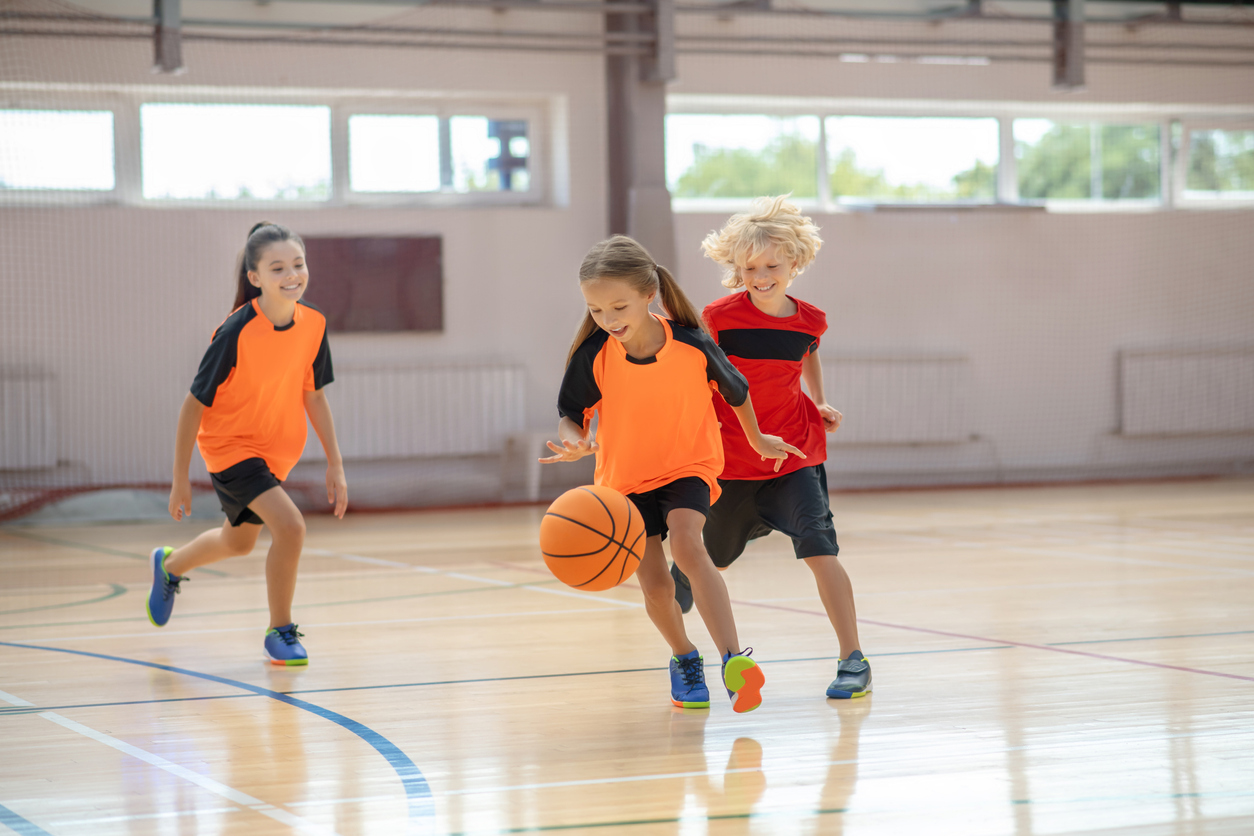
Games in a youth championship provide valuable feedback on the quality and effectiveness of the preparation process.
Competition shows:
- whether the training work is appropriate,
- whether players are developing,
- which elements are progressing successfully,
- and how the team’s current level compares with other teams.
Games should therefore not be viewed only through wins and losses.
They are also an important part of the learning and evaluation process.
Main Areas of Development
I. Individual Fundamentals
Offense
Development of individual offensive technique.
Defense
Development of individual defensive technique.
II. Building the Offense
Players gradually learn how individual skills connect into team offense.
III. Team Defense
Individual defensive fundamentals must develop toward coordinated team defense.
IV. Fast Break
Players should learn how to turn defensive possessions into immediate offensive opportunities.
V. Special Offensive Situations
Delay Offense
Players should become familiar with situations in which possession and game tempo must be controlled.
Press Break
The team must learn how to play against full-court pressure.
VI. Team Defensive Systems
Players should gradually experience different levels of defensive pressure:
- compact defense,
- half-court defense,
- full-court defense.
VII. Special Situations
Training should also include:
- jump-ball situations,
- free throws,
- baseline inbound plays,
- sideline inbound plays.
VIII. Controlled Play
Players should gradually learn how to execute structured basketball within clearly defined tactical situations.
Example: Available Training Time Until April 30, 2007
This historical example shows how the available practice time can be calculated and allocated.
- 10 Monday practices: 15 hours
- 9 Wednesday practices: 13.5 hours
- 10 Friday practices: 15 hours
Total training time: 43.5 hours
Competition Dates
- February 10
- February 16
- March 13
- March 30
- April 30
The central principle is:
Preparation should always be influenced by the next competition.
The coach must ask:
What do we want to achieve before the next game?
That objective should then be divided into weekly goals, and the structure of each practice should be designed accordingly.
The process is:
Situation analysis → Goal setting → Training design
At the same time, one question remains fundamental throughout the season:
What Do I Want the Team to Achieve by the End of the Year?
This long-term objective determines the direction of the entire program.
Tactical Goals
Develop an Offense with Limited Dribbling
Players should learn an offensive system that can function with:
- no dribble,
- or only one dribble when possible.
The objective is to encourage:
- passing,
- movement,
- spacing,
- decision-making,
- and playing without unnecessary possession of the ball.
Practice the Desired Playing Style
Training should repeatedly include the team’s intended style of play:
- defense into outlet and fast break,
- transition opportunities,
- understanding the importance of transition offense,
- and offense against an organized half-court defense.
Practice Technique in a Tactical Environment
Technical skills should be transferred into game situations as early as possible.
Whenever appropriate, exercises should include defenders.
Particular emphasis should be placed on:
- 2-on-2,
- 3-on-3,
- and 4-on-4.
There should also be a significant amount of two-basket 4-on-4 play.
Eventually, players must practice true competitive situations through 5-on-5.
Special Tactical Situations
The program should also contain:
- baseline inbound plays,
- sideline inbound plays,
- and press-break offense.
Technical Goals
1. Layups
Practice layups progressively and in smaller technical segments.
Emphasis should be placed on correct mechanics before increasing speed and complexity.
2. Passing and Getting Open
Players should practice:
- different types of passes,
- creating passing angles,
- getting open,
- timing,
- and receiving the ball correctly.
3. Offensive Footwork
Work on sequences involving:
- receiving the ball,
- fakes,
- pivoting,
- dribbling,
- and passing.
These can initially be practiced in pairs.
4. Defensive Footwork
Use several different defensive footwork exercises.
One possible structure is to use three-minute blocks.
5. Boxing Out
Box-out drills should appear in every practice.
Rebounding must become part of the team’s regular training culture.
6. Offensive Rebounding
Players should learn to attack the offensive glass purposefully.
7. Defensive Rebounding into Transition
Defensive rebounding should immediately connect to:
- securing the ball,
- the outlet pass,
- and transition offense.
The rebound should not represent the end of the possession.
It should represent the beginning of the next one.
8. Post Defense
Players should begin learning how to defend interior players.
9. Positional Play
Players should practice the basic principles of playing from different positions.
10. Influencing the Ball Handler
Use 1-on-1 situations to teach defenders how to influence and direct the offensive player.
11. Denial Defense
Practice defending an off-ball player from the ball side and denying easy receptions.
12. Defensive Rotations
Use 3-on-3 and 4-on-4 situations to teach:
- help,
- recovery,
- communication,
- and defensive rotation.
13. Cuts and Establishing Position
Players should learn both:
- effective cutting,
- and establishing useful offensive position.
Shooting Program
The shooting program should contain several different forms of practice.
Technical Shooting
Examples:
- stationary shooting,
- shooting after pivoting,
- shooting after the dribble,
- shooting from movement.
Repetition Shooting
Players need repeated technical execution to stabilize shooting mechanics.
Shooting by Court Segment
Use selected areas of the court so that players gradually develop a complete shooting map.
Three-Point Shooting
Three-point shooting can also be introduced according to the age and developmental level of the players.
Competition
Shooting competitions create:
- pressure,
- motivation,
- concentration,
- and enjoyment.
Example Weekly Shooting Program
Monday
Stationary and Pivot Shooting
Examples:
- five shots in pairs,
- five shots from one designated location,
- four minutes while collecting your own rebound.
Repetition Shooting
Focus on repeated execution of correct technique.
Competition
Finish with a competitive shooting task.
Wednesday
Shooting After the Dribble
In pairs:
- rebound your own shot,
- pass,
- attack with one or two dribbles,
- shoot.
Shooting by Segment
Use five selected shooting areas.
Competition: “31”
Play to 31 points.
For example:
- an outside shot = 3 points,
- a rebound = 1 point.
Friday
Shooting from Movement
For example:
- V-cut into the shot,
- six shots before changing roles.
Three-Point Shooting
Change roles after every two attempts.
Competition
The pair works together to reach 10 made baskets.
Structure of a Practice
A sample practice can be organized as follows.
1. Warm-Up
Offensive Footwork — 5 minutes
Combine movement with passing and offensive footwork.
Defensive Footwork — 9 minutes
For example:
3 × 3-minute blocks
Fast Break — 5 minutes
Practice outlet, running lanes and transition.
2. Offensive Work — 20 minutes
Develop the offensive principles currently emphasized in the program.
3. Shooting Program — 10 minutes
Use the shooting theme assigned to that training day.
4. Defensive Work — 20 minutes
Practice individual and team defensive objectives.
5. Playing — 10 minutes
Allow players to apply the learned principles in competitive situations.
Total structured work: approximately 79 minutes.
Players temporarily resting can perform supplementary work such as:
- core strengthening,
- leg strengthening,
- jump rope.
Allocation of the Total Training Time
In the historical example, the available training time was:
43.5 hours = 2,610 minutes
Across 29 practices, the planned allocation included:
Warm-Up and Fundamental Preparation
- offensive footwork with passing: 145 minutes
- defensive footwork and specific conditioning: 261 minutes
- fast break and transition: 145 minutes
Offensive Development
580 minutes
Shooting Program
290 minutes
This could be divided into:
- first shooting task: 4 minutes × 29 practices = 116 minutes
- second shooting task: 3 minutes × 29 practices = 87 minutes
- shooting competition: 3 minutes × 29 practices = 87 minutes
Defensive Development
580 minutes
Playing
290 minutes
The Role of Competition
The most important principle is that games should constantly provide new information for the training process.
After competition, the coach should evaluate:
- what players could execute,
- what they could not yet execute,
- where individual technique failed,
- where team play broke down,
- and what should become the next training priority.
The next game then provides another checkpoint.
In this way, development becomes a continuous cycle:
training → competition → evaluation → new objectives → training
Long-Term Development Comes First
The objective of a youth program should not simply be to prepare for the next game.
The next game is important because it provides direction and feedback.
But the fundamental question remains:
What kind of basketball player do we want to develop by the end of the season — and ultimately in the years ahead?
Technical development, tactical understanding, decision-making and competitive experience should all serve that long-term goal.
The master program creates the structure.
Games provide the feedback.
And daily practice provides the development.