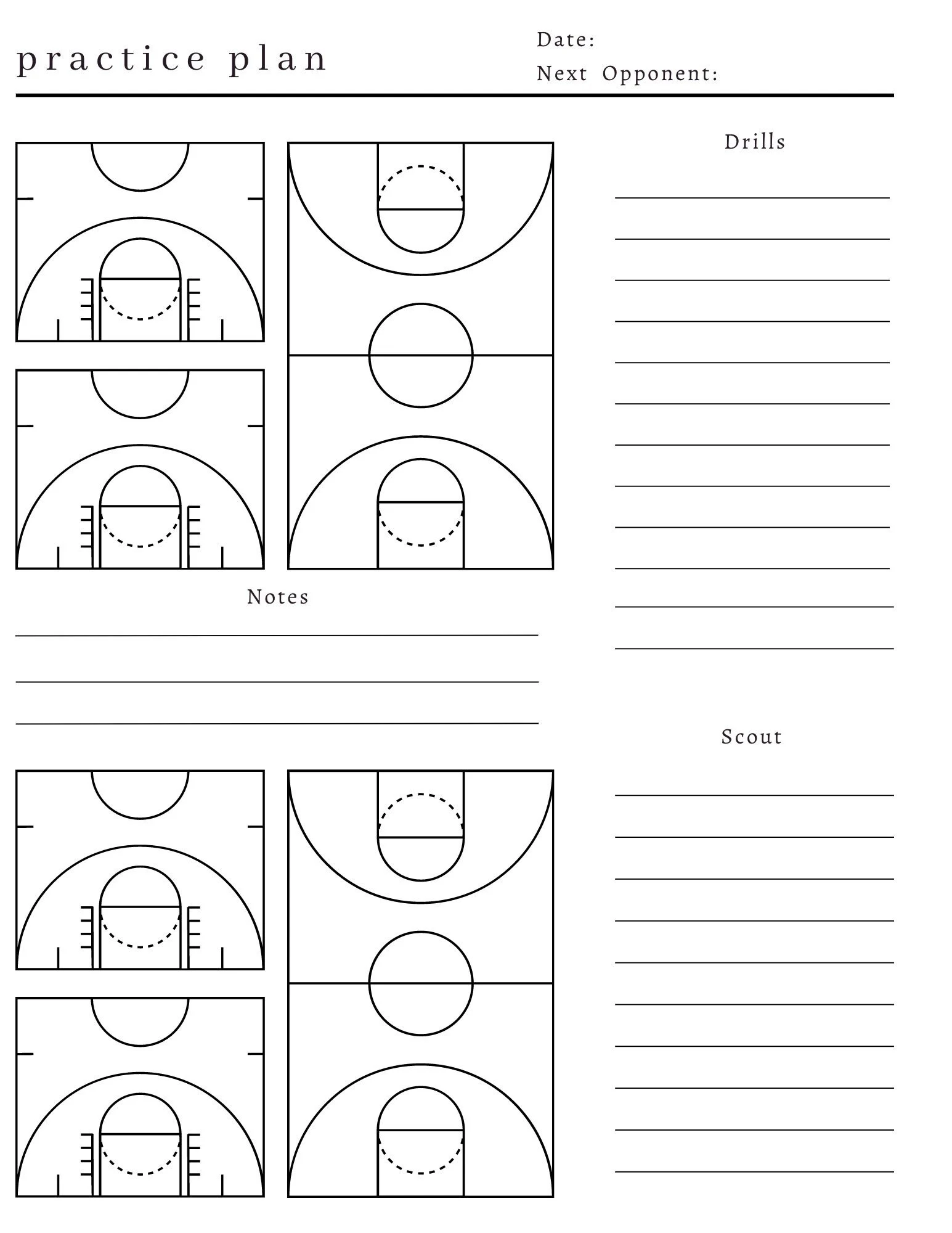
Címke: game preparation

  • Practice Planning

    Practice Planning

    Organizing Practice

    One of the most important responsibilities of a coach is organizing and planning practice.

    The method used to structure training has a major influence on the successful development of the team.

    A good plan gives direction to the work.

    At the same time, it must remain flexible enough to respond to what actually happens on the court.

    From the Curriculum to the Daily Practice Plan

    A useful planning process can be built in three stages:

    1. Develop the overall curriculum or long-term training plan.
    2. Use that plan to create the weekly practice schedule.
    3. From the weekly schedule, prepare the individual daily practice plans.

    The daily plan should therefore never exist in isolation.

    Each practice should be part of a larger developmental process.

    Developing the Daily Plan

    1. Calculate the Number of Practices Available

    First, determine how many practices are available before the first game.

    Every planned day without practice should also be identified, together with the reason for the break.

    This gives the coach a realistic picture of the time available.

    2. Calculate the Total Training Time

    Multiply the total number of practices by the expected duration of each session.

    For example, if practices last 1.5 hours, the total number of practices multiplied by 90 minutes gives the total amount of available training time.

    This step is important because coaches often overestimate how much can realistically be taught before competition begins.

    Time is limited.

    Planning must therefore involve priorities.

    3. Divide the Available Time Among the Main Phases

    The total training time should then be distributed among the different phases of the curriculum.

    This provides an approximate amount of time available for each area.

    Not every topic deserves the same amount of attention.

    Some elements will be more important than others.

    For that reason, time may sometimes need to be taken from one phase and reassigned to another.

    The important point is that these decisions should be deliberate.

    Plan the Period Leading to the Next Game

    Use a planning sheet covering the period between the first practice and the next competition.

    Mark all days without practice.

    At the top of each daily plan, write the main objective of the session.

    This gives the practice a clear identity.

    Every drill and activity should then contribute to that objective.

    Connect Time and Training Content

    The available time and the planned training material must fit together.

    Each practice should build upon the previous one.

    The next session should continue the developmental process.

    This progression should continue until the first game.

    Practice planning should therefore not consist of a collection of unrelated drills.

    It should resemble a sequence.

    Each day has a purpose.

    Each day prepares the next one.

    Follow the Plan — but Record Every Change

    Once the plan has been created, it should be followed.

    However, any changes should be recorded.

    After each practice — but before the following session — the coach should review what happened and make any necessary adjustments to the next practice plan.

    This process should continue until competition begins.

    The coach therefore works in a continuous cycle:

    plan → practice → evaluate → adjust → practice again

    The Plan Is a Guide, Not a Law

    Changes should be expected.

    A training program should never become excessively rigid.

    What happens on the court must remain the most important source of information.

    The practice plan is a guide.

    It is not a law.

    But even when the coach changes the route, the final destination must remain clear.

    Every modification should answer the question:

    Does this change help us move toward our objective?

    Flexibility without direction becomes improvisation.

    Structure without flexibility becomes rigidity.

    Effective coaching requires both.

    Do Not Plan the First Practice After the Game in Advance

    The first practice following the opening game should not be completely predetermined.

    The game itself should decide what needs greater emphasis next.

    The coach cannot know that before evaluating the performance.

    Competition provides information that practice cannot always provide.

    For example, the game may reveal that the team needs considerably more work against full-court pressure.

    Or perhaps defensive transition becomes the priority.

    Maybe rebounding, spacing or decision-making becomes the most urgent issue.

    The next practice should respond to what the game has shown.

    Planning Is a Continuous Process

    Good practice planning is not simply writing exercises on a sheet of paper.

    It means connecting:

    • long-term objectives,
    • weekly priorities,
    • daily practice goals,
    • available training time,
    • competition,
    • evaluation,
    • and continuous adjustment.

    The coach needs a plan.

    But the coach must also be willing to change it.

    The most effective plan is therefore not necessarily the one that is followed exactly.

    It is the one that consistently keeps the team moving toward the desired goal.
  • Travel Checklist for Coaches

    Travel Checklist for Coaches

    Travelling with a basketball team requires more preparation than simply packing clothes.

    An away game or tournament may require:

    • official documents,
    • coaching equipment,
    • statistical materials,
    • personal clothing,
    • hygiene items,
    • food and drink,
    • and technical equipment.

    The following checklist was designed to help coaches prepare according to the number of games and days away from home.

    Trip Length

    GamesApproximate Trip Length
    1 game1 day
    2 games1 day
    3 games2 days
    4 games2 days
    5 games3 days

    Basketball and Administrative Equipment

    Player Membership / Registration Cards

    12

    Regardless of the number of games, make sure all necessary player identification or registration cards are available.

    Complete Team Rosters

    • 1 game: 2 copies
    • 2 games: 3 copies
    • 3 games: 4 copies
    • 4 games: 5 copies
    • 5 games: 6 copies

    Licenses

    2 copies

    Statistical Sheets

    • 1 game: 2
    • 2 games: 3
    • 3 games: 4
    • 4 games: 5
    • 5 games: 6

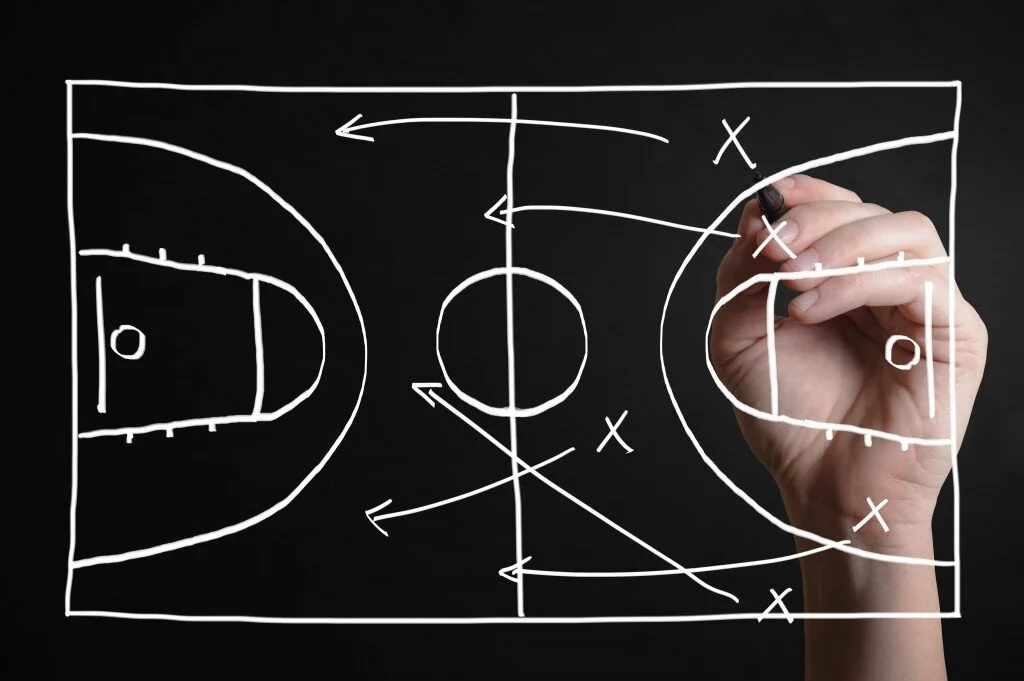
    Coaching Board

    1

    Pen

    1

    Markers

    2

    Clothing

    Shoes

    • 1–4 games: 1 pair
    • 5 games: 2 pairs

    Socks

    • 1 game: 2 pairs
    • 2 games: 3 pairs
    • 3 games: 4 pairs
    • 4 games: 5 pairs

    For longer trips, pack additional pairs according to need.

    Underwear

    • 1 game: 2
    • 2 games: 3
    • 3 games: 4
    • 4 games: 5
    • 5 games: 6

    T-Shirts

    • 1 game: 2
    • 2 games: 3
    • 3 games: 4
    • 4 games: 5
    • 5 games: 6

    Shorts

    • 1 game: 1
    • 2 games: 2
    • 3 games: 2
    • 4 games: 3
    • 5 games: 3

    Long Pants

    • 1 game: 1
    • 2 games: 2
    • 3 games: 2
    • 4 games: 2
    • 5 games: 2

    Sweater / Sweatshirt

    • 1 game: 1
    • 2–5 games: 2

    Tracksuit

    1

    Personal and Hygiene Items

    Towel

    • 1–4 games: 1
    • 5 games: 2

    Toothpaste

    1

    Toothbrush

    1

    Toilet Paper

    1

    Shower Gel

    1

    Sleepwear

    1 set

    Creams / Personal Care Products

    1–2 as required

    Medication

    The original checklist suggests carrying basic medication for issues such as:

    • headache,
    • cramps,
    • fever.

    Any medication should of course be handled according to the individual’s own needs and appropriate medical guidance.

    Travel and Downtime

    Reading Material

    Bring something to read during travel or waiting periods.

    Music Player

    A useful item for longer journeys and downtime.

    Food

    Prepare appropriate food according to the duration and schedule of the trip.

    Drinks

    The original guide suggested approximately:

    • 1 game: 1 litre
    • 2 games: 2 litres
    • 3 games: 3 litres
    • 4 games: 4 litres

    Hydration requirements should naturally be adapted to travel time, temperature and individual needs.

    Technical Equipment

    Laptop / PDA

    The original checklist included a laptop and a Palm-style handheld device for coaching and organizational work.

    Note Paper

    Bring paper for:

    • game notes,
    • scouting,
    • tactical ideas,
    • statistics,
    • and post-game observations.

    Phone Charger

    Do not forget the charger.

    Camera / Photo Camera

    Useful for:

    • recording games,
    • documenting tournaments,
    • technical analysis,
    • or team memories.

    Before Leaving

    A coach should make one final check before departure:

    • Are all player documents present?
    • Are the necessary rosters and licenses packed?
    • Are statistical sheets ready?
    • Is the coaching board packed?
    • Are pens and markers available?
    • Is the technical equipment charged?
    • Are personal clothing and hygiene items sufficient for the length of the trip?
    • Are food and drinks organized?
    • Is everything needed for the first game immediately accessible?

    Good travel preparation removes unnecessary problems before the team ever reaches the court.

    The fewer logistical details the coach has to solve during the trip, the more attention can remain where it belongs:

    on the players, the team and the game.

  • Pre-Competition Training Program

    Pre-Competition Training Program

    The purpose of these guidelines is to encourage coaches to think carefully about the most important principles of training before a major competition.

    One of the fundamental considerations is that the opponent’s known strengths and weaknesses are just as important as our own.

    The training program should therefore reflect both:

    • what our team does well,
    • what still needs improvement,
    • and what the upcoming opponents are likely to demand from us.

    Key Principles

    A pre-competition training program should include:

    • a structured shooting program,
    • fundamental defensive techniques,
    • offensive transition,
    • fast-break situations,
    • attacking an unorganized defense,
    • controlled isolation,
    • structured half-court offense,
    • and transition from offense to defense.

    Defensive fundamentals should first be practiced technically, then under increasingly realistic pressure.

    For example, a defensive task can eventually be maintained for approximately 30 seconds in 3-on-3 or 4-on-4 situations.

    1. Start Every Practice with High-Energy Work

    Every practice should begin with dynamic, high-tempo activities.

    However, progression remains essential.

    One possible approach is to use approximately five three-minute blocks.

    Examples include:

    Three-Ball Transition Drill

    Start from the baseline in pairs using three balls.

    • dribble to half court,
    • make one pass,
    • continue with the dribble,
    • finish with a layup.

    Variation with a Paint Finish

    Use the same structure, but finish with a shot from inside the paint.

    Rebound and Outlet Sequence

    One player begins near the baseline and sideline in an outlet position.

    The player with the ball:

    • self-passes the ball off the backboard,
    • rebounds,
    • takes one dribble,
    • and makes the outlet pass.

    The drill continues in a continuous rotation.

    Continuous Footwork

    Include a continuous footwork exercise emphasizing:

    • balance,
    • speed,
    • coordination,
    • and defensive movement.

    Free Throws Under Fatigue

    Shoot free throws in sets of three immediately after physical loading.

    The objective is to reproduce the physical state in which free throws often occur during games.

    2. Practice Advantage Situations

    Include two or three full-court drills emphasizing numerical advantages.

    Each can last approximately 4–5 minutes.

    These situations should teach players to recognize and exploit advantages quickly.

    Press-break concepts can also be practiced without defenders first so that spacing, timing and movement become automatic before pressure is added.

    3. Defensive Fundamentals

    Fundamental defensive exercises should remain part of the program.

    At the same time, offensive players should execute technically correct actions so that both sides of the drill improve.

    Use two or three foundational exercises and then build them gradually toward:

    • small-sided team situations,
    • and eventually 5-on-5.

    Examples include:

    Defending the Ball Handler

    Practice containment and influencing the direction of the dribbler.

    This can be done:

    • full court,
    • in court segments,
    • from half court,
    • from specific positions,
    • with a layup finish,
    • or with a jump-shot finish.

    Boxing Out

    For example, the coach takes the shot.

    Players execute the box-out and then continue immediately into full-court 1-on-1.

    Denying Cuts

    Practice defending offensive cuts in 2-on-2 situations.

    Correct Help Defense

    Use 2-on-2 situations to reinforce proper help positioning and recovery.

    4. Build from Small-Sided Situations

    In small-sided team situations, approximately the first two-thirds of the action can be predetermined.

    The final part should then allow players to finish creatively.

    This structure gives the coach control over the tactical objective while still requiring the players to:

    • read the defense,
    • make decisions,
    • and create solutions.

    5. Basketball-Specific Conditioning

    Conditioning should also take place on the basketball court.

    Use 1–3 minute blocks involving basketball-specific activities such as:

    • defensive work,
    • agility,
    • shooting,
    • rebounding,
    • and transition.

    The exercises can be organized:

    • as a team,
    • in pairs,
    • or in groups of three.

    The objective is to condition the players through movements and decisions that resemble the game.

    6. Practice the Offensive Style

    The team should rehearse its offensive identity and transition game.

    Against a set defense, practice situations such as:

    Quick Offense into Longer Possessions

    Players must understand when to attack immediately and when to continue into a longer half-court possession.

    Inbound Plays

    Practice sideline and baseline situations that may become important in close games.

    Situations Following Free Throws

    Players should know their responsibilities immediately after both made and missed free throws.

    Cutting Actions

    Rehearse offensive actions based on purposeful cutting and coordinated movement.

    Finishing Situations

    Practice possessions that finish through:

    • 1-on-1 creation,
    • or interior passing and post play.

    7. Finish with 5-on-5

    The practice should ultimately progress toward 5-on-5.

    Before each block, clearly define:

    • the offensive objective,
    • and the defensive objective.

    The coach should avoid stopping play too frequently.

    Only major mistakes should interrupt the action.

    Players need extended periods in which they can:

    • read situations,
    • solve problems,
    • communicate,
    • and maintain continuity.

    Players resting outside the 5-on-5 action can perform upper-body and trunk-strengthening exercises.

    At the end of practice, include approximately 3–5 minutes of jump rope.

    Jump rope can also be used earlier in practice as part of the warm-up.

    Build Each Practice on the Previous One

    The next practice should always build on what was done before.

    However, training should continue to progress.

    A useful guideline is that approximately 70% of the practice should move the team forward.

    Only the most important elements should be repeated extensively.

    The objective before a major competition is not simply to rehearse everything the team already knows.

    The objective is to sharpen the elements that will matter most.

    Training should therefore become increasingly:

    • specific,
    • purposeful,
    • game-like,
    • intense,
    • and connected to the demands of the upcoming opponent.

    The closer the competition becomes, the clearer the priorities should be.

  • Tips for Scouting the Opponent

    Tips for Scouting the Opponent

    Opponent Scouting

    Opponent: ________________________________________

    Defense

    1. What is their best defensive system?
    2. What defense do they use most frequently?
    3. When do they begin applying pressure to the guards?
    4. How do they defend the wings?
    5. How do they defend the low post?
    6. How do they defend the high post?
    7. How do they defend screens?
    8. Do they play tight man-to-man defense or do they sag off?
    9. Where do they trap?
    10. Are they a pressing team?
    11. Do they recover quickly or slowly in transition?
    12. Do they have a particular player who defines their defensive system?
    13. What are the weaknesses of their half-court defense?
    14. What are the weaknesses of their press?
    15. Do they use any special defenses, such as Box-and-One, Triangle-and-Two or other combination defenses?

    General Information

    Offensive Philosophy


    Defensive Philosophy


    What Do We Need to Do to Beat Them?

    What Should We Practice Against Them?

  • Ray Allen’s Pre-Game Shooting Workout

    Ray Allen’s Pre-Game Shooting Workout

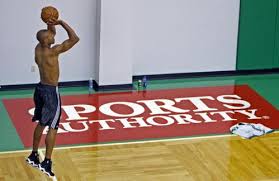
    Ray Allen arrives at the arena three and a half hours before the game.

    You could say he is almost always the first player in the gym.

    After fifteen seasons, he still follows the same routine every time to prepare himself for the game.

    He shoots from five different spots on the floor and has to make five shots from each one:

    the two corners, the two wings and the top of the key.

    He starts close to the basket, then moves two steps farther out, continues from mid-range, shoots from the old three-point line and finally from behind the three-point line.

    Between each shooting series, he also makes five free throws.

    Altogether, the routine adds up to approximately 150 made shots, completed in around 20–30 minutes.

    Most of the shots are taken from a stationary position.

    Allen always begins in a low, balanced shooting stance. He calls for the ball and is fully prepared to shoot before receiving it.

    Every shot is taken at game speed and with complete concentration.

    There are no tricks and no sensational methods.

    Just accuracy, timing and sound fundamentals.

    That is how Ray Allen became one of the best shooters in the game.

    His excellence was no accident.