
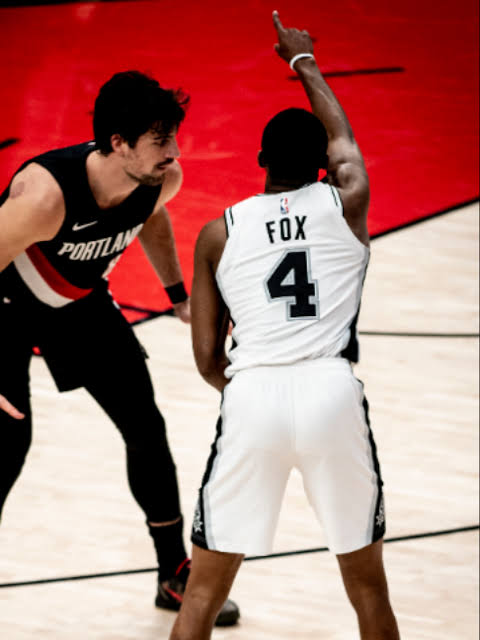
We divide our offense into four main parts:
- Early offense
- Motion offense
- Controlled half-court offense against a set defense
- Isolation
Each phase has a different purpose, but together they create a complete offensive system.
1. Early Offense
Fast break and secondary break are our primary tools for attacking before the defense becomes organized.
The secondary break I teach is different from what many other teams use.
That difference itself can become an advantage.
If opponents have to spend additional time preparing specifically for our offense, they have less time to work on their own system.
Our secondary break is designed to create quick, high-quality scoring opportunities.
We do not simply run with the ball.
We sprint with it.
There is a difference.
We want to attack at full speed and create either:
- a layup,
- an easy shot,
- or an immediate advantage.
Our goal is to punish every opponent who fails to sprint back on defense.
If the defense does recover and there is no immediate, accurate and high-quality scoring opportunity, we begin moving the ball.
From there, we search for:
- a prepared quality shot,
- or an opportunity to play inside.
Attack the Paint Aggressively
We want to attack the paint with aggression.
If our secondary break works effectively, we should be able to win many games from the free-throw line.
One important objective is to attempt more free throws than the opponent.
If we sprint the floor hard enough, the defense has to react.
Speed places defenders under pressure.
If they cannot keep up, they are often forced to foul.
2. Motion Offense
If we do not create a scoring opportunity from the break or from the first series of quick passes — for example, after reversing the ball to the opposite side — we enter our motion offense.
This phase gives players enough creative freedom to play basketball.
That requires an important coaching distinction:
We must teach players how to play, not only what to play.
The objective is to make every player better.
If every individual improves, the team improves as well.
The fast break can be stopped.
And it is unrealistic to expect every point to come from controlled half-court offense.
When both the transition game and structured offense fail to create an advantage, players must still be capable of making plays.
Four Roles Within the Motion Offense
I divide our motion offense into four main roles:
- ball handlers,
- screeners,
- cutters,
- interior players.
Each component should be taught in detail.
We begin with simple situations such as 2-on-0.
Then we add defenders.
Step by step, the teaching progresses through increasingly complex situations until players can execute the principles in:
- 4-on-4,
- and eventually 5-on-5.
By building the system through these smaller components, the complete motion offense gradually develops.
Every Player Must Understand Every Role
One of the most important principles of the system is that every player must know, practice and apply different roles.
At certain moments, any player may have to perform almost any responsibility.
If we want to exploit mismatches, our interior players must be capable of making entry passes.
At the same time, our guards must understand post play.
We therefore need to develop players who are comfortable with every major element of the motion offense.
These skills will also improve our controlled half-court offense.
3. Controlled Half-Court Offense
We only enter our controlled half-court offense when neither the early offense nor the motion offense produces a quality shot.
If approximately 12–13 seconds pass without a clear and efficient scoring opportunity, we begin our structured offense.
Many teams prefer to run their controlled sets first.
Only when those actions fail do they begin to play more freely.
I want to do the opposite.
I want our team to play differently from most opponents.
That makes preparation against us more difficult.
Opponents do not enjoy spending twenty seconds repeatedly working in a defensive stance while trying to contain continuous offensive movement.
Search for High-Percentage Finishes
Our controlled offense primarily searches for opportunities near the basket rather than outside shots.
The main exception is when we specifically need a three-point field goal.
Structured offense must always be designed around the strengths and weaknesses of the players available.
For example, it makes little sense to design a final action around a lob pass if the personnel cannot execute that action consistently.
The offense should emphasize strengths.
It should not expose weaknesses unnecessarily.
Every Play Needs Multiple Options
Each set should contain two or three possible finishing options.
Our primary target may be the center — the 5 — but we should also create opportunities for other players, such as the 4 or the 2.
The center may become tired.
The defense may remove the first option.
When that happens, another player or another part of the action must become more important.
Multiple options also make it easier to adjust when the defense reacts successfully.
The goal is to make a good decision when the primary option is taken away.
Attack the Opponent’s Weaknesses
Controlled offense allows us to target weaknesses in the opponent’s defense.
Sometimes it is difficult to explain every individual weakness to the players during a game.
But by selecting the correct play, we can attack that weakness without needing a long explanation.
For example, if the opponent’s center cannot defend our 5 on the perimeter, we can run an action that forces that defender away from the basket.
The right play can also help keep the ball away from players who should not be asked to handle it excessively.
The offensive structure itself can guide decision-making.
How Many Plays Do We Need?
In my experience, we may begin a season using approximately 8–12 controlled offensive plays.
By the end of the season, that number often decreases to around 6–8.
Why?
Because there may only be roughly 20–25 controlled half-court possessions in a game.
The remaining shots come from:
- early offense,
- motion offense,
- zone offense,
- or isolation.
During the first half of the season, we evaluate which plays fit the team best.
Over time, the players themselves begin to reveal which actions are most useful.
There is no need to worry that opponents will completely scout us simply because we use only six primary plays.
Each play can contain several possible finishes.
If the defense finds one effective way to stop an action, we can react quickly through the other options built into it.
4. Isolation
We do not use isolation very often.
However, when the shot clock is approaching its final seconds, it is extremely useful to have a player who can create a scoring opportunity individually.
If early offense, motion offense and controlled offense have all failed, we need another solution.
At that point, we put the ball into the hands of our most creative player.
Then we either:
- clear the floor,
- or provide a screen.
But we want to avoid the hero shot.
That is the type of shot where, if it goes in, the crowd erupts and the player becomes a hero.
If it misses, everyone simply says:
“Well, it was almost impossible anyway.”
That is not the kind of offense we want.
Isolation Must Be Practiced
Creative players also need to practice the exact situations they are likely to face late in possessions.
Isolation should not mean improvisation without preparation.
We need actions that can reliably create a legitimate scoring opportunity within approximately seven seconds.
The objective is not to ask a player to perform a miracle.
The objective is to give the right player enough space, structure and preparation to create a good shot.
Bringing the Four Aspects Together
A complete offense cannot depend on only one method of scoring.
Transition can be stopped.
Motion offense will not always create an advantage.
Controlled sets can be defended.
And isolation should never become the primary solution.
The strength of the system comes from connecting all four phases.
We begin with speed.
If that does not produce an advantage, we flow into movement.
If the defense remains organized, we use controlled offense.
And when the possession reaches its final stage, we rely on a prepared creative solution.
The purpose is not simply to run plays.
It is to develop players who understand when to run, when to move, when to execute and when to create.