
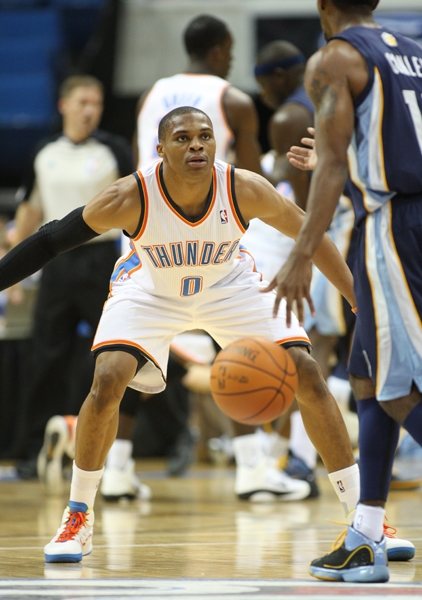
Here is a practical framework for building a defensive segment of practice.
Before selecting drills, the coach must first answer a more important question:
What kind of defense do we want to play?
The defensive style of the team must be clearly defined before it can be trained effectively.
Define Your Defensive Identity
Before designing the practice, answer the following questions.
What Is the Main Objective of the Defense?
Do we want to:
- force turnovers?
- protect the paint?
- influence the ball toward the sideline?
- influence the ball toward the middle?
There is no meaningful defensive drill without first understanding what the defense is trying to accomplish.
How Do We Transition Back on Defense?
Decide:
- how many players sprint back,
- which players are responsible for transition defense,
- and what their priorities are.
Transition defense must be organized rather than left to chance.
How Do We Defend the Post?
Decide how the team will guard an interior player.
Possible approaches include:
- fronting,
- playing on the high side,
- playing behind,
- changing the position according to the location of the ball,
- or trapping the post.
Whatever method is selected, the entire team must understand how to react when the post receives the ball.
How Do We Defend the Ball Handler?
Determine:
- whether the ball is influenced in a particular direction,
- whether the defender sends the ball toward the sideline or middle,
- whether the defender plays square,
- and how high on the floor pressure begins.
The on-ball defender must know exactly what the team expects.
How Do We Defend Away from the Ball?
The off-ball defense may include:
- denial,
- help positioning,
- and help-and-recover responsibilities.
The player without the ball is still involved in defending the ball.
How Do We Defend Screens?
Decide:
- whether the defense switches,
- when switching is allowed,
- and when defenders remain with their original assignments.
These decisions must be established before the team can execute them consistently.
Defensive Practice Priorities
Once the defensive philosophy has been defined, practice can be built around the following areas.
1. Pressure the Ball
Do not allow the ball handler to play comfortably.
The defender should influence what the offensive player can do rather than simply reacting.
2. Deny the Pass
Disrupt the offense.
Prevent or make difficult:
- passes,
- cuts,
- catches,
- and other offensive actions.
When playing denial defense, the objective is simple:
Do not allow your player to receive the ball easily.
When contesting rather than fully denying, force the offensive player to receive the ball farther away from the three-point line or from the preferred attacking area.
3. Defend the Post
The defense must have a clear plan for post play.
Possible approaches include:
- fronting,
- playing high side,
- adjusting according to whether the ball is above or below the free-throw line,
- playing behind,
- or trapping with different defenders.
The specific choice matters less than the fact that the entire team reacts together.
If the post catches the ball, the defense should know exactly what happens next.
When possible, force the interior player toward a more difficult shot, such as a fadeaway.
4. Help and Recover
A defender does not only guard an individual opponent.
Every defender also helps guard the ball.
Because containing the ball is one of the most difficult defensive responsibilities, off-ball defenders must be prepared to help and then recover to their own assignments.
5. Box Out
A defensive possession is not finished until the defense secures the rebound.
Force a difficult shot.
Then box out.
Then rebound.
Then run.
Practice Competitively
Competitive drills help maintain defensive intensity.
Instead of allowing the drill to continue without consequence, establish clear defensive objectives.
For example:
- require a weak-side box-out,
- require two consecutive defensive rebounds,
- or demand a certain number of defensive stops before the defense can leave the floor.
The defensive team should have something to earn.
Defensive Scoring
Another method is to create a scoring system.
For example:
- 3 points for forcing an offensive foul,
- 2 points for a defensive rebound or steal,
- 1 point for a deflection.
A competitive scoring system rewards the defensive behaviors the coach wants to develop.
Part 1 — Defensive Fundamentals
Use small-sided drills to teach individual and small-group defensive fundamentals.
Possible formats include:
- 1-on-1,
- 2-on-2,
- 3-on-3.
The original plan suggests four short drills of approximately three minutes each.
1-on-1: Defending the Ball
Objective
Teach the defender to:
- contain the ball handler,
- influence the drive,
- contest the shot,
- and finish the possession with a box-out.
1-on-1: Defending the Post
Objectives
Teach the defender to:
- defend the post position,
- deny or disrupt the entry pass,
- maintain the selected defensive position,
- and force a difficult shot if the ball is received.
1-on-1: Defending Away from the Ball
Practice off-ball defense from different locations:
- on the wing,
- on the ball side,
- on the weak side.
The coach may take the shot so the defender must finish the possession by boxing out.
Combination Drill
Combine several defensive responsibilities in one sequence.
Possible teaching points include:
- sprinting into help position,
- ball-side positioning,
- defending cuts,
- preventing backdoor cuts,
- forcing catches farther away from the basket,
- and boxing out.
2-on-2: Sprint to Help
The objective is to teach defensive positioning according to the movement of the ball.
Players should practice:
- helping on a baseline drive,
- recovering to their own player,
- denying a ball-side cutter,
- and boxing out.
A possible progression is:
- help position,
- baseline penetration,
- weak-side cut.
3-on-3: Closeout and Box-Out
Objective
Teach defenders to finish every defensive possession.
Emphasize:
- closeouts,
- containing penetration,
- contesting shots,
- and boxing out in every situation.
3-on-3: Defending Screens
Objective
Teach the defense to:
- disrupt catches,
- defend screening actions,
- defend cuts after screens,
- and execute the team’s chosen screen-defense rules.
4-on-3: Communication, Help and Recovery
Playing at a temporary numerical disadvantage forces defenders to communicate and cooperate.
Emphasize:
- communication,
- closeouts,
- help positioning,
- recovery,
- and defending penetration.
This type of drill teaches players that team defense is based on collective movement rather than isolated individual matchups.
Part 2 — Shell Drill
The Shell Drill can be used to develop team defensive positioning.
The main focus is:
- ball-side positioning,
- help-side positioning,
- movement with the ball,
- communication,
- and collective responsibility.
A possible progression includes:
- Sprint to help.
- Defend penetration.
- Defend cuts.
- Defend guard-to-wing screens.
- Defend guard-to-guard screens.
- Defend off-ball screens.
- Allow only the post player to operate inside.
- Defend every offensive intention and anticipate the next action.
The final goal is not simply reacting.
The defense should begin to think one action ahead.
Part 3 — Earn the Right to Play Offense
A powerful competitive method is to require the defensive team to achieve a specific objective before it can switch to offense.
Possible conditions include:
- three steals,
- three defensive rebounds,
- three offensive fouls forced,
- three consecutive defensive stops,
- or two consecutive stops.
The exact condition can change according to the emphasis of the practice.
The principle remains the same:
defense must earn possession.
Build Defense from the Inside Out
A strong defensive practice should not be a random collection of drills.
It should progress logically:
individual defense → small-group defense → team defense → competitive execution
First define the defensive philosophy.
Then teach the individual responsibilities.
Next connect players through help, recovery and communication.
Finally, place those principles into competitive situations.
Thirty focused minutes of defense can be extremely valuable when every drill reinforces the same defensive identity.