Címke: decision making

  • Teaching Tactical Principles Through Integrated Offense and Defense

    Teaching Tactical Principles Through Integrated Offense and Defense

    MKOSZ Coaching Clinic at the University of Physical Education
    June 24–25, 2016
    Summary of a presentation by Dr. Ágoston Nagy

    Introduction

    The style of play we choose helps define our team.

    A clear playing style can make a team:

    • stronger,
    • more consistent,
    • easier to evaluate,
    • and more valuable as a collective unit.

    Every player has an important role within this structure.

    Players are connected like links in a chain. They complement one another and contribute to each other’s development.

    The strength of the team is therefore influenced by its weakest link.

    For this reason, individual technical and tactical development cannot be neglected, and a team cannot be built exclusively around its current key players.

    The objective is to teach an offensive and defensive style in which the principles are:

    • understandable,
    • attractive,
    • achievable,
    • consistent,
    • and available to every player.

    This is particularly important in university-age basketball, where players are still developing both as athletes and as people.

    Understanding the Team

    The composition of a university team presents particular challenges.

    There may not be large age differences, but players can have very different basketball backgrounds.

    Some have played together for years.

    Some are clearly talented.

    Others possess potential that still needs to be developed.

    The program must provide a place for all of them.

    Use Competition as Part of the Learning Process

    University players can practice only as much as their academic schedule allows.

    Because of their age, they may also participate in several competitions.

    Games should therefore not be viewed only as events that must be won.

    They can also become part of the preparation process.

    Competition gives players additional opportunities to:

    • apply what they have learned,
    • reinforce habits,
    • experiment with new ideas,
    • gain playing experience,
    • and prepare for the most important competitions.

    Playing time per athlete across the week can itself become part of the development program.

    Basketball Changes Constantly

    The game evolves rapidly.

    A team that does not adapt will eventually fall behind.

    Our philosophy is to teach creative basketball.

    That means developing players who can recognize situations rather than merely reproduce memorized movements.

    The teaching method must therefore evolve as well.

    Especially at university age, a more inclusive teaching approach can involve players more deeply in the learning process.

    The emphasis should be placed on positive development.

    This requires positive personalities both on and off the court.

    The objective is not only to help players progress in basketball.

    They should also learn to see possibilities for growth outside their sporting careers.

    Quality Matters More Than Numbers

    Sometimes eight fully committed players can create a better practice environment than twelve players when even one or two negative influences consistently slow the group down.

    The quality of the learning environment matters.

    Modern technological tools can also support teaching, feedback and understanding.

    The Offensive Principles of DEAC

    One of the key objectives of teaching is to save time without sacrificing understanding.

    Players should not always be forced to restart their learning from the lowest possible level.

    Some already understand certain movements and concepts.

    Their experience can help accelerate the learning of the entire team.

    Instead of repeating identical patterns every day, coaches can:

    • change the drill,
    • change the emphasis,
    • increase the decision-making demand,
    • or add defensive reads.

    The objective is increasingly creative knowledge.

    Ultimately, we want players to make decisions that are:

    • faster,
    • more accurate,
    • and more effective.

    1. Ball Movement

    The more often the ball is moved from one side of the floor to the other, the more the defense must:

    • rotate,
    • communicate,
    • and close out.

    Ball movement creates defensive movement.

    Offensive Rules

    On the weak side, players should remain ready to receive the ball.

    When the ball arrives:

    • attack an aggressive closeout,
    • shoot when the defender gives too much space,
    • pass when the next advantage is available.

    Do not hold the ball unnecessarily.

    Think ahead.

    Know what you are likely to do before the catch.

    Avoid meaningless dribbles.

    After receiving the ball, look first to:

    shoot, drive or pass.

    2. Player Movement and Spacing

    Do not simply stand.

    A stationary offensive player is easier to guard and often forces the offense toward isolated 1-on-1 play.

    There are moments when maintaining space is important, but most offensive situations require intelligent movement.

    Cut Hard

    Every cut should have a purpose.

    Read the defense and choose the appropriate movement.

    Possible options include:

    • backdoor cuts,
    • ball-side cuts,
    • hard basket cuts,
    • and relocations into open space.

    Before cutting, move the defender.

    Use a fake.

    Change from slow movement to explosive movement.

    Every cut should threaten the basket.

    Even when the cutter does not receive the ball, the movement may create a scoring opportunity for a teammate.

    3. Screens

    Set legal screens.

    The objective of the screen is to help a teammate create an advantage.

    Do not use unnecessary force.

    And never remain stationary after setting the screen.

    Once the screen has been set, read:

    • the defender,
    • the ball,
    • and the movement of your teammate.

    Then decide where to move next.

    Screen with Purpose

    If the defense anticipates the screen, fake the screening action and exploit its reaction.

    The screener and the player using the screen must work together.

    Spacing and timing are essential.

    Using a Screen to Get Open

    Before using a screen, move your defender.

    Do not simply run toward the screen.

    Read how the defender plays it and select the appropriate cut.

    Possible solutions include:

    • curl,
    • straight cut,
    • fade,
    • or a more complex change of direction.

    For example, when a defender goes over the top of a down screen, a fade away from the basket may create the better receiving angle.

    Hand-Off

    The hand-off can also be used to help a teammate create separation.

    If the defense aggressively attacks the hand-off, the ball handler should be prepared to fake the exchange and attack the defender.

    The hand-off is not merely a transfer of the basketball.

    It is a two-player tactical action that requires reading the defense.

    4. Penetration

    Drive-and-kick actions must be organized.

    Players without the ball should understand the intention of the penetrator.

    A good drive forces the defense to collapse.

    That collapse creates passing opportunities.

    But the penetration must be believable.

    Attack the basket with the shoulder and body position suggesting a genuine scoring attempt before looking for the kick-out.

    If the defense believes the drive is threatening the basket, help will come deeper.

    That creates better passing opportunities.

    Be Ready for the Kick-Out

    The receiver should be in a low, ready position.

    From the catch, the player should be prepared to:

    • shoot,
    • drive,
    • or make the extra pass.

    Do not hold the ball unnecessarily.

    If the ball stops, the defense has time to recover and the advantage disappears.

    Control the Drive

    Penetration does not mean driving blindly as deep as possible.

    Avoid:

    • offensive fouls,
    • uncertain passes,
    • and driving into areas where too many defenders can reach the ball.

    A controlled drive creates an advantage.

    An uncontrolled drive can destroy it.

    5. Passing Angles

    Receivers must create passing lanes.

    Do not stand still while a teammate penetrates.

    Move upward or downward along the perimeter to create a useful passing angle.

    One of the best moments to relocate is when the defender turns the head to help.

    The receiver should also look for visual connection with the passer, particularly when the ball is being passed inside.

    Receive in an Athletic Position

    Do not catch the ball with straight legs and an upright body.

    Receive in a position from which you can immediately act.

    Before the ball arrives, begin thinking:

    • Can I shoot?
    • Can I drive?
    • Where is my defender?
    • Is the next pass available?

    Good offense starts before the catch.

    6. Inside-Out Play

    Interior and perimeter play should support one another.

    Post Play

    Get the ball inside.

    When defenders help toward the post, look for the pass back outside.

    Perimeter players should establish visual contact with the post player and move into useful passing lanes.

    A hard weak-side cut can also create an open scoring opportunity when the interior player is a good passer.

    Pass Fakes

    Unselfish offense is not only about passing.

    Sometimes the best way to create an opportunity for a teammate is to fake the pass.

    Pass fakes can:

    • move defenders,
    • open driving lanes,
    • create hand-off opportunities,
    • or improve an interior passing angle.

    The fake must be believable.

    Use the eyes and body.

    Protect the basketball with the torso while manipulating the defender.

    7. Controlled Offense

    Controlled offense is used to organize the movement of:

    • the basketball,
    • and the players.

    This can take the form of:

    • a set play,
    • or a continuity/motion system.

    But structure should never eliminate decision-making.

    Read the Defense

    Do not execute offense blindly.

    Do not perform a movement only because that is what the diagram says.

    If the defense overplays the intended action:

    punish the overplay.

    The system provides structure.

    The defense determines the final decision.

    8. Unselfish Basketball

    Make the Extra Pass

    Do not settle merely for a good shot.

    Search for a great shot.

    The extra pass often transforms an acceptable opportunity into a clean one.

    This mentality is contagious.

    Once players begin creating better shots for one another, the quality of the entire offense improves.

    Create Opportunities for Teammates

    Attack with the intention of creating an easier opportunity for someone else.

    This responsibility does not belong only to the point guard.

    Every player can create an advantage for a teammate.

    Celebrate Correct Basketball

    Recognize unselfish actions.

    Value the player who makes the correct pass.

    Value the screen that creates the shot.

    Value the cut that opens space for someone else.

    Everything should ultimately serve the team.

    Teaching Offense and Defense Together

    Offensive principles become more meaningful when they are learned against defensive principles.

    A player cannot truly understand spacing without understanding help defense.

    A player cannot understand the value of a closeout attack without learning what a good closeout looks like.

    A player cannot fully understand pick-and-roll offense without also understanding pick-and-roll defense.

    For this reason, tactical teaching should connect the two sides of the game.

    Main Areas of Offensive Practice

    The offense can be divided into several practical areas:

    • penetration,
    • cutting,
    • pick-and-roll,
    • transition,
    • 5-on-5 offense,
    • out-of-bounds situations,
    • and zone offense.

    These should not simply be memorized as separate plays.

    They should be connected through common principles.

    Daily Defensive Work

    Defensive elements can also appear continuously within the teaching process.

    Examples include:

    • closeouts and 1-on-1 defense,
    • transition defense,
    • pick-and-roll defense,
    • post defense,
    • rebounding,
    • and defending numerical advantages.

    The objective is to develop players who understand both sides of every tactical situation.

    Progressive Teaching

    Teaching can progress through different numerical situations.

    For example:

    1-on-1 → 3-on-1 → 5-on-3 → 5-on-5

    or:

    4-on-0 → 5-on-0 → 5-on-5

    The purpose is to gradually increase:

    • information,
    • pressure,
    • decision-making,
    • and tactical complexity.

    Constraint-Based Games

    Rules can be added to scrimmages to emphasize the desired behavior.

    Instead of simply playing 5-on-5 and hoping the correct habits appear, the coach can manipulate the scoring system.

    Defensive Emphasis Game

    Examples of defensive scoring conditions include:

    • +1 for a steal,
    • +1 for stopping transition without fouling,
    • −1 for allowing a three-point attempt.

    The offense can also receive rewards such as:

    • +1 for an offensive rebound,
    • +3 for successful transition offense.

    The scoring system tells players what matters.

    3-on-3 Stay-on-the-Court

    A competitive 3-on-3 format can require the winning team to remain on the floor.

    Additional tactical conditions can be introduced, such as:

    • pick-and-roll actions,
    • playing to two points,
    • no long outlet passes,
    • three-quarter-court pressure,
    • rewarding charges,
    • or requiring consecutive defensive stops.

    Such constraints connect tactical learning to competition.

    Accelerating the Game

    A scrimmage can also be scored to encourage faster basketball.

    For example:

    Defense

    • +1 for stopping the ball in transition without fouling.
    • +3 if the offense is prevented from attempting a shot from inside the free-throw area during the fast break.
    • −1 if the offense generates a three-point attempt in transition.

    Offense

    A basket scored from transition can count double.

    The objective is to make the tactical emphasis visible in the scoring.

    From Drills to Decisions

    The purpose of these exercises is not to create players who can reproduce drills perfectly.

    The purpose is to develop players who understand:

    • spacing,
    • ball movement,
    • timing,
    • screening,
    • penetration,
    • passing angles,
    • inside-out play,
    • defensive reactions,
    • and team responsibility.

    A drill is only a teaching tool.

    The game is the final test.

    Offense and Defense Are One Learning Process

    Basketball is not divided into two completely separate subjects called offense and defense.

    One creates the problem.

    The other provides the response.

    Then the first must adapt again.

    That interaction is the game.

    When players learn offensive and defensive principles together, they begin to understand not only what to do, but also why the action works.

    That is the foundation of tactical intelligence.

    And tactical intelligence gives players the freedom to play creatively without abandoning the principles of the team.
  • The Context of Rule Enforcement in Hungary’s NB II

    The Context of Rule Enforcement in Hungary’s NB II

    “A basketball game is won by the team that makes fewer mistakes.”

    This article examines basketball officiating and rule enforcement through the particular environment of Hungary’s NB II competition.

    It approaches the subject from several directions:

    • the structure of basketball,
    • the role of competition,
    • the characteristics of NB II,
    • the development of referees,
    • the evaluation of officiating,
    • and the responsibility shared by everyone involved in the game.

    Historical note: This article reflects the structure, financial conditions and officiating environment of Hungarian basketball at the time it was originally written. Specific league structures, regulations and costs should therefore be read as archival context rather than current information.

    Why NB II?

    NB II provides an interesting environment in which to examine rule enforcement.

    It is, in many respects, an unusual competition.

    Teams may have very different objectives, player profiles and levels of experience, while referees may also be at very different stages of their careers.

    That makes the league a valuable environment for examining how the rules of basketball are interpreted and applied in practice.

    The purpose of this discussion is broader than criticizing individual calls.

    It is about understanding the game and considering how all of its participants can contribute to its development.

    Basketball as a Demanding Game

    Basketball places extremely high demands on its participants.

    From the perspective of:

    • training theory,
    • rules,
    • sport psychology,
    • decision-making,
    • and technical execution,

    the game requires constant adaptation.

    Players, coaches, referees and officials are not simply participants.

    They all influence what the game becomes.

    They can contribute to its development — or slow that development down.

    Competition as Feedback

    Coaching is purposeful activity.

    It is also an educational process that shapes the entire personality of the athlete.

    There are many possible ways to reach a training objective, but only one team can ultimately win a championship.

    Individual games should therefore also be understood as checkpoints.

    They show whether:

    • the work is moving in the right direction,
    • the players understand what has been taught,
    • and the team can apply its learning under competitive pressure.

    Coaches must then help players process the result.

    Winning and losing are both forms of feedback.

    The Influence of the Referee

    Especially in youth basketball, the referee’s:

    • personality,
    • attitude,
    • preparation,
    • and professional knowledge

    can have an important effect on the game.

    A match that appears insignificant to an outsider may be extremely important within the development of a player or team.

    For that reason, it is dangerous to say:

    “It is only one game.”

    Every game represents the work of players and coaches.

    Careful and committed officiating should respect that work.

    Four Active Elements of the Game

    Basketball has four particularly important groups of active participants:

    • players,
    • coaches,
    • referees,
    • and table officials.

    All four should ultimately be working toward the same objective:

    a better basketball game.

    The game should develop continuously.

    That requires cooperation.

    The participants may have different responsibilities, but they should not behave as if they belong to opposing systems.

    They are all part of the same game.

    Respecting Each Other’s Work

    Coaches, players and referees experience basketball differently.

    For a committed coach, coaching may become much more than employment.

    It can become a central part of life.

    The work extends far beyond the duration of a practice.

    There is:

    • preparation,
    • planning,
    • teaching,
    • competition,
    • analysis,
    • evaluation,
    • and constant responsibility for other people.

    Referees also invest time in:

    • studying,
    • preparation,
    • physical readiness,
    • travel,
    • competition,
    • and professional development.

    For this reason, the different participants in basketball must respect each other’s work.

    That respect also creates responsibility.

    Basketball as Preparation for Life

    Basketball resembles life in many ways.

    There are rules.

    There are time limits.

    There are people evaluating your decisions.

    There are teammates trying to achieve the same objective.

    There are opponents trying to prevent it.

    You cannot simply take unlimited steps with the ball.

    You cannot use your elbows without consequence.

    You must make decisions under pressure.

    And mistakes matter.

    The team that makes fewer costly mistakes often has the better chance of winning.

    Outside basketball, people also experience real and perceived injustices.

    The way they learn to process these situations can become part of their development.

    That is one reason sport has value beyond competition itself.

    Making Fewer Mistakes

    The principle of minimizing mistakes applies not only to players.

    It also applies to referees.

    No referee can officiate a perfect game.

    But professional respect is earned through preparation and the effort to make as few mistakes as possible.

    That process begins before the opening tip.

    It includes:

    • arriving properly prepared,
    • appropriate appearance,
    • pre-game organization,
    • communication between officials,
    • understanding the level of competition,
    • and approaching the game with the correct attitude.

    Quality officiating begins long before the first whistle.

    The Development of Referees

    Referees should also have a developmental pathway.

    Progress should ideally be connected to:

    • clearly defined levels,
    • performance,
    • evaluation,
    • and examination games.

    Such a structure can create continuous professional control and healthy competition.

    Advancement should be understandable and predictable.

    The objective should not merely be to satisfy minimum requirements.

    The system should encourage commitment and development.

    One possible tool would be structured post-game evaluation in which teams provide standardized feedback that can support those responsible for referee appointments and development.

    Why NB II Can Be Important for Referee Development

    NB II can provide valuable examination situations for officials.

    It includes adult competition but may contain players with very different backgrounds.

    Some teams may be trying to progress toward higher divisions.

    Others may include former top-level players extending their careers.

    Some may primarily develop young players by exposing them to senior competition.

    Others may consist largely of veteran players.

    This variety makes the environment challenging.

    It also makes it useful for referee development.

    A Diverse Competition

    In the historical environment described in the original article, NB II could include several very different types of teams.

    Teams seeking promotion

    These clubs are actively attempting to move toward a higher competitive level.

    Their games may carry significant sporting consequences.

    Former high-level players

    Some teams include players who previously competed in the first division and are continuing their careers at a lower level.

    Their experience creates particular challenges for young referees.

    Developmental teams

    Some clubs use NB II to expose young players to the demands of adult basketball.

    Veteran teams

    Other teams may have a considerably higher average age and participate with different competitive objectives.

    A referee in this environment must therefore adapt to very different games and personalities.

    NB II Should Not Be Treated as an Inferior Game

    The prestige and future of a competition are influenced by the quality of its officiating.

    A referee should not approach an NB II game with less commitment simply because there are not thousands of spectators in the stands.

    The players and coaches still invest:

    • time,
    • energy,
    • preparation,
    • travel,
    • and financial resources

    into the competition.

    The game deserves appropriate professional attention.

    Officiating Under Pressure

    NB II can also be a difficult environment for referees.

    Decisions may receive intense criticism.

    Players and coaches may be experienced enough to have strong opinions about every call.

    The referee must therefore be prepared not only technically, but psychologically.

    Unexpected situations will occur.

    The ability to manage them is part of officiating.

    A technical foul can sometimes be necessary.

    But authority cannot depend solely on demonstrating the ability to punish.

    Managing a game also requires:

    • communication,
    • emotional control,
    • consistency,
    • and an understanding of people.

    Referee Communication

    Officials must also communicate effectively with each other.

    Teamwork between referees is essential.

    There can be situations in which an official hesitates because a call appears to belong to another referee’s area of responsibility.

    But the primary objective should remain the correct management of the game.

    The officiating crew functions as a team.

    As with players, poor cooperation weakens the entire unit.

    Communication with Players and Coaches

    Communication is not a one-sided process.

    The tone, timing and quality of communication influence how a situation develops.

    A referee who focuses only on mechanically performing the technical requirements of the job may overlook the human side of the game.

    Players and coaches also have responsibilities in this relationship.

    Respect must work in both directions.

    Preparation Begins Before the Game

    Reducing officiating errors begins with professional habits.

    These include:

    • punctuality,
    • appropriate clothing and appearance,
    • pre-game preparation,
    • communication with the officiating crew,
    • checking the playing environment,
    • and understanding the responsibilities of the table officials.

    A referee who arrives late or poorly prepared has already created an unnecessary problem before the game begins.

    Professionalism is visible before the ball is tossed.

    The Rules Must Be Enforced Consistently

    The original argument emphasizes that the level of competition should not fundamentally change the seriousness with which the rules are applied.

    Certain youth competitions naturally have specific developmental regulations.

    But within a given competition, rule enforcement should be:

    • clear,
    • consistent,
    • written,
    • and understandable.

    Players and coaches must know what is expected.

    Referees must know what is expected.

    Consistency gives everyone a better chance to learn.

    Referees Influence the Development of Basketball

    Officiating is not separate from player and coach development.

    The way the game is called influences:

    • which techniques players learn,
    • which defensive behaviors are rewarded,
    • which illegal advantages disappear,
    • how coaches teach,
    • and what style of basketball develops.

    This gives referees considerable responsibility.

    A consistently applied rule teaches.

    An inconsistently applied rule creates uncertainty.

    Everyone Is Responsible for the Game

    Players must improve.

    Coaches must improve.

    Referees must improve.

    Table officials and competition organizers must also improve.

    The development of basketball cannot be assigned to one group.

    Each group influences the others.

    The strongest environment is created when everyone understands that they are participating in the same process.

    The Goal

    The objective is not a basketball game without mistakes.

    Such a game does not exist.

    The objective is a culture in which every participant tries to reduce avoidable mistakes and improve the quality of the game.

    Players prepare to perform better.

    Coaches prepare to teach and lead better.

    Referees prepare to make better decisions.

    And all of them respect the work invested by the others.

    Because ultimately:

    the quality of basketball depends on the quality of everyone who takes part in it.

  • Preparing Our Youth Team for the Finals

    Preparing Our Youth Team for the Finals

    For years, I have attended the season-ending tournament for the youngest competitive age groups, traditionally held on the first weekend of June.

    What I have seen there has convinced me that conscious, systematic and well-planned development matters.

    It does more than make our daily work meaningful.

    It does more than help children succeed at one tournament.

    It begins to prepare them for the more serious basketball work that will follow in later years.

    The strongest teams at this tournament are usually already further ahead in their development than the others.

    That is one of the reasons they are more successful.

    At the same time, this is one of the most enjoyable competitions of the year.

    The effort, enthusiasm and emotions of the children create a special experience for players, coaches, parents and spectators alike.

    As the finals approach, coaches should begin answering some important questions.

    The answers will also tell us what we need to practice.

    What Have We Learned So Far?

    Morning Games

    How does the team perform early in the day?

    Are the players physically and mentally ready to compete immediately?

    Do we need to change the warm-up or preparation routine?

    Two Games in Succession

    How do the players respond when they have to play two games within a relatively short period?

    Can they maintain:

    • concentration,
    • effort,
    • defensive intensity,
    • decision-making,
    • and technical quality?

    Playing Against Strong Opponents

    What happens when the opponent is physically, technically or tactically stronger?

    Can our players continue to execute what they have learned?

    Or does the structure of our game disappear under pressure?

    Full-Court Pressure

    Can we play with pressure defense for extended periods?

    Can we also play effectively against pressure?

    Both sides of the problem must be trained.

    Rebounding

    Can we finish defensive possessions with the rebound?

    Can we create second opportunities through offensive rebounding?

    Boxing Out

    Do our players understand that rebounding begins before the ball comes off the rim?

    Boxing out must be taught deliberately.

    What Should a Team Be Able to Do by the Finals?

    The following list can serve as a developmental checklist.

    A strong youth team should increasingly be able to recognize and solve these situations.

    Defensive Transition

    Defend While Outnumbered

    Players must learn how to delay the offense when the defense is temporarily at a numerical disadvantage.

    They need to protect the basket first and buy time for teammates to recover.

    Sprint Back

    Transition defense begins with effort.

    Players must learn to return quickly and organize behind the ball.

    Rebounding

    Players should be able to:

    • locate the ball,
    • make contact,
    • box out,
    • pursue the rebound,
    • secure possession.

    Cutting

    Backdoor Cuts

    Players should recognize opportunities to cut behind an overplaying defender.

    General Cutting

    They need to understand:

    • timing,
    • spacing,
    • change of direction,
    • and when a cut creates an advantage for a teammate.

    Offensive Spacing

    Players should understand how to organize themselves on the floor and maintain useful spacing.

    One-on-One Play

    Every player needs experience attacking and defending 1-on-1.

    Young players must gradually learn:

    • how to create an advantage,
    • how to protect the ball,
    • how to finish,
    • and how to defend without unnecessary fouling.

    Inbound Situations

    Baseline and sideline inbound plays should not be completely unfamiliar situations by the time the team reaches a final tournament.

    Interior One-on-One Play

    Players should experience receiving the ball inside and playing 1-on-1 from the post.

    At this age, this is also part of developing complete basketball players rather than assigning permanent positions too early.

    Free Throws

    Free-throw shooting must be practiced regularly.

    Players should experience shooting free throws:

    • when fresh,
    • when tired,
    • and under competitive pressure.

    Mid-Range Shooting

    Players should gradually develop the ability to finish from different distances rather than relying on only one type of shot.

    Offensive Concepts

    Pressing

    Players should understand the basic principles of applying full-court pressure.

    Playing Without a Dribble

    Can the team create offense without immediately putting the ball on the floor?

    This develops:

    • passing,
    • cutting,
    • spacing,
    • vision,
    • and decision-making.

    One-Dribble Basketball

    Limiting players to one dribble can also be a valuable teaching constraint.

    It forces them to think before using the dribble.

    Controlling the Ball and Tempo

    Players should experience situations in which the objective is not simply to attack as quickly as possible.

    They should also begin learning how to control possession and tempo.

    Isolation

    Players should recognize when a 1-on-1 advantage exists and how the other four players should create space around it.

    Motion Offense

    Young players should learn offense through:

    • movement,
    • passing,
    • cutting,
    • spacing,
    • and reading the defense.

    The goal is not simply to memorize patterns.

    The goal is to learn how to play.

    Drawing Offensive Fouls

    Players should gradually recognize situations in which legal defensive position can create an offensive foul.

    Loose Balls

    A competitive team must react immediately to loose-ball situations.

    These possessions often reveal more about mentality than tactical knowledge.

    Defensive Concepts

    Sagging and Help Position

    Players should understand when and how to move away from their own matchup to protect dangerous areas of the court.

    Half-Court Defense

    The team should be capable of organizing its defense from half court.

    Double-Teams

    Players need to understand:

    • when a double-team is initiated,
    • where it comes from,
    • and how the remaining defenders rotate.

    1+4 Defense

    Special defensive concepts can also be introduced when appropriate, provided players understand the individual defensive principles underneath them.

    Press-Break Offense

    The team should know how to organize itself when facing full-court pressure.

    Players need solutions for:

    • getting open,
    • inbounding safely,
    • creating passing angles,
    • advancing the ball,
    • and attacking once the press is broken.

    Special Situations

    Jump-Ball Situations

    Players should know their responsibilities when possession begins from a jump-ball situation.

    After Free Throws

    What happens after a made or missed free throw?

    Players should know where to go and what their next responsibility is.

    End-of-Game Situations

    Even young players should gradually experience basic late-game situations.

    They need to learn:

    • when to attack,
    • when to protect possession,
    • when to foul,
    • how to manage the clock,
    • and how to remain calm.

    Developing Small-Group Cooperation

    Two- and Three-Player Connections

    Before players can understand complex 5-on-5 basketball, they need to learn how two and three players cooperate.

    This includes:

    • passing and cutting,
    • drive-and-kick situations,
    • help and recovery,
    • screening actions,
    • and basic rotations.

    Small-sided games are one of the most effective environments for teaching these relationships.

    Individual Defensive Skills

    Defending Cuts

    Players must learn how to maintain position and prevent easy cuts toward the basket.

    Defending the Post Entry

    The defense should understand how to make interior passes more difficult.

    Influencing the Ball Handler Toward the Sideline

    Players should learn how defensive positioning can guide the attacker toward less dangerous areas of the court.

    Influencing the Ball Handler Toward the Weak Hand

    When appropriate, defenders can learn to influence an offensive player toward the weaker hand.

    What Does the Champion Know?

    The purpose of such a checklist is not to turn children into miniature professional players.

    Nor should every item be mastered perfectly before the tournament.

    The real question is:

    How far has the team progressed in understanding the game?

    The strongest youth teams are usually not successful because they know the greatest number of set plays.

    They are successful because their players can solve more basketball situations.

    They can:

    • transition,
    • defend,
    • rebound,
    • pass,
    • cut,
    • play 1-on-1,
    • cooperate in small groups,
    • handle pressure,
    • and make increasingly independent decisions.

    That is why preparation for a final tournament should be more than preparation for a few games.

    It should be another stage in the long-term development of the young basketball player.

    The tournament gives us a target.

    But development remains the real objective.

  • Mental Preparation

    Mental Preparation

    A good basketball player cannot be defined simply by having a good shooting touch.

    What truly characterizes a player is the mental ability with which he or she plays the game.

    Let us think about that.

    Basketball Is a Mental Game

    Beyond a certain level, basketball may be considered roughly 20% physical and 80% mental.

    Like tennis and golf, basketball is also a game played in the mind.

    As awareness develops, players begin to see the game differently.

    Decisions become clearer.

    Situations become easier to recognize.

    The game begins to slow down mentally, even though physically it remains just as fast.

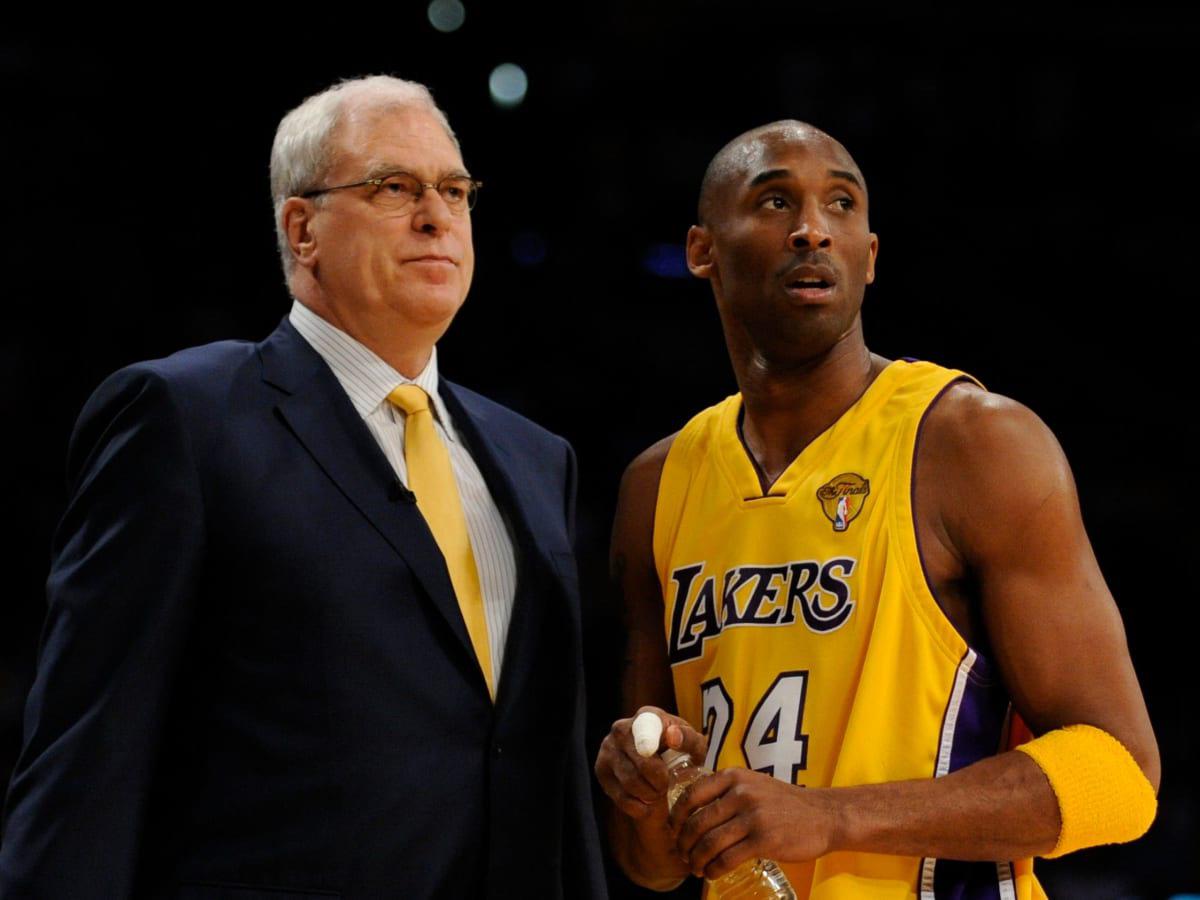
    Phil Jackson has suggested that basketball players often become calmer and more mature around the age of 28.

    By that stage, they may develop into more conscious and reliable role players who understand how to contribute successfully to a team.

    Better Players Make Better Decisions

    Watt Nicoll once raised a simple question:

    What is the difference between Zinedine Zidane and a third-division football player?

    One important answer is that Zidane makes the correct decision earlier.

    That principle applies directly to basketball.

    At higher levels, players may possess similar technical and physical skills.

    The difference is often:

    • what they recognize,
    • when they recognize it,
    • and how quickly they choose the right solution.

    Mental preparation therefore cannot be separated from technical and tactical development.

    The Whole Is Greater Than the Sum of Its Parts

    One of the fundamental principles of team sport is that:

    the whole can become greater than the sum of its individual parts.

    A collection of talented players does not automatically create a great team.

    It is much easier to build a successful group when we think of the players first as a team, rather than simply as a collection of gifted individuals.

    If we create prima donnas, problems will eventually appear.

    Talent matters.

    But talent without cooperation can work against the team.

    Managing the Ego

    Managing the ego is therefore critical.

    A player should ask:

    Do you want to win?

    Do you want to become a champion?

    A legend?

    A hero?

    If the answer is yes, then individual ambition must eventually serve something larger.

    Michael Jordan did not become great simply because of his own individual performances.

    Part of his greatness came from helping the people around him become better and more important within the team.

    That mentality can also be transferred into everyday work.

    The best players do not only ask:

    “How can I be better?”

    They also ask:

    “How can I make the team better?”

    That may be one of the most important aspects of mental preparation.

    Because at the highest level, technical ability alone is not enough.

    Players must learn to:

    • recognize situations,
    • make decisions,
    • manage their ego,
    • understand their role,
    • trust teammates,
    • and place individual talent inside a collective purpose.

    The mind does not simply support performance.

    It shapes the way the game is played.

  • Four Aspects of Offense

    Four Aspects of Offense

    We divide our offense into four main parts:

    1. Early offense
    2. Motion offense
    3. Controlled half-court offense against a set defense
    4. Isolation

    Each phase has a different purpose, but together they create a complete offensive system.

    1. Early Offense

    Fast break and secondary break are our primary tools for attacking before the defense becomes organized.

    The secondary break I teach is different from what many other teams use.

    That difference itself can become an advantage.

    If opponents have to spend additional time preparing specifically for our offense, they have less time to work on their own system.

    Our secondary break is designed to create quick, high-quality scoring opportunities.

    We do not simply run with the ball.

    We sprint with it.

    There is a difference.

    We want to attack at full speed and create either:

    • a layup,
    • an easy shot,
    • or an immediate advantage.

    Our goal is to punish every opponent who fails to sprint back on defense.

    If the defense does recover and there is no immediate, accurate and high-quality scoring opportunity, we begin moving the ball.

    From there, we search for:

    • a prepared quality shot,
    • or an opportunity to play inside.

    Attack the Paint Aggressively

    We want to attack the paint with aggression.

    If our secondary break works effectively, we should be able to win many games from the free-throw line.

    One important objective is to attempt more free throws than the opponent.

    If we sprint the floor hard enough, the defense has to react.

    Speed places defenders under pressure.

    If they cannot keep up, they are often forced to foul.

    2. Motion Offense

    If we do not create a scoring opportunity from the break or from the first series of quick passes — for example, after reversing the ball to the opposite side — we enter our motion offense.

    This phase gives players enough creative freedom to play basketball.

    That requires an important coaching distinction:

    We must teach players how to play, not only what to play.

    The objective is to make every player better.

    If every individual improves, the team improves as well.

    The fast break can be stopped.

    And it is unrealistic to expect every point to come from controlled half-court offense.

    When both the transition game and structured offense fail to create an advantage, players must still be capable of making plays.

    Four Roles Within the Motion Offense

    I divide our motion offense into four main roles:

    • ball handlers,
    • screeners,
    • cutters,
    • interior players.

    Each component should be taught in detail.

    We begin with simple situations such as 2-on-0.

    Then we add defenders.

    Step by step, the teaching progresses through increasingly complex situations until players can execute the principles in:

    • 4-on-4,
    • and eventually 5-on-5.

    By building the system through these smaller components, the complete motion offense gradually develops.

    Every Player Must Understand Every Role

    One of the most important principles of the system is that every player must know, practice and apply different roles.

    At certain moments, any player may have to perform almost any responsibility.

    If we want to exploit mismatches, our interior players must be capable of making entry passes.

    At the same time, our guards must understand post play.

    We therefore need to develop players who are comfortable with every major element of the motion offense.

    These skills will also improve our controlled half-court offense.

    3. Controlled Half-Court Offense

    We only enter our controlled half-court offense when neither the early offense nor the motion offense produces a quality shot.

    If approximately 12–13 seconds pass without a clear and efficient scoring opportunity, we begin our structured offense.

    Many teams prefer to run their controlled sets first.

    Only when those actions fail do they begin to play more freely.

    I want to do the opposite.

    I want our team to play differently from most opponents.

    That makes preparation against us more difficult.

    Opponents do not enjoy spending twenty seconds repeatedly working in a defensive stance while trying to contain continuous offensive movement.

    Search for High-Percentage Finishes

    Our controlled offense primarily searches for opportunities near the basket rather than outside shots.

    The main exception is when we specifically need a three-point field goal.

    Structured offense must always be designed around the strengths and weaknesses of the players available.

    For example, it makes little sense to design a final action around a lob pass if the personnel cannot execute that action consistently.

    The offense should emphasize strengths.

    It should not expose weaknesses unnecessarily.

    Every Play Needs Multiple Options

    Each set should contain two or three possible finishing options.

    Our primary target may be the center — the 5 — but we should also create opportunities for other players, such as the 4 or the 2.

    The center may become tired.

    The defense may remove the first option.

    When that happens, another player or another part of the action must become more important.

    Multiple options also make it easier to adjust when the defense reacts successfully.

    The goal is to make a good decision when the primary option is taken away.

    Attack the Opponent’s Weaknesses

    Controlled offense allows us to target weaknesses in the opponent’s defense.

    Sometimes it is difficult to explain every individual weakness to the players during a game.

    But by selecting the correct play, we can attack that weakness without needing a long explanation.

    For example, if the opponent’s center cannot defend our 5 on the perimeter, we can run an action that forces that defender away from the basket.

    The right play can also help keep the ball away from players who should not be asked to handle it excessively.

    The offensive structure itself can guide decision-making.

    How Many Plays Do We Need?

    In my experience, we may begin a season using approximately 8–12 controlled offensive plays.

    By the end of the season, that number often decreases to around 6–8.

    Why?

    Because there may only be roughly 20–25 controlled half-court possessions in a game.

    The remaining shots come from:

    • early offense,
    • motion offense,
    • zone offense,
    • or isolation.

    During the first half of the season, we evaluate which plays fit the team best.

    Over time, the players themselves begin to reveal which actions are most useful.

    There is no need to worry that opponents will completely scout us simply because we use only six primary plays.

    Each play can contain several possible finishes.

    If the defense finds one effective way to stop an action, we can react quickly through the other options built into it.

    4. Isolation

    We do not use isolation very often.

    However, when the shot clock is approaching its final seconds, it is extremely useful to have a player who can create a scoring opportunity individually.

    If early offense, motion offense and controlled offense have all failed, we need another solution.

    At that point, we put the ball into the hands of our most creative player.

    Then we either:

    • clear the floor,
    • or provide a screen.

    But we want to avoid the hero shot.

    That is the type of shot where, if it goes in, the crowd erupts and the player becomes a hero.

    If it misses, everyone simply says:

    “Well, it was almost impossible anyway.”

    That is not the kind of offense we want.

    Isolation Must Be Practiced

    Creative players also need to practice the exact situations they are likely to face late in possessions.

    Isolation should not mean improvisation without preparation.

    We need actions that can reliably create a legitimate scoring opportunity within approximately seven seconds.

    The objective is not to ask a player to perform a miracle.

    The objective is to give the right player enough space, structure and preparation to create a good shot.

    Bringing the Four Aspects Together

    A complete offense cannot depend on only one method of scoring.

    Transition can be stopped.

    Motion offense will not always create an advantage.

    Controlled sets can be defended.

    And isolation should never become the primary solution.

    The strength of the system comes from connecting all four phases.

    We begin with speed.

    If that does not produce an advantage, we flow into movement.

    If the defense remains organized, we use controlled offense.

    And when the possession reaches its final stage, we rely on a prepared creative solution.

    The purpose is not simply to run plays.

    It is to develop players who understand when to run, when to move, when to execute and when to create.

  • Stereotypes in Coaching Decision-Making

    Stereotypes in Coaching Decision-Making

    A successful, confident and media-visible coach may easily be perceived as more competent and less fallible than others.

    As a result, obvious mistakes can become more difficult to recognize.

    This is known as the halo effect.

    Understanding Coaching Decisions

    To understand coaching decisions and choices, we need a specific vocabulary.

    Decision-making is affected by systematic errors and biases that tend to appear repeatedly under particular circumstances.

    Mental processes continuously operate in our minds without attracting our attention.

    They create impressions, intuitions and ultimately decisions.

    By their nature, intuition can be biased.

    Yet we often trust these intuitive judgments because they feel correct and convincing.

    An outside observer may sometimes recognize our mistakes more easily than we do ourselves.

    This is one reason why assistant coaches and other members of the coaching staff can play such an important role.

    When responsibilities and decision-making authority are appropriately distributed, colleagues can help the head coach make more rational decisions both during immediate game situations and later during evaluation.

    Are Coaches Good Intuitive Statisticians?

    Are basketball coaches good intuitive decision-makers?

    Are the statistical indicators commonly used in game analysis sufficiently reliable?

    Do they provide enough information to establish meaningful patterns?

    Probably not always.

    This also suggests that coaches may not be particularly good intuitive statisticians.

    Coaches constantly search for immediate answers to problems that occur during games.

    Observations suggest that significant differences exist in how coaches interpret the same situations and in what first comes to mind when they encounter them.

    Naturally, certain impressions and intuitive responses are shared by many coaches.

    For example, when a player receives a second personal foul in the first quarter, many coaches will immediately consider substituting that player.

    There are therefore recognizable similarities in coaching behavior.

    However, decisions should not always be based exclusively on the assumption that similar situations require similar solutions.

    That approach can become a rule of thumb — a simplified heuristic.

    Reliance on such shortcuts can produce bias and systematic error.

    The Availability Heuristic

    Many decisions are made by responding to a problem with the first solution that comes to mind.

    A strategy based on how quickly a relevant memory or example can be retrieved is known as the availability heuristic.

    Judgmental heuristics can also create bias.

    Imagine asking:

    Who is currently the most successful coach in sport?

    There is a good chance that many people will mention the same familiar names.

    Media exposure makes these individuals highly available in our memory.

    We know them.

    They are the first people who come to mind.

    But if we were asked to define exactly which characteristics make them the best coaches, we might suddenly find the question far more difficult.

    This is another example of intuitive bias — even if the initial judgment may contain some truth.

    Intuition, Prediction and Basketball Trends

    This leads toward an important central question:

    What role can intuitive bias play in anticipation, prediction and the identification of sporting principles and trends?

    In an earlier article, I discussed the above-average intuition of exploratory coaches — those who constantly search for new solutions.

    It would be interesting to compare the biases affecting their judgments with those affecting more conservative coaches who prefer lower-risk decisions.

    In my view, bias probably exists in both groups.

    However, these decisions should not automatically be explained only by heightened emotional states.

    Heuristics may offer a more useful framework for identifying the underlying relationships.

    Why We Need to Examine the Coach’s Toolbox

    The tools used by coaches require closer analysis because we are naturally inclined to explain problems through the causes that come most quickly to mind.

    Frequently discussed topics occupy our thinking.

    As a consequence, other important problems may receive insufficient attention.

    An important starting point is the generally accepted principle that:

    the human mind is vulnerable to systematic error.

    Alongside chance, this may have substantial importance when attempting to explain scientifically why coaches differ from one another.

    Several interesting research questions follow.

    How do coaches react under uncertainty?

    What decisions do they make?

    How do they weigh different alternatives?

    Do intuitive decisions correspond with logic?

    And if not, how large is the gap between rational judgment and intuitive judgment?

    Heuristics and Expert Intuition

    Daniel Kahneman argued that judgmental heuristics can be extremely useful, but they can also produce serious and systematic errors.

    Accurate professional intuition, however, can often be explained more effectively by extensive experience than by heuristic shortcuts alone.

    This distinction is important for studying basketball coaches.

    Skills developed through experience and heuristic processes can therefore be considered alternative sources of intuitive decisions and choices.

    End-of-Game Decisions

    End-game situations in basketball create a particularly demanding group of tactical problems.

    The outcome of these situations can often depend heavily on expert intuition.

    Several pieces of information may have to be processed almost simultaneously:

    • the score,
    • the remaining time,
    • the flow and tendencies of the game,
    • the players currently on the court,
    • their physical and psychological condition,
    • the opponent’s lineup,
    • and the known tendencies of the opposing coach.

    Together, these elements may allow an experienced coach to recognize a tactical opportunity almost instantly.

    The coach then has to choose a solution that the players on the court are realistically capable of executing.

    Although this can appear almost magical, expert intuition is not magic.

    We experience examples of it regularly.

    From a player’s body language, an experienced coach may recognize that a player who is bent over and breathing heavily needs to be substituted.

    A hesitant ball handler may become an obvious trapping target.

    A poor free-throw shooter may become the player whom the defense deliberately chooses to foul.

    These responses can appear immediate.

    But they are often based on accumulated experience.

    Intuition as Recognition

    Excellent coaches interpret available information differently.

    According to Herbert Simon’s concept of expertise, an expert recognizes a situation, retrieves relevant information from memory and identifies an appropriate response.

    From this perspective:

    intuition is recognition.

    Effective intuition develops when an expert coach recognizes familiar elements within a new situation and responds appropriately.

    The recognition may occur extremely quickly.

    For example, after seeing the opponent’s starting five and combining that information with other impressions, a coach may suddenly decide to modify elements of the previously agreed game plan.

    This is one of the most important characteristics of expert decision-making.

    However, not every intuitive response represents expertise.

    Some intuitive judgments are strongly influenced by emotion.

    These affect heuristics may also play an increasingly important role in explaining coaching decisions.

    Fast and Slow Coaching Decisions

    When a coach encounters a problem, intuitive thinking is activated immediately.

    With sufficient expertise, this may produce a series of rapid and effective decisions.

    However, when the problem becomes more difficult, something else may happen.

    A fast answer may appear that actually solves a different and easier problem rather than the one originally faced.

    This gives intuition another route toward a solution — but it may also produce error.

    Imagine facing an opponent with two extremely large centers.

    The obvious concern may be defensive rebounding.

    One intuitive response could be to increase the tempo, shorten offensive possessions and force those larger players into a game that requires more repeated movement.

    The strategy might become even more effective if combined with full-court defensive pressure.

    The original problem was the opponent’s size and rebounding advantage.

    The response, however, attacks a different characteristic: the ability of those large players to function effectively in a faster and more physically demanding game.

    That may prove to be an excellent solution.

    Or it may simply be an intuitive shortcut.

    The difference is not always immediately obvious.

    When No Immediate Answer Appears

    Sometimes neither an expert solution nor a heuristic response immediately comes to mind.

    At that point, the coach has to make a greater cognitive effort.

    Decision-making becomes slower.

    More information must be deliberately examined and evaluated.

    We can therefore distinguish two broad forms of decision-making.

    Fast Decisions

    Fast decisions include both:

    • expert intuitive responses,
    • and heuristic responses.

    Perception and memory produce largely automatic mental operations.

    The answer appears quickly.

    Slow Decisions

    Slow decisions require more complex cognitive effort.

    The coach must consciously evaluate:

    • the available information,
    • possible consequences,
    • tactical alternatives,
    • risks,
    • and the probability of success.

    This process requires more time and deliberate attention.

    Expert Intuition or Cognitive Bias?

    The central challenge is that both expertise and bias can produce decisions that feel intuitive.

    The coach experiences both as an immediate sense of what should be done.

    The difference lies in where that intuition comes from.

    Expert intuition develops through extensive experience and repeated exposure to recognizable situations.

    Heuristic intuition relies more heavily on simplified mental shortcuts.

    Emotional intuition may be influenced by feelings and immediate impressions.

    All three can contribute to coaching decisions.

    Understanding which mechanism is operating at a particular moment may help explain why some coaches repeatedly make more effective decisions than others.

    The Role of the Coaching Staff

    This also reinforces the importance of a coaching staff.

    A coach working alone may become trapped within his own interpretation of a situation.

    Assistant coaches can provide alternative observations and challenge the first answer that comes to mind.

    Different responsibilities, perspectives and areas of expertise may reduce the effects of individual bias.

    The objective is not to eliminate intuition.

    That would be neither possible nor desirable.

    Instead, the objective should be to distinguish more effectively between:

    • intuition based on expertise,
    • intuition based on heuristics,
    • and intuition influenced primarily by emotion.

    Conclusion

    Basketball requires countless decisions under uncertainty.

    Many of them have to be made within seconds.

    Experienced coaches develop the ability to recognize familiar patterns, retrieve relevant knowledge and respond extremely quickly.

    This is the strength of expert intuition.

    At the same time, the human mind is naturally vulnerable to systematic errors.

    Familiarity, media exposure, emotional impressions and easily accessible memories can all influence judgment.

    The same mental mechanisms that allow us to make rapid decisions may therefore also lead us toward predictable mistakes.

    For coaches, the challenge is not to abandon intuition.

    The challenge is to understand it.

    We need to recognize when an immediate decision is supported by genuine expertise and when it may simply reflect a familiar stereotype, an available memory or an emotional response.

    When intuition provides no reliable answer, slower and more deliberate thinking becomes necessary.

    The better coaches understand these processes, the more effectively they can evaluate their own decisions — and the more rationally they can use one of the most powerful tools available to them:

    experience.