
Címke: confidence

  • The Credible Coach

    The Credible Coach

    Have you ever wondered why some coaches achieve sustained success with their teams while others struggle even to win more games than they lose?

    Most coaches have probably asked themselves questions like these:

    • How do successful coaches build winning programs and maintain them year after year, even when everyone is trying to beat them?
    • How can some coaches recover from disappointing seasons, start winning again and eventually return to championship level?
    • Why are some coaches able to bring out the best in their players while athletes under other coaches consistently underperform?
    • How do certain coaches earn the trust, respect and belief of their players while others struggle even to get their attention?

    Some of the answers can be found when coaches talk to one another, exchange experiences and pay attention to what happens behind successful programs.

    Modern coaching increasingly requires an approach different from the traditional model.

    Motivation can no longer rely primarily on autocratic leadership and fear.

    Instead, successful coaches work to create strong relationships with their players — relationships built on trust.

    Coaching is fundamentally about relationships.

    It extends far beyond the individual coach.

    The coaching staff and the team must create an environment in which people believe in one another.

    Without that belief, very little can be achieved.

    When players genuinely believe in their coach and in each other, extraordinary things become possible.

    The Seven Foundations of the Credible Coach

    A credible coach combines seven fundamental qualities.

    We might call them the Seven Secrets of Successful Coaching.

    Consider each one carefully — and ask yourself how strongly it describes your own coaching.

    1. Character

    The credible coach tries to do what is right.

    He respects his athletes.

    He tells them the truth.

    He does not manipulate them.

    He leads the team professionally and surrounds himself with people of strong character.

    Over the long term, character can be just as important as talent.

    Players quickly recognize whether their coach’s words and actions are consistent.

    Credibility begins with integrity.

    2. Competence

    The credible coach understands the fundamentals and strategies of the game.

    He knows how to make appropriate adjustments and is capable of solving problems when situations change.

    But knowledge of the present is not enough.

    A credible coach remains curious.

    He searches for:

    • new ideas,
    • innovative methods,
    • better teaching techniques,
    • and opportunities for improvement.

    He remains a student of the game throughout his life.

    Recognizing limitations and admitting mistakes are not signs of weakness.

    They are signs of professional maturity.

    The credible coach is ambitious and action-oriented, but remains humble and focused on improvement.

    3. Commitment

    The credible coach is deeply committed.

    He presents the team with a vision of a successful future and does more than simply talk about it.

    He helps make that vision possible.

    His coaching is driven by genuine passion.

    That passion creates energy and enthusiasm.

    He is also resilient.

    Every season brings inevitable disappointments, defeats and difficulties.

    The credible coach possesses enough energy and flexibility to survive those storms.

    He is a competitor.

    He enjoys competition.

    And he enjoys winning.

    4. Caring

    The credible coach genuinely cares about the players.

    He wants the best for them not only in basketball, but in life.

    Whenever possible, he tries to help.

    He invests time in getting to know his athletes as people.

    He shows interest in:

    • their families,
    • their friends,
    • their goals,
    • their ambitions,
    • and their lives away from basketball.

    This relationship does not necessarily end when a player’s career ends.

    In many cases, the connection between coach and athlete lasts a lifetime.

    That is one of the most powerful elements of coaching.

    5. Building Confidence

    The credible coach continuously builds confidence in his players.

    He helps them believe that success is possible and shows them how they can achieve it.

    Players should feel that, with appropriate preparation and effort, they are capable of accomplishing meaningful goals.

    The credible coach maintains high expectations.

    But high expectations must be combined with patience.

    Development takes time.

    Players will fail.

    They will make mistakes.

    Their confidence will sometimes disappear.

    When this happens, the credible coach understands how to support them and help them return successfully to the court.

    The goal is not to protect players from every failure.

    The goal is to help them recover from it.

    6. Communication

    The credible coach is an excellent communicator.

    He is:

    • open,
    • honest,
    • direct,
    • and clear.

    When speaking with an individual player or with the entire team, he constantly redirects attention toward the task.

    He expects the best from his players and communicates that belief to them.

    But communication is not only about speaking.

    The credible coach also listens.

    He takes the time to understand where players are coming from.

    That knowledge allows him to make better decisions.

    It also helps him recognize conflicts early and deal with problems before they become significantly larger.

    Communication creates understanding.

    Understanding creates trust.

    And trust creates the foundation for effective coaching.

    7. Consistency

    The credible coach develops a clear coaching philosophy.

    The principles behind that philosophy remain relatively stable over time, although the methods can adapt to changing players and changing situations.

    The credible coach maintains a balanced approach whether the team is winning or losing.

    He controls the emotional temperature of the group.

    He creates a sense of calm so that the team does not rise too high after success or fall too low after failure.

    Team standards and rules are applied consistently.

    New rules may sometimes become necessary.

    But once established, they must also be applied consistently.

    Players need to know where the boundaries are.

    They need to know what is expected.

    And they need to believe that those expectations apply fairly.

    Preparation Matters

    Finally, the credible coach is organized.

    Preparation is taken seriously.

    Successful coaching is rarely the product of improvisation alone.

    Practices are prepared.

    Games are prepared.

    Players are prepared.

    The coaching staff is prepared.

    And the coach prepares himself.

    Being a credible coach is not easy.

    It is both a challenge and a responsibility.

    But motivated, disciplined and committed players recognize the value of a coach they can trust.

    That is why building credibility is worth the effort.

    Because ultimately, players do not simply follow tactics.

    They follow people they believe in.
  • An Anxious Genius

    An Anxious Genius

    Kobe Bryant’s Return Did Not Go the Way We Expected

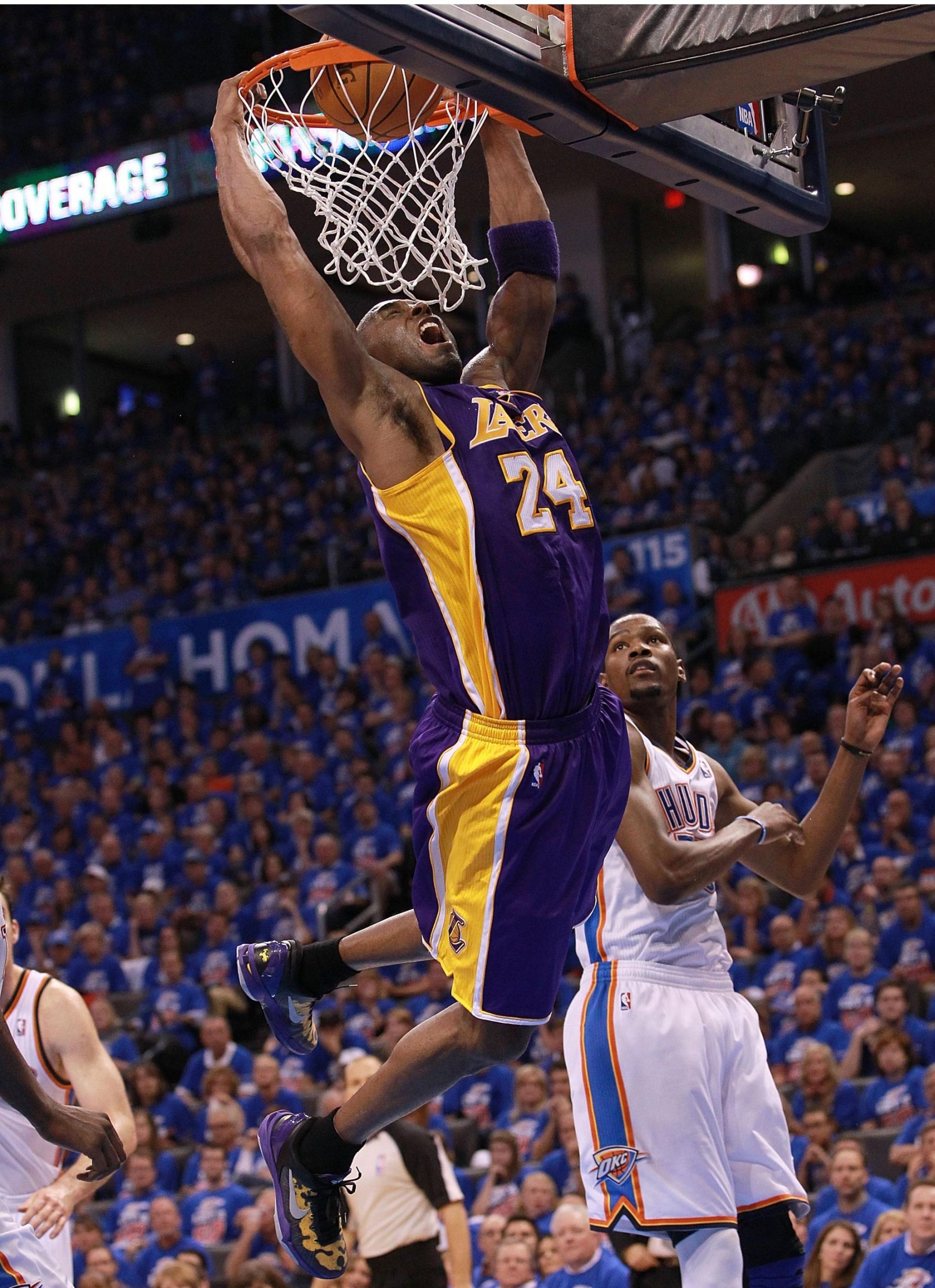
    As a youth basketball coach, I experienced a strangely familiar feeling when I stayed up that night to watch one of the greatest players of all time return to the court on NBA TV GameTime.

    Despite the 3:30 a.m. start, I was genuinely excited to see how the icon would perform.

    Just as millions of people had supported Derrick Rose during his comeback, millions were now hoping for Kobe Bryant to succeed — whether they were Lakers fans or not.

    Something Was Different

    Kobe’s body language made it obvious that he was fighting with himself.

    He desperately wanted to meet the expectations surrounding his return.

    For several minutes, he barely attacked the basket.

    Instead, he tried to contribute by creating opportunities for others.

    Defensively, he seemed to overcompensate.

    He frequently looked toward his teammates, searching for connection and reassurance.

    The familiar ease was missing from his game.

    He appeared to be forcing himself into the rhythm of the match.

    Even after creating assists, very little changed.

    Some of his passes — including one to Pau Gasol — showed flashes of his extraordinary vision, yet even while searching for safe solutions he occasionally drifted into risky decisions.

    One pass even seemed to surprise Jonas Valančiūnas so much that he almost forgot to raise his hands to intercept it.

    There was no real harmony in Kobe’s movement.

    The problems appeared most clearly on defense.

    During his limited minutes, he accumulated four relatively easy personal fouls, making it even harder for him to settle into the game and contribute at the level he expected from himself.

    When Confidence Begins to Shake

    There was hesitation on his drives.

    From my perspective, even his first field goal was more complicated than it needed to be. He finished with his left hand — something many people might interpret as skill rather than uncertainty.

    And of course, who am I to question Kobe Bryant?

    But he simply did not look like himself.

    You could sense it at the free-throw line.

    You could see it on some of his drives, where it was difficult to understand exactly what he intended to do at the end of the movement.

    At times, the ball almost seemed to hesitate in his hands.

    That uncertainty eventually resulted in turnovers.

    For a serious competitor, this can become one of the most stressful situations in basketball.

    And it is particularly difficult to reverse when mistakes begin to accumulate.

    Turnover.

    Foul.

    Missed shot.

    Another mistake.

    Then another.

    The Lesson

    Basketball can become a mental stress bomb.

    Every small detail can contribute either to success or failure.

    The level of expectation placed upon us — and the expectations we place upon ourselves — matter.

    So does the lack of recent competitive experience needed to meet those expectations.

    The quality of reinforcement matters.

    The number of actions and reactions experienced during practice and games matters.

    All of these impulses influence performance.

    Kobe Bryant was obviously not a youth player.

    And because he was an experienced professional, you could see him actively searching for solutions not only within the game itself but also in the way he managed the psychological conflict.

    He sought physical contact with teammates more frequently.

    He looked for encouraging expressions.

    He blew into his hands.

    He wiped his face and forehead repeatedly.

    During dead-ball situations, an uncomfortable smile occasionally appeared.

    His gestures, body language and movements reminded me of young players experiencing something new — perhaps playing in front of a larger crowd for the first time.

    As the game progressed, however, something began to change.

    His apparent tunnel vision slowly widened.

    The familiar Kobe Bryant court vision gradually seemed to return.

    Think About the Young Player

    We should therefore not be surprised when a beginner becomes anxious when entering the court.

    When a young player steps onto that four-line stage, he or she may feel as though everyone is watching.

    That feeling has to be managed.

    For coaches, this raises several important questions.

    What do we say after the player makes a mistake?

    How do we respond?

    What task do we give next?

    Can we give the player a responsibility that increases confidence?

    Can we create a situation in which successful execution provides positive reinforcement?

    These decisions matter.

    Responsibility Builds Confidence

    Kobe was also given responsibilities.

    Toward the end of the game, he even returned to his familiar role.

    His teammates trusted him with it.

    But the shots did not fall.

    Despite all his effort, he was not the player who could win the game that night.

    And that itself was instructive.

    After watching Derrick Rose return, I had now received another lesson from basketball’s strongest league.

    Everyone has to relearn the game.

    Every player needs the opportunity to perform a role.

    Every player needs meaningful responsibilities.

    They need situations in which they cooperate with teammates and experience for themselves:

    • where they currently stand in their preparation,
    • what kind of form they are in,
    • how reliable their technical skills are,
    • what their physical condition allows them to do,
    • and how they compare with the players and teams around them.

    Even the greatest players experience this process.

    In that sense, the biggest stars can sometimes look surprisingly similar to young beginners taking their first steps in organized basketball.

    Patience

    Development requires progression.

    It requires trust.

    It requires reinforcement.

    It requires practice.

    And it requires mental preparation.

    The environment surrounding the athlete also carries enormous responsibility.

    The coaching staff.

    The family.

    The media.

    The teammates.

    The broader environment.

    All of them can either help the player move forward or make the process more difficult.

    And if even Kobe Bryant needs time, confidence, repetition and patience when returning to competition, perhaps we should remember that the same is even more true for the young players we are trying to develop.

    Talent does not remove uncertainty.

    Experience does not eliminate stress.

    Greatness does not make a player immune to pressure.

    Sometimes even a genius needs time to feel like himself again.

  • The Road to the Elite

    The Road to the Elite

    José María Buceta was a guest speaker at a professional meeting in Debrecen, where he shared his thoughts with representatives of accredited basketball academies on the factors that influence talented young players on their journey toward elite basketball.

    The following is a short summary, primarily for those who were unable to attend his highly dynamic and convincing two-hour presentation.

    The Transition Toward Elite Basketball

    Our Spanish guest highlighted three major elements in the process of helping selected young players successfully transition into senior basketball.

    This stage of development is particularly difficult because many players are still uncertain about themselves.

    They may not yet have a realistic self-image.

    They do not always know whether they should still think of themselves as children or as adults, while the opportunities and expectations surrounding them have already changed dramatically.

    One of the fundamental elements of development is ambition.

    Without ambition, meaningful progress is difficult because the player is unlikely to produce the level of effort required.

    Ambition is therefore one of the essential building blocks of success.

    Ambitious players want more.

    They want to improve.

    They have goals.

    Competing for the Attention of Young Players

    One of the greatest challenges of the twenty-first century is competing for the attention of young athletes.

    Their attention is divided among many different influences.

    They can create temporary worlds in which they have considerable control over their own lives.

    Video games, virtual reality, music, films and social media can all become part of these environments.

    In many of these worlds, young people can become the central character much more easily than they can on a basketball court or during practice.

    This may be one reason why sport must now compete with so many attractive forms of stimulation.

    Coaches have to offer something meaningful enough to awaken ambition and make athletes genuinely desire success.

    Coaching Leadership Must Change

    One way of achieving this is by changing our coaching leadership style.

    The military-style approach based on strict discipline and one-way demands is no longer equally effective with every young athlete.

    An autocratic and aggressive leadership style — which may have worked well in previous generations — can still be effective with players who are already highly committed and firmly attached to their goals.

    But there are fewer of these players today.

    And this is not only a local issue.

    It can be observed around the world.

    Young athletes are often easier to engage in environments in which they feel comfortable and successful.

    For this reason, the coach’s first responsibility is to create a desire for the next step.

    Players need new goals that are challenging but achievable through work and gradual development.

    Once this is achieved, they are more likely to accept demanding work and sustained effort.

    The next stage is to give them confidence.

    Leaving the Comfort Zone

    Players must be given difficult competitive problems and meaningful tasks that they can solve with varying degrees of success.

    In other words, they have to be moved gradually out of their comfort zone.

    The comfort zone is the environment in which they feel successful, secure and often superior to their peers.

    The coach must progressively move them into situations in which:

    • they want to prove themselves,
    • they accept the challenge,
    • they understand what is happening to them,
    • and they know exactly what is expected.

    However, expectations alone are not enough.

    Players must also be given the tools required to succeed.

    They must be prepared:

    • physically,
    • technically,
    • tactically,
    • emotionally,
    • and mentally.

    The next step is to teach them how to tolerate and manage the psychological, physical and cognitive pressure associated with the new level.

    Practical Examples

    1. Changing a Player’s Position

    Imagine a talented young player who has been highly successful as a power forward.

    The coach wants to develop that player for a different role.

    Before the player can become successful in the new position, many new fundamentals may have to be learned.

    If the process is unsuccessful, the player may retreat to the comfort zone where he already feels secure and perhaps even considers himself one of the best players in his age group.

    The player should therefore be involved in the decision.

    He needs to understand what the coach wants to see.

    The coach should explain why the role change may be essential for the player’s future career.

    For example, the player may need to develop:

    • stronger ball-handling,
    • outside shooting,
    • the ability to defend quicker opponents,
    • and other perimeter skills.

    When players are included in these decisions, they become more invested in the process.

    They become participants rather than passive subjects.

    This increases the likelihood of achieving the long-term goal.

    It also reduces the chance that the player will resist the change and retreat to a lower level of challenge.

    2. Moving into the Senior Team

    The timing and method of introducing a young player to the senior team are extremely important.

    Barcelona was given as an example of a club that regularly introduces young players in a highly deliberate way.

    They are not promoted simply to sit on the bench.

    Instead, they receive specific responsibilities in real game situations.

    Naturally, the young player must already be prepared well enough to handle this level of stress.

    Based on technical fundamentals and physical development, there should be a reasonable expectation that the player can perform with at least some success.

    This creates one of the most important conditions for further development:

    the player experiences that he can function at the higher level.

    Young players should also understand what is happening to them.

    They should gradually become experts in their own development process.

    They need to think professionally and understand:

    • what is good for them,
    • what the risks are,
    • what is expected,
    • and why the next step matters.

    Playing time should therefore not be treated as a gift.

    Minutes should not simply be handed out.

    Nor should young players only enter games when their team is already leading by thirty points.

    They need meaningful opportunities in real competitive situations.

    This can become the first step in the modern development of future elite players.

    3. The Danger of Using Young Players Only as Practice Bodies

    Buceta considered it a major mistake when young players are promoted to the senior team without being given difficult, purposeful and challenging tasks.

    If they are treated merely as passive practice bodies and are then sent back to play at U20 level, the process can become counterproductive.

    The lower level may no longer motivate them.

    It may no longer represent a challenge.

    And it may no longer correspond to the level for which they are preparing.

    The result can be a return to the comfort zone.

    Once there, some players may lose the desire to move forward again.

    In extreme cases, they may choose another path entirely and leave basketball prematurely.

    4. Talk to the Players

    Before putting a player into a difficult situation, coaches should sit down with them.

    Awaken their interest.

    Stimulate ambition.

    Discuss their fears.

    Listen to their opinions.

    Try to understand how they think.

    Coaches must learn to see the world through the eyes of young players.

    We need to understand what matters to them today.

    These are the things with which basketball is competing for their attention.

    Compromises may sometimes be necessary.

    The important question is what level of challenge the player can realistically accept at that particular stage.

    What can they handle?

    Where can they still experience success?

    This represents the first step toward gradual progression.

    The Coach’s Responsibility

    The coach must manage the entire process.

    That requires patience.

    This can be extremely difficult because the coach must also keep players motivated.

    Without motivation, meaningful effort cannot be expected.

    A Practical Coaching Tool

    At the beginning of the season, after coaches have formed their own assessment of each talented player, it can be extremely useful to ask the players directly how they see themselves.

    One practical method is to ask each athlete to prepare a simple table describing:

    • their strengths,
    • their weaknesses,
    • and what they are willing to contribute to the team.

    The coach can then compare the player’s self-evaluation with his or her own notes.

    Buceta recommended discussing these differences individually through a question-based conversation.

    This can be extremely valuable.

    It makes it easier to involve players directly in their own development.

    At the same time, coaches gain a clearer understanding of:

    • how players currently view themselves,
    • the level of their motivation,
    • their expectations,
    • and what the next developmental step should be.

    The players themselves also begin to understand what comes next.

    They recognize:

    • the next objective,
    • the direction of development,
    • and the expectations placed upon them.

    This creates the foundations for gradual progression, purposeful development and consistency.

    Consistency Throughout the Entire Season

    Perhaps this is one reason why elite basketball environments remain ahead.

    Consistent work is required throughout the entire season.

    The development process cannot be concentrated only at the beginning of the year.

    Coaches must not allow players to lose interest.

    Loss of interest is often followed by reduced motivation, enthusiasm and consistency.

    Once that happens, the process of becoming an elite player becomes damaged.

    The probability of successful transition decreases.

    And valuable time is lost.

    Time loss may be one of the greatest enemies in player development.

    That is why the timing of each stage matters.

    Three questions become particularly important:

    1. When, how and with what tools do we motivate the player?
    2. What goals do we set, and how do we build the player’s confidence while pursuing them?
    3. How do we teach the player to manage the stress of competing at elite level?

    There Are No Secrets

    According to Buceta, there are no real secrets in basketball.

    The overall basketball knowledge of different nations and the professional preparation of their coaches may not differ as dramatically as people sometimes believe.

    The major differences can instead be found in:

    • the motivation level of young players,
    • how coaches use the tools available to them,
    • the level of consistency,
    • and the patience with which development is managed.

    Successful basketball nations tend to combine:

    • teaching,
    • patience,
    • talent development,
    • consistent work,
    • and appropriate risk-taking.

    They also create the conditions required for this process.

    Players gradually become experts in their own development.

    They learn early what they need to do and why they need to do it in order to become successful.

    Their self-evaluation must remain balanced with realistic external evaluation.

    This is why personal conversations and individual analysis can move the development process forward.

    Choosing the Right Leadership Style

    One of the greatest challenges for coaches is choosing the appropriate leadership style.

    The goal is to bring three elements together as effectively as possible:

    • ambition,
    • confidence,
    • and the skills required to succeed.

    At the same time, coaches have to take risks.

    Young athletes need to be placed in real and difficult situations.

    They must learn to accept these challenges.

    But the goals must remain achievable.

    Expectations should not become excessive.

    If players are overloaded, they may collapse under the pressure and immediately retreat to a lower competitive level where they can once again feel successful.

    That does not always mean the player lacks ability.

    Perhaps the progression was poorly timed.

    Perhaps the necessary ambition had not yet developed.

    Perhaps confidence was insufficient.

    Perhaps the athlete had not yet been prepared adequately for the next level.

    Or perhaps, after one poor performance, the player was simply left alone and did not yet know how to deal with the pressure.

    Throughout the entire process, one old-fashioned quality remains essential:

    patience.

    Used correctly, patience may reveal far more potential than we sometimes imagine.


    Dr. Ágoston Nagy
    DEAC