
Címke: comeback

  • Whole Again

    Whole Again

    Posted on December 18, 2013

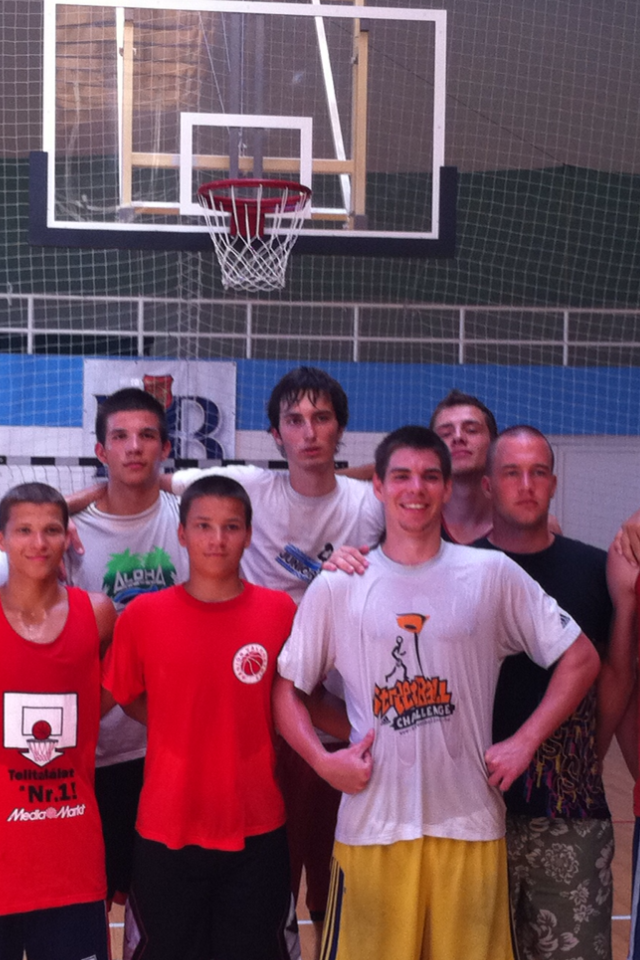
    My life entered another dimension in the summer of 2005, when I first met my new team: a group of boys born in 1991 who had just moved from the U14 level into the cadet age group.

    Together with my friend, B., I arrived at every practice excited.

    The players seemed almost hungry for knowledge, while every day brought adventures worthy of a novel — stories that affected them and therefore us as well, and which we still remember and talk about today.

    We went through a great deal together.

    Whatever happened, we somehow always managed to move forward and achieve something from the goals we had set.

    Because of them, our profession as youth coaches gained real meaning.

    Whenever we were close to questioning whether we were on the right path, those dozen or so mischievous boys with shining eyes were standing in front of us.

    They wanted to play.

    And they wanted to win.

    Nobody Missed Practice

    At the time, I did not keep an attendance sheet.

    There was no need.

    Nobody was absent.

    I can barely remember anyone being late either.

    One of the players travelled from Hajdúböszörmény, sometimes leaving home in the early hours of the morning and returning only after the evening practice.

    To this day, I do not completely understand how he managed to prepare for school the next day and still achieve excellent academic results.

    One thing is certain:

    he was among the leaders and became an example for all of us — and for the generations that followed.

    A Team Full of Stories

    We had ordinary weekdays and special game days.

    At times, we competed successfully in several championships simultaneously.

    We had injured players.

    We had players who struggled academically but eventually found their way in their studies.

    We had a bronze-medal hero who produced one final unforgettable performance against an opponent.

    We had a national-team player who travelled across Europe with the country’s best, later lost his way after leaving his original environment, and eventually found another place to continue his journey.

    We had an eternal scoring talent who probably should have been playing somewhere in a European league, but remained stuck at a level from which perhaps even today someone should grab him and sound the alarm.

    Several of these mischievous friends used to organise weekends together at their parents’ homes simply so that the teammates who had become almost inseparable could spend even more time together.

    One proudly stepped forward to lead the team during difficult times and introduced himself to the opposition as the happiest twelfth man in basketball.

    Another devoured life — and girls — before making his way to the University of Technology, where perhaps he slowed down a little. But he knows his own story.

    There were quiet madmen.

    There was also our sharp-eared inventor of words, who eventually became a referee while continuing to play excellent basketball as a lightning-fast ball magician.

    These boys have now become men.

    They are approaching graduation.

    And they have already made history.

    They were not only some of the defining figures of the golden era of DSI, but were also part of the group with which DEAC, founded in 1919, reached the first division for the first time in its history.

    And they still love basketball.

    Despite their problems and injuries, practice and competition remain in their minds and in their hearts.

    The Engine

    Among them was B.

    From the very beginning, he was the engine.

    He represented the style, the fighting spirit, the momentum and the irresistible passion that were essential to winning.

    We believed we could beat anyone.

    We prepared all day to find ways to succeed.

    We learned how to come back from behind, even when everyone else had already given up on us.

    And the engine grew.

    He became stronger.

    Eventually, B. became one of the leaders of the DEAC team that stepped onto the court for its first-ever NB I championship game.

    In the first quarter alone, he recorded a double-double.

    Then, when we least expected it, everything changed.

    In the ninth minute, after stealing the ball, he was hit from behind.

    Weeks later, it became certain that he had torn his anterior cruciate ligament.

    The First Return

    After an enormous amount of work and rehabilitation, B. returned one year later.

    He came back physically stronger, hungry to play and ready for competition.

    He immediately brought tremendous energy to the team.

    With him, it seemed possible to move to another level again.

    Then, in the final game of December, away from home, he was kicked from the side directly in the operated knee.

    The reconstructed ligament could not withstand it.

    And the familiar nightmare began again.

    But the world did not stop.

    With even greater determination — almost as if driven by pure defiance — B. decided to prove that there was a way back.

    Another year of work followed.

    Gradually, he returned first to specialised training and then eventually to basketball.

    Again

    When all of us finally believed that everything was right again, another unbelievable trauma struck.

    In Veszprém, it happened once more.

    B. was almost impossible to contain.

    He was incredibly quick.

    During a drive to the basket, he was pushed while in the air and crashed painfully to the floor.

    By the time I reached him, tears were already falling.

    He knew something was wrong.

    May 2013.

    Another chapter began.

    December 16, 2013

    On December 16, 2013, we wrote another chapter in this story.

    B.’s knee was repaired again.

    And the healing process began.

    For an injured athlete, surgery can represent a strange turning point.

    Until that moment, everything is uncertainty.

    Waiting.

    Delays.

    Questions.

    After the operation, the direction finally changes.

    Now the focus is no longer on waiting.

    It is on returning.

    On rehabilitation.

    On work.

    On moving forward.

    Because B.’s basketball and his role within the team are a little like basketball itself.

    You can live without it.

    But why would you want to?

    B.

    We are waiting for you.

    And we will not leave you alone.
  • An Anxious Genius

    An Anxious Genius

    Kobe Bryant’s Return Did Not Go the Way We Expected

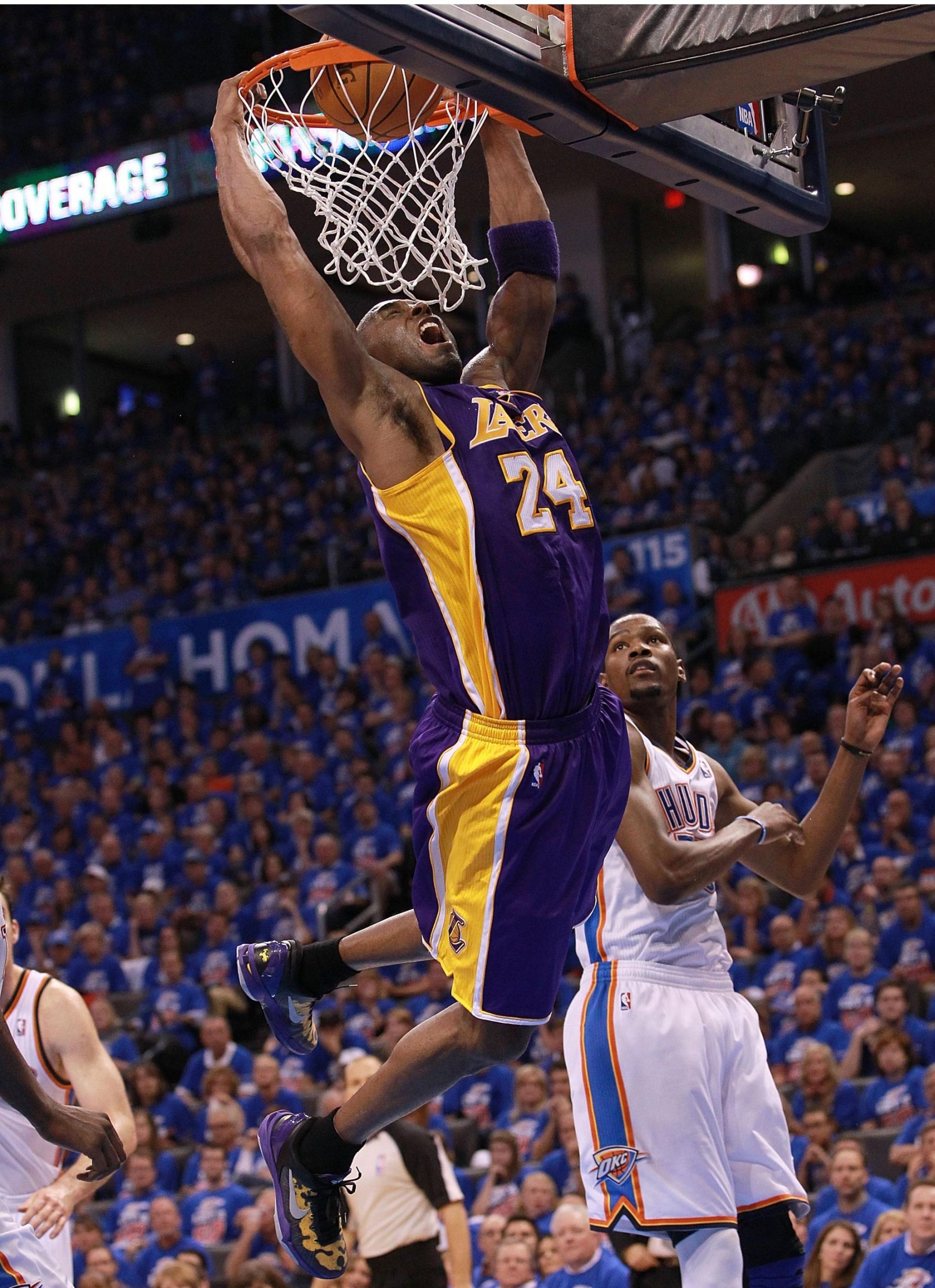
    As a youth basketball coach, I experienced a strangely familiar feeling when I stayed up that night to watch one of the greatest players of all time return to the court on NBA TV GameTime.

    Despite the 3:30 a.m. start, I was genuinely excited to see how the icon would perform.

    Just as millions of people had supported Derrick Rose during his comeback, millions were now hoping for Kobe Bryant to succeed — whether they were Lakers fans or not.

    Something Was Different

    Kobe’s body language made it obvious that he was fighting with himself.

    He desperately wanted to meet the expectations surrounding his return.

    For several minutes, he barely attacked the basket.

    Instead, he tried to contribute by creating opportunities for others.

    Defensively, he seemed to overcompensate.

    He frequently looked toward his teammates, searching for connection and reassurance.

    The familiar ease was missing from his game.

    He appeared to be forcing himself into the rhythm of the match.

    Even after creating assists, very little changed.

    Some of his passes — including one to Pau Gasol — showed flashes of his extraordinary vision, yet even while searching for safe solutions he occasionally drifted into risky decisions.

    One pass even seemed to surprise Jonas Valančiūnas so much that he almost forgot to raise his hands to intercept it.

    There was no real harmony in Kobe’s movement.

    The problems appeared most clearly on defense.

    During his limited minutes, he accumulated four relatively easy personal fouls, making it even harder for him to settle into the game and contribute at the level he expected from himself.

    When Confidence Begins to Shake

    There was hesitation on his drives.

    From my perspective, even his first field goal was more complicated than it needed to be. He finished with his left hand — something many people might interpret as skill rather than uncertainty.

    And of course, who am I to question Kobe Bryant?

    But he simply did not look like himself.

    You could sense it at the free-throw line.

    You could see it on some of his drives, where it was difficult to understand exactly what he intended to do at the end of the movement.

    At times, the ball almost seemed to hesitate in his hands.

    That uncertainty eventually resulted in turnovers.

    For a serious competitor, this can become one of the most stressful situations in basketball.

    And it is particularly difficult to reverse when mistakes begin to accumulate.

    Turnover.

    Foul.

    Missed shot.

    Another mistake.

    Then another.

    The Lesson

    Basketball can become a mental stress bomb.

    Every small detail can contribute either to success or failure.

    The level of expectation placed upon us — and the expectations we place upon ourselves — matter.

    So does the lack of recent competitive experience needed to meet those expectations.

    The quality of reinforcement matters.

    The number of actions and reactions experienced during practice and games matters.

    All of these impulses influence performance.

    Kobe Bryant was obviously not a youth player.

    And because he was an experienced professional, you could see him actively searching for solutions not only within the game itself but also in the way he managed the psychological conflict.

    He sought physical contact with teammates more frequently.

    He looked for encouraging expressions.

    He blew into his hands.

    He wiped his face and forehead repeatedly.

    During dead-ball situations, an uncomfortable smile occasionally appeared.

    His gestures, body language and movements reminded me of young players experiencing something new — perhaps playing in front of a larger crowd for the first time.

    As the game progressed, however, something began to change.

    His apparent tunnel vision slowly widened.

    The familiar Kobe Bryant court vision gradually seemed to return.

    Think About the Young Player

    We should therefore not be surprised when a beginner becomes anxious when entering the court.

    When a young player steps onto that four-line stage, he or she may feel as though everyone is watching.

    That feeling has to be managed.

    For coaches, this raises several important questions.

    What do we say after the player makes a mistake?

    How do we respond?

    What task do we give next?

    Can we give the player a responsibility that increases confidence?

    Can we create a situation in which successful execution provides positive reinforcement?

    These decisions matter.

    Responsibility Builds Confidence

    Kobe was also given responsibilities.

    Toward the end of the game, he even returned to his familiar role.

    His teammates trusted him with it.

    But the shots did not fall.

    Despite all his effort, he was not the player who could win the game that night.

    And that itself was instructive.

    After watching Derrick Rose return, I had now received another lesson from basketball’s strongest league.

    Everyone has to relearn the game.

    Every player needs the opportunity to perform a role.

    Every player needs meaningful responsibilities.

    They need situations in which they cooperate with teammates and experience for themselves:

    • where they currently stand in their preparation,
    • what kind of form they are in,
    • how reliable their technical skills are,
    • what their physical condition allows them to do,
    • and how they compare with the players and teams around them.

    Even the greatest players experience this process.

    In that sense, the biggest stars can sometimes look surprisingly similar to young beginners taking their first steps in organized basketball.

    Patience

    Development requires progression.

    It requires trust.

    It requires reinforcement.

    It requires practice.

    And it requires mental preparation.

    The environment surrounding the athlete also carries enormous responsibility.

    The coaching staff.

    The family.

    The media.

    The teammates.

    The broader environment.

    All of them can either help the player move forward or make the process more difficult.

    And if even Kobe Bryant needs time, confidence, repetition and patience when returning to competition, perhaps we should remember that the same is even more true for the young players we are trying to develop.

    Talent does not remove uncertainty.

    Experience does not eliminate stress.

    Greatness does not make a player immune to pressure.

    Sometimes even a genius needs time to feel like himself again.