Címke: ball handling

  • 100 Off-Season Tasks for Basketball Players

    100 Off-Season Tasks for Basketball Players

    An Off-Season Basketball Development Program

    The off-season provides an opportunity to improve skills, physical preparation, basketball habits and confidence.

    The following list comes from an earlier Basket Clinic training program and presents 100 ideas for individual off-season development.

    Important: This is an archival training resource. Some of the original training volumes and methods reflect an earlier approach to athletic preparation and should not automatically be treated as modern prescriptions. Training load should always be adjusted to the player’s age, development, health, experience and individual needs.

    At Home

    1. Perform 25 fingertip push-ups.
    2. Perform 500 calf raises.
    3. Take 100 simulated shots while lying on your back, concentrating on the shooting motion.
    4. Perform isometric exercises using a doorframe, with an emphasis on leg work.
    5. Read basketball and motivational books and develop a positive mental attitude.
    6. Squeeze two tennis balls to work on hand strength.
    7. Hold and handle a basketball while watching television.
    8. Sleep with your basketball.

    Outdoor Tasks

    1. Jog 3–7 kilometers daily.
    2. Practice dribbling a golf ball or tennis ball.
    3. Jump rope for 10 minutes every day.
    4. Practice spinning the basketball on your fingers.
    5. Work on gripping and controlling the basketball in your hands.
    6. Practice juggling three balls.
    7. Run 10 × 30-meter sprints.
    8. Play in adidas Streetball events.

    In the Gym

    1. Warm up properly and perform mobility and stretching exercises.
    2. Play plenty of 1-on-1.
    3. Play plenty of 2-on-2.
    4. Play plenty of 3-on-3.
    5. Play plenty of 4-on-4.
    6. Play plenty of 5-on-5.
    7. Handle the ball between and around your legs without looking down.
    8. Dribble two basketballs simultaneously.
    9. Slalom-dribble between chairs.
    10. Practice dribbling while sitting on a chair.
    11. Practice the behind-the-back dribble.
    12. Sprint-dribble the full length of the court.
    13. Practice changing speed while dribbling with both hands.
    14. Perform a spin move at each court line.
    15. Practice between-the-legs changes of hand.
    16. Touch the net, backboard or rim continuously 25 times, depending on your jumping ability.
    17. Perform 25 jumps over a bench or similar obstacle.
    18. Practice dribbling with your eyes closed.
    19. Dribble while moving in a circle with the opposite hand touching the floor.
    20. Dribble around the three circles of the basketball court.

    Shooting and Finishing

    1. Shoot from approximately 30 centimeters from the basket and carefully check your technique — elbow position, wrist action and follow-through.
    2. Make 10 layups from each side.
    3. Practice 10 post moves from each side.
    4. Practice stationary hook shots for 5 minutes.
    5. Practice hook shots with both hands for 10 minutes.
    6. Take 50 mid-range shots from inside.
    7. Shoot 100 free throws.
    8. Take 20 bank shots from each side.
    9. Take 100 set or rhythm shots from approximately five meters without using a dribble.
    10. Take 100 jump shots from approximately five meters.
    11. Practice attacking and penetration moves 100 times.
    12. Take 100 jump shots from approximately 7.5 meters.
    13. If you are physically capable, practice 10 dunks with each hand.

    Ball Control

    1. Move the basketball around each leg.
    2. Move the basketball around both legs together.
    3. Move the basketball around your head.
    4. Move the basketball around your waist.

    Strength Development

    1. Perform leg presses for 10 repetitions, three times per week.
    2. Perform leg extensions for 10 repetitions, three times per week.
    3. Perform leg curls for 10 repetitions, three times per week.
    4. Perform bench presses for 10 repetitions, three times per week.

    Defensive Footwork and Movement

    1. Practice defensive slides to the right and left.
    2. Practice defensive movement forward.
    3. Practice defensive movement backward.
    4. Practice defensive footwork with changes of stance.
    5. Practice the jump stop out of the dribble.
    6. Practice pivoting on both feet.
    7. Run backward.
    8. Perform backward hops.
    9. Hop the full length of the court.
    10. Practice hopping with crossing footwork.
    11. Perform sprint drills with line touches.

    Tip-In and Finishing Work

    1. Perform 10 right-handed tip-ins.
    2. Perform 10 left-handed tip-ins.
    3. Perform 10 alternating-hand tip-ins.
    4. Perform 10 two-handed tip-ins.
    5. Perform 10 running tip-ins above the rim, jumping toward the basket — a “Superman” style drill.

    Passing

    1. Practice passing with a medicine ball.
    2. Perform 25 two-handed chest passes.
    3. Perform 25 bounce passes.
    4. Perform 25 hook passes.
    5. Perform 25 overhead passes.
    6. Perform 25 baseball passes.
    7. Perform 25 behind-the-back passes.
    8. Practice any other passing techniques you already know.

    Advanced Footwork and Ball Handling

    1. Practice dribbling with changes of rhythm and hesitation steps.
    2. Practice dribbling while using forward and backward pivots.
    3. Practice dribbling with crossover footwork.
    4. Perform 25 jumps while raising a medicine ball overhead.

    Play the Game

    1. Take part in summer competitions.
    2. Play plenty of games during the summer.
    3. Play against older and more experienced players.

    Take Care of Yourself

    1. Pay attention to good eating, recovery and sleeping habits.
    2. Adjust nutrition and body composition only according to your actual physical needs and appropriate professional guidance.
    3. Avoid alcohol, recreational drugs and smoking.
    4. If appropriate and safe, include selected running or movement activities on grass or sand.
    5. Use the jump rope regularly.
    6. The original program recommends training with ankle weights; this should be regarded as a historical recommendation rather than a universal modern training method.
    7. Play basketball in appropriate basketball shoes.
    8. The original program also recommends weighted-vest training. External loading should only be used when appropriate for the athlete and the exercise.

    Live Basketball During the Summer

    1. Spend as much productive time in the gym as possible during the summer.

    The original program described this as:

    “Live in the gym.”

    The message is commitment — not simply being physically present, but using the off-season deliberately.

    1. Play tennis to challenge hand-eye coordination and movement skills.
    2. Have shooting competitions with your parents, family members or friends.

    Play games such as 33 or other competitive shooting games.

    Give them a head start if necessary.

    1. Accumulate substantial quality basketball practice during the summer.

    The original program set an ambitious target of:

    250 hours of basketball during the off-season.

    The Bigger Idea

    The most valuable lesson in this list is not that every player should complete every task exactly as written.

    The message is that the off-season should be used intentionally.

    Develop:

    • your ball handling,
    • shooting,
    • finishing,
    • passing,
    • footwork,
    • physical preparation,
    • basketball understanding,
    • competitive experience,
    • recovery habits,
    • and confidence.

    Some days may focus on skill.

    Other days may focus on strength, movement or competition.

    The specific program should change according to the player.

    The commitment to improvement should remain.

    The season shows what kind of player you are.

    The off-season gives you the opportunity to change what kind of player you will become.
  • Ball Handling Against Pressure

    Ball Handling Against Pressure

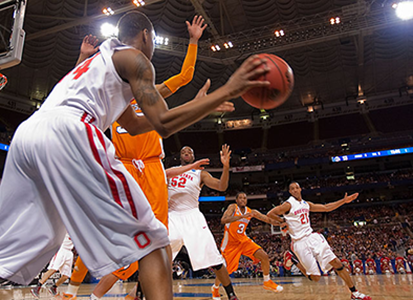
    Always be prepared — mentally and physically — for the defense to pressure the ball.

    Sometimes the pressure may never come.

    But if you are not ready for it, the surprise itself can create poor reactions.

    Strong ball handling under pressure begins before the defender attacks.

    It begins with preparation.

    Face the Defender

    When you receive the ball under pressure, turn and face the defender.

    Be strong and balanced.

    From this position you should be able to:

    • pass,
    • drive,
    • dribble,
    • or shoot.

    The defender should never be allowed to eliminate all of your options before you have even started the possession.

    You Control the Situation — Not the Defender

    Basketball is a constant battle for balance.

    In many 1-on-1 situations, the first player to lose balance or body position loses the advantage.

    When you square up against the defender, practice maintaining a strong base.

    Use footwork to attack the defender’s stance.

    When possible, step aggressively toward or beyond the defender’s lead foot and force the defender to react.

    The important principle is:

    Do not allow the defender to dictate your dribble.

    You should determine the direction and rhythm of the action.

    Protect the Ball with Your Body

    Use your body to create a barrier between the defender and the basketball.

    Keep the ball strong and protected.

    When holding the ball, bring it into a secure position near the body rather than exposing it unnecessarily.

    Use pivots to change the angle and prevent the defender from reaching directly toward the ball.

    Your body position should make the defender work around you rather than allowing a direct path to the basketball.

    Do Not Rush Into the Dribble

    Many young players believe that the moment a defender applies pressure, they must immediately begin dribbling.

    That is often a mistake.

    An aggressive defender usually gives something away.

    The defender may:

    • overplay one side,
    • lean too far forward,
    • open a driving lane,
    • or become vulnerable to a pass fake.

    Take enough time to recognize what the defense has given you.

    Then attack it.

    Maintain Balance and Body Control

    Even a player who is not exceptionally fast can protect the basketball effectively if body control and balance are good.

    Speed is useful.

    Control is essential.

    A player who remains balanced can:

    • change direction,
    • change pace,
    • protect the ball,
    • and react to the defender.

    A player who loses balance becomes predictable.

    Practice Different Speeds and Rhythms

    Do not practice every dribble at the same speed.

    Work on ball handling while:

    • walking,
    • moving slowly,
    • accelerating,
    • decelerating,
    • using longer steps,
    • using shorter steps.

    The objective is to become comfortable changing rhythm.

    A defender becomes much more difficult to control when the offensive player never changes speed.

    Put the Defender on Their Heels

    Use changes of:

    • direction,
    • speed,
    • and rhythm

    to force the defender out of balance.

    A useful sequence is:

    pass fake → read the defender → attack with the dribble

    The pass fake may cause the defender to shift weight, turn the head or move the feet.

    That moment can create the space needed to attack.

    Make the Defender Cross the Feet

    One of the objectives of change-of-direction dribbling is to make the defender lose an efficient defensive stance.

    If the defender is forced to cross the feet or turn the hips sharply, the offensive player gains an advantage.

    Use:

    • hesitations,
    • changes of pace,
    • directional changes,
    • and fakes

    to create that reaction.

    Then accelerate.

    Confidence Under Pressure

    Do not play afraid of losing the basketball.

    Every player will eventually commit a turnover.

    Fear of making a mistake often creates the very mistake the player is trying to avoid.

    Instead, focus on:

    • balance,
    • body control,
    • ball protection,
    • reading the defender,
    • and making a deliberate decision.

    Confidence does not mean taking unnecessary risks.

    It means trusting the skills you have practiced.

    Pressure Is an Opportunity

    Aggressive defenders want to make you uncomfortable.

    But aggressive defense also creates opportunities.

    The closer the defender plays, the more important it becomes to recognize:

    • where the defender’s weight is,
    • which direction is being denied,
    • which space has been opened,
    • and when to attack.

    The goal is not simply to survive pressure.

    The goal is to make the defender’s pressure work against them.

    Stay balanced.

    Protect the ball.

    Control the rhythm.

    Read the defender.

    Then attack the space that becomes available.

  • Ball-Handling Drills

    Ball-Handling Drills

    Depending on your age and level of preparation, these exercises can help you improve individually and become a more valuable member of your team.

    There is a special satisfaction in knowing that you worked hard to become a better player.

    Individual drills — especially those directly connected to the game, such as ball handling and dribbling — can help take your basketball skills to the next level.

    The following program focuses on:

    • ball control,
    • individual dribbling moves,
    • foot speed,
    • coordination,
    • change of direction,
    • change of pace,
    • and turning the dribble into a scoring opportunity.

    Consistent individual work also helps players develop confidence and build a stronger work ethic.

    Phase One

    The first phase begins with foot speed.

    Quick feet are an important part of basketball both with and without the ball.

    1. Jump Rope

    Jumping rope can help develop quick and active feet.

    Begin with:

    • two-foot jumps,
    • then single-leg jumps.

    Try to perform the movement with speed and rhythm.

    A more advanced variation is the double-under, in which the rope passes under the feet twice during one jump.

    2. Line Jumps

    Use any line on the basketball court.

    Jump rapidly from side to side across the line for approximately 30 seconds.

    The exercise is simple, but it can be used regularly to develop quicker footwork and lower-body coordination.

    Ball-Handling Exercises

    Once the feet are active, turn the focus toward controlling the basketball.

    Daily ball-handling work can improve:

    • hand-eye coordination,
    • fingertip control,
    • speed,
    • confidence,
    • and comfort with the ball.

    The objective is to develop what we might call basketball confidence — the ability to handle the ball naturally without constantly looking at it or worrying about losing control.

    1. Fingertip Taps

    Hold the arms extended and rapidly tap the ball from one hand to the other using the fingertips.

    Focus on quick, controlled contacts.

    2. Around the Head

    Move the basketball around the head.

    Perform 15 repetitions in each direction.

    Keep the movement quick and controlled.

    3. Around the Waist

    Circle the basketball tightly around the waist.

    Perform 15 repetitions in each direction.

    4. Around the Ankles

    Move the ball around the ankles.

    Perform 15 repetitions in each direction.

    Stay balanced and keep control of the ball.

    5. Combination

    Combine the previous ball-control movements into one sequence.

    Work continuously from:

    • head,
    • waist,
    • ankles,
    • and back through the sequence.

    6. Around the Left Leg

    Circle the ball around the left leg.

    Perform 15 repetitions in each direction.

    7. Around the Right Leg

    Circle the ball around the right leg.

    Perform 15 repetitions in each direction.

    8. Figure Eight

    Move the basketball in a figure-eight pattern between and around the legs.

    Keep the feet stationary while developing rhythm and control.

    9. Fingertip Dribbling

    Use the fingers to control the basketball with quick, short dribbles.

    The objective is to develop greater sensitivity and control through the fingertips.

    10. Stationary Dribbling Moves

    Practice fundamental dribbling changes while remaining in a controlled area:

    • crossover,
    • between-the-legs,
    • behind-the-back,
    • spin move,
    • half-spin,
    • and retreat or recovery dribble.

    Do not simply perform the movement.

    Try to execute every change with purpose and control.

    11. Dribbling Around the Left Leg

    Dribble around the left leg using the left hand.

    Do not look at the ball.

    Keep the dribble low and controlled.

    12. Dribbling Around the Right Leg

    Dribble around the right leg using the right hand.

    Again:

    Do not look at the ball.

    Develop equal confidence on both sides.

    13. Dribbling Figure Eight

    Dribble the basketball in a figure-eight pattern through the legs.

    Use multiple low dribbles while maintaining a balanced stance.

    Do not watch the basketball.

    The objective is to control the ball through feel rather than sight.

    14. Dribbling While Lying on Your Back

    Lie on your back and practice controlling the ball with both hands.

    Dribble around the head area and underneath or around the legs as space allows.

    This creates a different coordination challenge.

    15. Wall Dribbling

    Face a wall and choose a fixed point to look at.

    Dribble with both the right and left hand while keeping your eyes on that target rather than on the basketball.

    This reinforces one of the most important ball-handling habits:

    play with your eyes up.

    Phase Two

    Once the exercises from Phase One have been learned and controlled, progress to Phase Two.

    This phase requires:

    • greater concentration,
    • better control,
    • and more game-like speed.

    Some exercises require two basketballs.

    A full basketball court with two baskets is ideal, but most of the running drills can also be performed in any safe area that allows approximately 25–30 meters of dribbling space.

    1. Two-Ball Dribbling

    Start on one baseline with one basketball in each hand.

    Move toward the opposite end while staying low and maintaining control of both balls.

    Dribble the balls alternately:

    • left hand,
    • right hand,
    • left hand,
    • right hand.

    This drill challenges hand-eye coordination and independent hand control.

    2. Controlled Between-the-Legs Dribbling

    Walk up and down the court while transferring the ball between the legs on each step.

    The objective is not speed at first.

    Focus on:

    • rhythm,
    • balance,
    • coordination,
    • and control.

    Once the movement becomes comfortable, gradually increase the pace.

    3. Sprint Dribbling

    Dribble from baseline to baseline at maximum controllable speed.

    Use both hands.

    The objective is to travel the distance with as few dribbles as possible while maintaining control.

    As your skill improves, try to reduce the number of dribbles required.

    Speed is useful only when the basketball remains under control.

    4. Sprint Dribble into a Layup

    Develop the ability to transition from full-speed dribbling into a finish.

    Sprint with the basketball toward the basket and finish with a layup.

    Then immediately continue toward the opposite basket.

    Practice:

    • right-handed dribbling and right-handed finishing,
    • left-handed dribbling and left-handed finishing.

    The transition between speed dribbling and finishing should become smooth.

    5. Sprint Dribble, Jump Stop and Power Finish

    Attack the basket at speed.

    Instead of finishing directly from a running layup:

    1. come to a controlled jump stop,
    2. establish balance,
    3. explode upward from two feet,
    4. finish strongly as if a defender were protecting the basket.

    Perform the drill:

    • from both sides,
    • and with both hands.

    6. Slalom Dribbling

    Begin near one baseline.

    Dribble toward the first target — for example, the elbow.

    Execute a crossover and accelerate toward the next target.

    Continue through a sequence such as:

    • first elbow,
    • half court,
    • opposite elbow,
    • opposite baseline area.

    Every change of direction should be followed by acceleration.

    The move creates the advantage.

    The acceleration uses it.

    7. Crossover Drive

    Begin around half court and dribble toward the free-throw-line area.

    A chair, cone or other obstacle may represent the defender.

    Approach with a low dribble.

    Execute a crossover in front of the obstacle and accelerate toward the basket for a layup.

    Practice:

    • both directions,
    • both hands,
    • and both finishing sides.

    Protect the basketball as you change direction.

    8. Double Crossover

    Begin around half court and attack toward the free-throw-line area.

    Perform two crossovers in front of the imagined defender before attacking the basket.

    The drill develops rapid changes of direction while maintaining control.

    9. Hesitation Dribble

    Attack from half court toward the free-throw line.

    As you reach the defender’s area:

    1. hesitate briefly,
    2. change rhythm,
    3. explode toward the basket,
    4. finish with a layup.

    The effectiveness of the move comes from the contrast between the pause and the acceleration.

    10. X Layups

    Begin underneath the basket.

    Dribble toward the left elbow, change direction and attack the basket for a layup.

    Immediately secure the rebound.

    Then dribble toward the right elbow, turn and attack the basket again, finishing with the opposite hand.

    Continue alternating sides.

    Throughout the drill:

    • keep the dribble low,
    • maintain a balanced athletic stance,
    • change direction sharply,
    • and finish under control.

    Train the Skill You Want to Use

    Ball-handling drills should eventually connect to real basketball actions.

    The goal is not simply to perform complicated dribbling moves.

    The goal is to be able to:

    • advance the ball under control,
    • change direction,
    • change speed,
    • protect the basketball,
    • keep the eyes up,
    • beat a defender,
    • and turn the advantage into a quality shot.

    Begin with control.

    Then add speed.

    Then add movement.

    Finally, connect the dribble to game actions.

    Individual improvement is built through repetition — but the repetitions must have a purpose.