Kategória: Stories

  • Warriors vs. Clippers, Game 7: The Decider

    Warriors vs. Clippers, Game 7: The Decider

    Posted on May 4, 2014

    Everyone should watch Game 7.

    And if there is not enough time for the entire game, then at least watch the second quarter.

    Sometimes I meet people who say they do not understand basketball.

    Others say they do not enjoy watching it.

    Some simply are not interested.

    I would recommend this particular second quarter to all of them.

    Basketball at Full Speed

    The game was balanced, spectacular and constantly changing.

    There was barely a moment when attention could drift.

    Thanks to NBA League Pass, games like this could be watched live even from far away.

    Normally, the referees’ whistles interrupt play every few possessions.

    In the first half of this game, however, the teams seemed determined to challenge that pattern.

    Possessions followed one another at an incredible pace.

    Both teams tried to eliminate the opponent’s strengths, yet the offensive players kept pushing the game toward another level.

    It was Game 7.

    Everything was at stake.

    And everyone played like it.

    The offensive possessions were often shorter than usual.

    Both teams used all five players on the court.

    What we saw was close to total basketball.

    Every opportunity became a real scoring opportunity.

    And the players were willing to take it.

    Curry Under Pressure

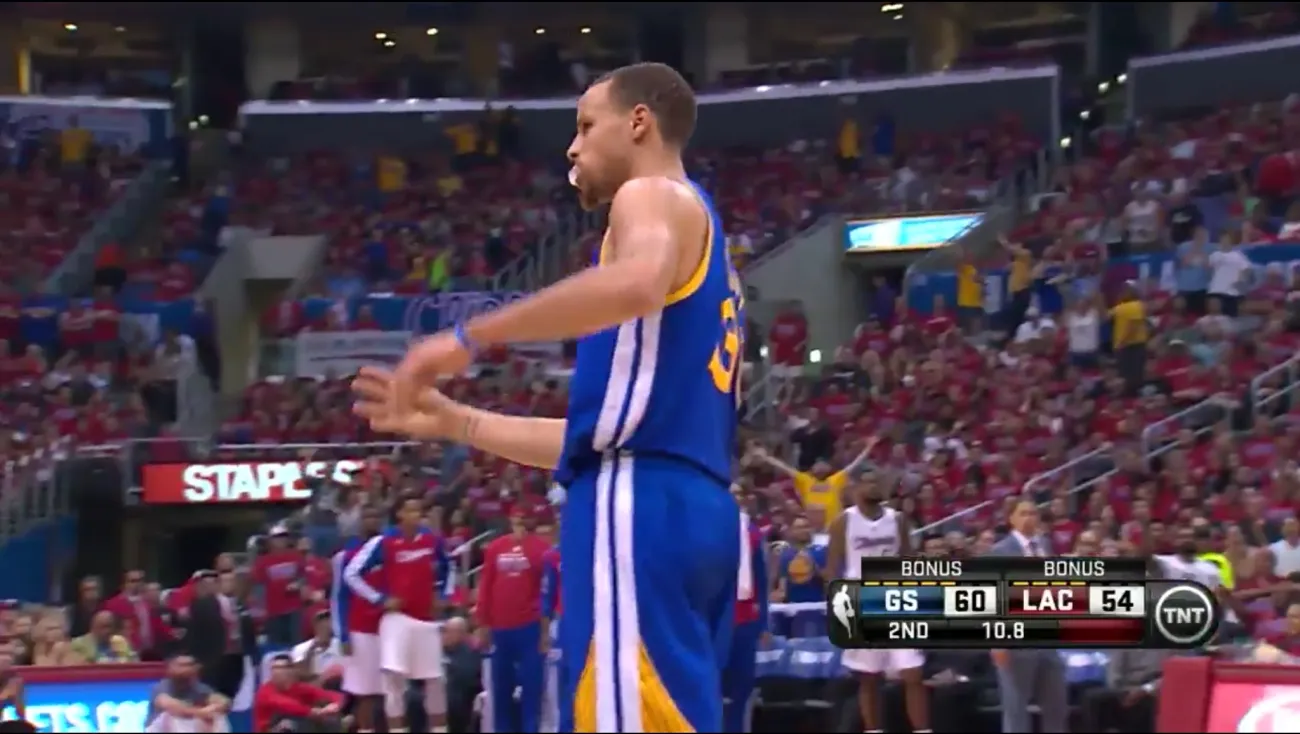
    Chris Paul and the Clippers repeatedly trapped Stephen Curry, trying to surround him and take away his rhythm.

    Curry did not back away from the challenge.

    He simply continued making three-point shots.

    And almost every time Golden State produced a big basket, the Clippers seemed to answer immediately.

    Sometimes it was J.J. Redick.

    Sometimes Jamal Crawford.

    Crawford had built a reputation as an exceptional maker of difficult shots — the kind of player who could create points even when the defense appeared to have done everything correctly.

    Before that, Andre Iguodala had his own stretch.

    He was effective both inside and outside and, within roughly fifteen seconds, hit two almost identical three-pointers from the same area of the floor.

    Athleticism Everywhere

    Blake Griffin took the ball the length of the court and finished at the rim.

    Earlier, he had thrown a lob to DeAndre Jordan, who exploded above the basket and finished with such power that the entire arena seemed to erupt with him.

    The second quarter already felt impossible to improve.

    Then Curry found another way.

    At the end of the period, he tried to beat the buzzer from beyond half court.

    He almost made it.

    The shot came just after the red light appeared.

    Even that miss somehow fit the atmosphere of the game.

    Everything felt possible.

    A Game Where Every Possession Mattered

    The game remained exciting and unpredictable until the end.

    Unfortunately, one team’s season had to finish.

    There would be no next game.

    With stakes that high, every possession mattered.

    Yet there were no major fights.

    No prolonged conflicts.

    Everyone remained completely focused on trying to influence what would happen next.

    In the end, whether because of preparation, execution, fortune or some combination of all three, the Clippers advanced.

    And even in the final minute, when more than twenty points were scored in an incredibly short period of time, the game never became boring.

    Then I noticed something.

    Something was missing.

    The Referees Were Almost Invisible

    Something that so often influences:

    • the result,
    • the atmosphere,
    • our opinion of the game,
    • and sometimes even basketball history.

    The referees.

    Or rather:

    the referees as protagonists.

    This time, they did not take the spotlight.

    They were present, but almost invisible.

    They seemed to understand the importance of the game and worked as partners in allowing the teams to decide it.

    There was no unnecessary theatre.

    No exaggerated display of authority.

    No visible desire to show that they controlled the game.

    They simply officiated.

    And with basketball being played at such a high level, they appeared determined to perform at the same level.

    Authority Without Theatre

    A referee already carries authority simply by holding the whistle.

    That authority also brings responsibility.

    It should not require players and coaches to constantly demonstrate submission to every decision.

    The best officials do not need to become part of the spectacle.

    They allow the game itself to remain the spectacle.

    That is what seemed to happen here.

    They did what was necessary.

    Without obvious prejudice.

    Without constantly demanding attention.

    And that must be a good feeling.

    Respecting the Game

    This was particularly interesting because throughout the playoffs there had already been controversial decisions and situations that generated debate.

    Not this time.

    Game 7 finished in an exemplary atmosphere.

    When the final whistle sounded, players from both teams embraced one another.

    Everyone had done what they could.

    Everyone had competed.

    And everyone had respected the game.

    There is something to learn from that too.

    Sometimes the best basketball is not only about extraordinary players making extraordinary plays.

    Sometimes it is also about everyone involved understanding their role.

    Players play.

    Coaches coach.

    Officials officiate.

    And the game remains at the centre of everything.
  • Kobe Bryant and Work Ethic

    Kobe Bryant and Work Ethic

    Kobe Bryant and Work Ethic

    Posted on December 19, 2013

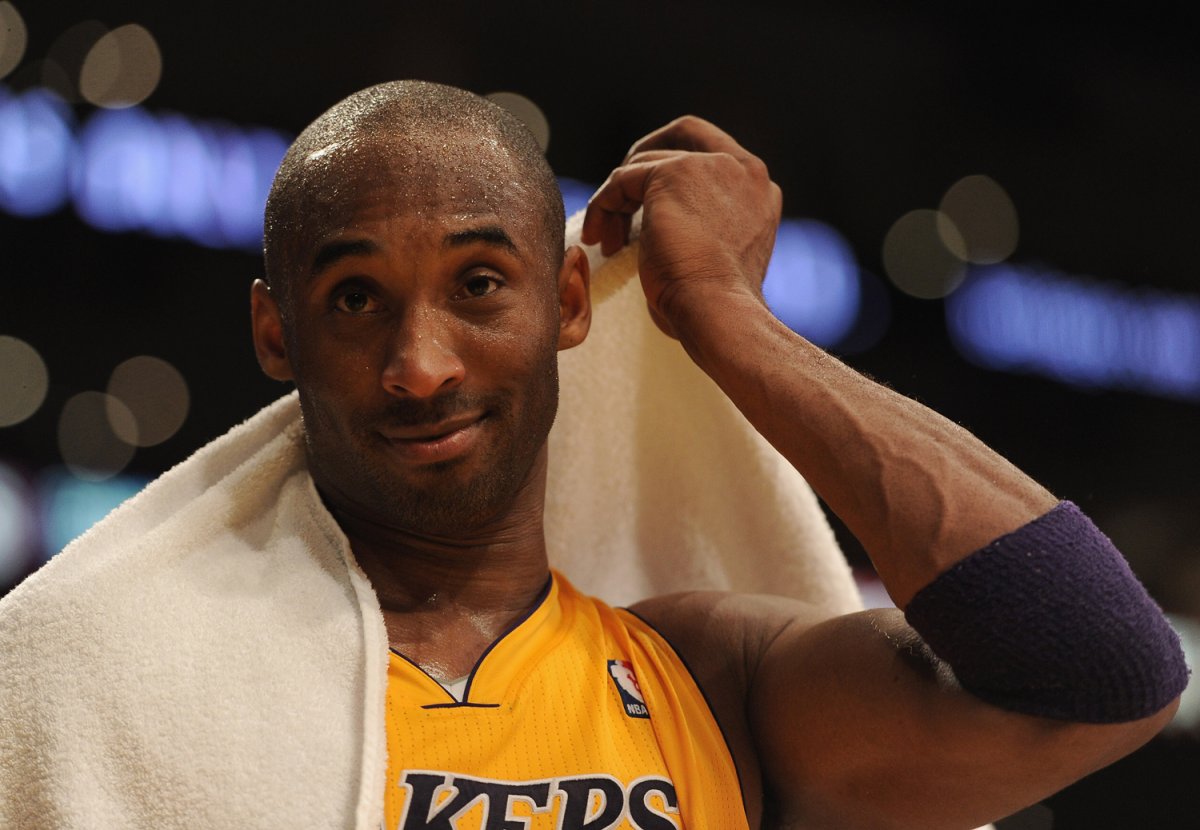
    The following Kobe Bryant story was originally shared by a member of the staff working with the United States national team during the London Olympics. It was translated and republished on Basket Clinic in 2013.

    It was around 3:30 in the morning.

    I was lying in bed, slowly drifting off to sleep, when my phone rang.

    I answered, slightly annoyed.

    “Hello, Rob. I hope I’m not disturbing you?”

    “What’s up, Kobe?”

    “I was just wondering if you could help me with a workout. That’s all.”

    I looked at the clock.

    It was 4:15 a.m.

    “Sure. Meet me at the gym.”

    It took me about twenty minutes to get dressed, put on my shoes and leave the hotel.

    By the time I arrived and opened the main gym, Kobe was already there.

    Alone.

    He was soaked in sweat, as if he had just stepped out of a swimming pool.

    It was not even five o’clock in the morning.

    The Workout

    We spent approximately the next 75 minutes working through conditioning exercises.

    After that, we went to the weight room, where Kobe completed another 45-minute strength workout.

    Then we said goodbye.

    He went back onto the court to shoot.

    I returned to the hotel and collapsed.

    Later That Morning

    I had to be back at the gym by 11 a.m.

    I woke up tired and exhausted, exactly as you would expect after so little sleep.

    Thanks, Kobe.

    I grabbed something to eat and headed back to the gym.

    I remember what happened next very clearly.

    Every member of the national team was there.

    The atmosphere was great.

    LeBron was talking with Carmelo.

    Coach K was explaining something to Kevin Durant.

    And on the other side of the court was Kobe.

    Alone.

    Still shooting.

    I walked over and patted him on the back.

    “Good workout this morning.”

    “What?”

    “The conditioning session,” I said.

    “Oh. Thank you. I really appreciate it, Rob.”

    “So when did you finish?”

    “Finish what?” Kobe asked.

    “Your shooting. When did you leave?”

    “Oh, that. Just now.”

    He had wanted to make 800 shots.

    And he had only just finished.

    What the Story Represents

    It is easy for players to talk about wanting to improve.

    It is easy to tell other people how serious you are.

    It is easy to show everyone how hard you supposedly work.

    Actually doing the work is different.

    Kobe Bryant’s work ethic helps explain why he became one of the defining players of his generation.

    This story is not really about waking up at four o’clock in the morning.

    It is about commitment.

    It is about continuing after most people would already consider the work finished.

    It is about setting a standard for yourself that does not depend on anybody watching.

    For basketball players, that may be the most important lesson.

    Before telling the world how hard you are working, ask yourself:

    How much are you actually doing to become better?

    Sometimes the answer is worth more than anything you could post about yourself.


    Original Basket Clinic publication: December 19, 2013
    Original format: translated quotation/story
    Hungarian translation: Dr. Ágoston Nagy

    Original sources listed with the 2013 article:
    Reddit / NBA discussion featuring the story
    Kobe Bryant’s Twitter profile

  • Whole Again

    Whole Again

    Posted on December 18, 2013

    My life entered another dimension in the summer of 2005, when I first met my new team: a group of boys born in 1991 who had just moved from the U14 level into the cadet age group.

    Together with my friend, B., I arrived at every practice excited.

    The players seemed almost hungry for knowledge, while every day brought adventures worthy of a novel — stories that affected them and therefore us as well, and which we still remember and talk about today.

    We went through a great deal together.

    Whatever happened, we somehow always managed to move forward and achieve something from the goals we had set.

    Because of them, our profession as youth coaches gained real meaning.

    Whenever we were close to questioning whether we were on the right path, those dozen or so mischievous boys with shining eyes were standing in front of us.

    They wanted to play.

    And they wanted to win.

    Nobody Missed Practice

    At the time, I did not keep an attendance sheet.

    There was no need.

    Nobody was absent.

    I can barely remember anyone being late either.

    One of the players travelled from Hajdúböszörmény, sometimes leaving home in the early hours of the morning and returning only after the evening practice.

    To this day, I do not completely understand how he managed to prepare for school the next day and still achieve excellent academic results.

    One thing is certain:

    he was among the leaders and became an example for all of us — and for the generations that followed.

    A Team Full of Stories

    We had ordinary weekdays and special game days.

    At times, we competed successfully in several championships simultaneously.

    We had injured players.

    We had players who struggled academically but eventually found their way in their studies.

    We had a bronze-medal hero who produced one final unforgettable performance against an opponent.

    We had a national-team player who travelled across Europe with the country’s best, later lost his way after leaving his original environment, and eventually found another place to continue his journey.

    We had an eternal scoring talent who probably should have been playing somewhere in a European league, but remained stuck at a level from which perhaps even today someone should grab him and sound the alarm.

    Several of these mischievous friends used to organise weekends together at their parents’ homes simply so that the teammates who had become almost inseparable could spend even more time together.

    One proudly stepped forward to lead the team during difficult times and introduced himself to the opposition as the happiest twelfth man in basketball.

    Another devoured life — and girls — before making his way to the University of Technology, where perhaps he slowed down a little. But he knows his own story.

    There were quiet madmen.

    There was also our sharp-eared inventor of words, who eventually became a referee while continuing to play excellent basketball as a lightning-fast ball magician.

    These boys have now become men.

    They are approaching graduation.

    And they have already made history.

    They were not only some of the defining figures of the golden era of DSI, but were also part of the group with which DEAC, founded in 1919, reached the first division for the first time in its history.

    And they still love basketball.

    Despite their problems and injuries, practice and competition remain in their minds and in their hearts.

    The Engine

    Among them was B.

    From the very beginning, he was the engine.

    He represented the style, the fighting spirit, the momentum and the irresistible passion that were essential to winning.

    We believed we could beat anyone.

    We prepared all day to find ways to succeed.

    We learned how to come back from behind, even when everyone else had already given up on us.

    And the engine grew.

    He became stronger.

    Eventually, B. became one of the leaders of the DEAC team that stepped onto the court for its first-ever NB I championship game.

    In the first quarter alone, he recorded a double-double.

    Then, when we least expected it, everything changed.

    In the ninth minute, after stealing the ball, he was hit from behind.

    Weeks later, it became certain that he had torn his anterior cruciate ligament.

    The First Return

    After an enormous amount of work and rehabilitation, B. returned one year later.

    He came back physically stronger, hungry to play and ready for competition.

    He immediately brought tremendous energy to the team.

    With him, it seemed possible to move to another level again.

    Then, in the final game of December, away from home, he was kicked from the side directly in the operated knee.

    The reconstructed ligament could not withstand it.

    And the familiar nightmare began again.

    But the world did not stop.

    With even greater determination — almost as if driven by pure defiance — B. decided to prove that there was a way back.

    Another year of work followed.

    Gradually, he returned first to specialised training and then eventually to basketball.

    Again

    When all of us finally believed that everything was right again, another unbelievable trauma struck.

    In Veszprém, it happened once more.

    B. was almost impossible to contain.

    He was incredibly quick.

    During a drive to the basket, he was pushed while in the air and crashed painfully to the floor.

    By the time I reached him, tears were already falling.

    He knew something was wrong.

    May 2013.

    Another chapter began.

    December 16, 2013

    On December 16, 2013, we wrote another chapter in this story.

    B.’s knee was repaired again.

    And the healing process began.

    For an injured athlete, surgery can represent a strange turning point.

    Until that moment, everything is uncertainty.

    Waiting.

    Delays.

    Questions.

    After the operation, the direction finally changes.

    Now the focus is no longer on waiting.

    It is on returning.

    On rehabilitation.

    On work.

    On moving forward.

    Because B.’s basketball and his role within the team are a little like basketball itself.

    You can live without it.

    But why would you want to?

    B.

    We are waiting for you.

    And we will not leave you alone.

  • Victory

    Victory

    Posted on September 29, 2013

    Today we won the first — and therefore, at this moment, the most important — game of the championship season.

    Defeating our prestigious opponent from the capital has always brought us great satisfaction.

    Our renewed team released an enormous amount of energy and we won.

    But I will not go into the details of the game, because the victory itself is only the starting point of what I experienced after I got home.

    Coming Home

    I was the last one to arrive home, at around 10 p.m.

    As usual, I stepped out of my shoes and slowly walked toward the room where, only a few hours earlier, the entire day had revolved around one question:

    How can we win this game?

    I could almost still feel the questions trapped inside those walls.

    Questions for which I had tried to prepare answers.

    I had imagined the possible scenarios and searched for the one that might make everyone happy.

    I was just about to sit down for a moment and quietly enjoy the success of the team by myself.

    Then I heard the most beautiful sound in the world.

    The laughter of my children and my family.

    They were joking freely, remembering the events of the evening, talking over one another and reliving the game.

    The taste of victory had overwritten everything else.

    For that moment, only one thing mattered:

    we had won — and we had done it in style.

    Something Money Cannot Buy

    My sister and her daughter listened with smiles as the boys, eyes shining, each told the same story from a different point of view.

    I simply stood in the hallway and listened to them.

    I did not want to interrupt.

    Because in moments like this, that atmosphere means everything.

    My mother noticed me standing there.

    She was not surprised when I told her that this was one of the greatest forms of happiness I could imagine.

    Even winning the lottery would not be the same.

    Because this feeling cannot be bought.

    It has to be experienced.

    As a player.

    As a coach.

    As a supporter.

    My niece had travelled home from Budapest just for this.

    Passing on a Sporting Culture

    Our profession — perhaps even our life’s work — is about passing on a sporting culture.

    And tonight, I felt that this had succeeded.

    Everyone understood what had happened.

    For all of us, the evening game had become the highlight of the day and of the weekend.

    That value carries us forward.

    And it also carries forward those who live the life of our team together with us.

    The Moment

    These are the moments worth living for.

    Moments that must be earned.

    And yet they last only briefly.

    Almost immediately, attention has to turn toward the next challenge.

    Perhaps that is because we are afraid of losing this feeling.

    It can become addictive.

    But the moment has to be understood.

    We only have a chance to understand it if we do not numb ourselves to it.

    If we do not sleep through the critical hours.

    If we can connect what happened to something deeper — something that strengthens the feeling and engraves it permanently into our memory.

    For me, tonight, that was the sound of my family laughing together.

    It meant a great deal.

    Because after so many years, I felt that I had added one more small piece to our shared history.

    I received confirmation from the people who love the same thing we teach every day.

    The same thing for which we sacrifice so much.

    The same thing for which we prepare together.

    Together

    Together.

    The family and the team.

  • An Obituary from Afar

    An Obituary from Afar

    Posted on September 8, 2013

    On Saturday afternoon, two basketball coaches passed away forever.

    They had spent much of their lives travelling, and over the years we would meet here and there, often only briefly.

    Most of the time, we barely had the chance to see one another.

    That was also the case the last time, in Miskolc, at the U18 European Championship.

    We are a community built around competition, yet also filled with shared memories.

    There is always something special about meeting again, because we belong to the same circle of trust.

    We speak the same language.

    The language of basketball.

    The language of the sport to which we sacrifice so much.

    We do it hoping that we can bring joy to others and, through that, make our own lives better too.

    Day after day, this is how we go to sleep and how we wake up.

    We prepare for the next challenge.

    Often, there is barely time to deal with our own problems, because so many people belong to us.

    So many share their concerns with us.

    So many expect us to help find an answer.

    For the two of them, all of that ended on Saturday.

    Something happened for which nobody can truly prepare.

    What remains for us is the legacy they left behind.

    And within that legacy are many unanswered questions.

    Perhaps that is one of the reasons they will continue to live on somewhere within us.

    And why we will not forget them.