Kategória: Offense

  • 10 Cuts Every Basketball Coach Should Know

    10 Cuts Every Basketball Coach Should Know

    The technique of cutting and getting open is one of the most underrated areas of teaching in youth basketball.

    Many coaches spend relatively little time teaching these movements, assuming that players will naturally learn how to get open as they gain experience.

    But there is much more to it.

    Good cutting technique allows players to create separation from defenders throughout a game.

    Players need to learn how to get open.

    They cannot always rely on screens to receive the ball. Sometimes they must create separation in an isolated situation simply by reading the defender and using the correct footwork, timing and change of direction.

    Some players become masters of this skill.

    They read the defense, manipulate the defender and then use the appropriate cut to create space.

    The following are ten of the most common cutting techniques.

    1. Backdoor Cut

    The backdoor cut is used when the defender aggressively denies the passing lane.

    When the defender moves between the offensive player and the ball, space opens behind the defense.

    That space can be attacked.

    The greatest challenge with the backdoor cut is that it requires an accurate, well-timed pass to create a clean finishing opportunity.

    At younger levels, this action may lead to turnovers when the timing or passing ability is not yet developed.

    The backdoor cut is most effective when the offensive player first encourages the defender to move farther into the passing lane.

    Then:

    1. sell the movement toward the ball,
    2. change direction sharply,
    3. explode behind the defender,
    4. cut toward the basket.

    The defender’s aggression becomes the source of the offensive advantage.

    2. V-Cut

    The V-cut is one of the most common techniques for getting open on the perimeter.

    The offensive player first moves inside the three-point line toward the defender.

    The player should get close enough to threaten the defender’s space.

    Then:

    1. plant the inside foot,
    2. change direction explosively,
    3. sprint back toward the perimeter,
    4. present a clear target for the pass.

    The path creates the shape of a “V.”

    The effectiveness comes from the sudden change of direction and speed.

    3. L-Cut

    The L-cut is particularly useful when a player begins near the low block and wants to get open on the wing.

    The movement requires:

    • quickness,
    • effective footwork,
    • and strong body positioning.

    Bring the defender upward with you.

    Use the inside foot to gain positional advantage and create brief body contact or separation.

    Then change direction sharply and sprint toward the wing to receive the pass.

    The route resembles the shape of the letter “L.”

    4. Curl Cut

    The curl cut is used around a screen.

    The cutter must read the defender.

    When the defender follows closely behind the offensive player through the screen, the cutter can curl tightly around the screener toward the basket.

    If executed well, the movement can lead directly to a layup.

    The closer the defender trails, the more effective the curl can become.

    However, if the defender anticipates the action and goes over the top of the screen into the passing lane, the offensive player should consider another option — particularly the flare cut.

    5. Flare Cut

    The flare cut and curl cut are closely connected.

    The correct choice depends on how the defender plays the screen.

    When the defender moves over the top and attempts to take away the passing lane toward the ball, the offensive player should move away from the ball rather than toward it.

    The cutter fades toward open perimeter space, often toward the corner or wing.

    This creates greater distance between the offensive player and the defender.

    The principle is simple:

    Curl when the defender trails. Flare when the defender goes over.

    6. Baseline Cut

    In this action, the offensive player runs underneath the other players along the baseline from one side of the court to the other.

    It can be particularly effective against zone defense.

    Defenders may become occupied with:

    • the basketball,
    • another offensive player,
    • or their designated zone responsibility.

    The cutter can then move behind the defense and appear in an area that is difficult to see.

    The baseline cut works best when the movement occurs outside the defenders’ field of vision.

    7. UCLA Cut

    The UCLA cut became closely associated with the UCLA teams coached by John Wooden.

    A common setup begins with a player positioned around the elbow.

    The guard passes the ball to the wing.

    After making the pass, the guard cuts toward the basket using the elbow player’s screen.

    When the timing and spacing are correct, the action can create a direct path to the rim and an open layup.

    It is a classic example of combining:

    • passing,
    • screening,
    • and immediate movement toward the basket.

    8. Ball-Side Cut

    This is a cut toward the ball.

    The offensive player will often begin by faking in the opposite direction.

    For example:

    1. make a movement away from the ball,
    2. cause the defender to shift backward or away,
    3. plant,
    4. then cut explosively toward the ball.

    The initial fake creates the separation.

    The final movement allows the offensive player to receive the pass.

    9. Cut Under the Ball Handler

    This movement is often used during an exchange with the dribbler.

    The off-ball player cuts underneath or behind the ball handler while the ball handler dribbles toward the area the cutter has just left.

    The movement can:

    • occupy the cutter’s defender,
    • create space for the dribbler,
    • improve spacing,
    • and generate a possible receiving opportunity on the opposite side.

    The two players effectively exchange positions.

    10. Flash from the Low Post

    This is a quick, explosive movement from the low-post area toward the middle of the floor, often into the high-post or free-throw-line area.

    The player should not drift slowly into position.

    The movement should be sharp and decisive.

    A well-timed flash can:

    • create a passing target,
    • move the defense,
    • open space behind the cutter,
    • and connect the inside and perimeter areas of the offense.

    Cutting Is About Reading the Defense

    Cuts should not be memorized as isolated routes.

    The most important skill is recognizing why a particular cut is available.

    For example:

    • denial can create the backdoor cut,
    • trailing defense can create the curl,
    • overplaying the screen can create the flare,
    • poor weak-side vision can create the baseline cut.

    The defense provides information.

    The offensive player must recognize it.

    Move the Defender First

    Effective cutting often begins before the real movement.

    Players should learn to:

    • change speed,
    • change direction,
    • use body contact legally,
    • fake one way before cutting another,
    • and manipulate the defender’s positioning.

    Simply running toward open space is usually easier to defend.

    Creating a reaction first makes the eventual cut far more effective.

    Timing Matters

    Even the correct cut can fail when the timing is poor.

    The cutter must coordinate movement with:

    • the passer,
    • the screen,
    • the position of the ball,
    • and the defender’s attention.

    Too early, and the passing window may not exist.

    Too late, and the defender may recover.

    Good cutting requires both technical execution and tactical awareness.

    Teach Players How to Get Open

    Youth players should not be expected to discover all of these solutions by accident.

    Cutting deserves deliberate teaching.

    Players need to understand:

    • when to cut,
    • where to cut,
    • how to create separation,
    • how to read the defender,
    • and how their movement affects teammates.

    A player who knows how to move without the ball becomes much more difficult to defend.

    And a team filled with players who understand cutting can create scoring opportunities without relying only on dribbling or set plays.


    Source: Basketball for Coaches — Cutting in Basketball
    Hungarian translation: Dr. Ágoston Nagy
    Original Basket Clinic publication date: March 31, 2020
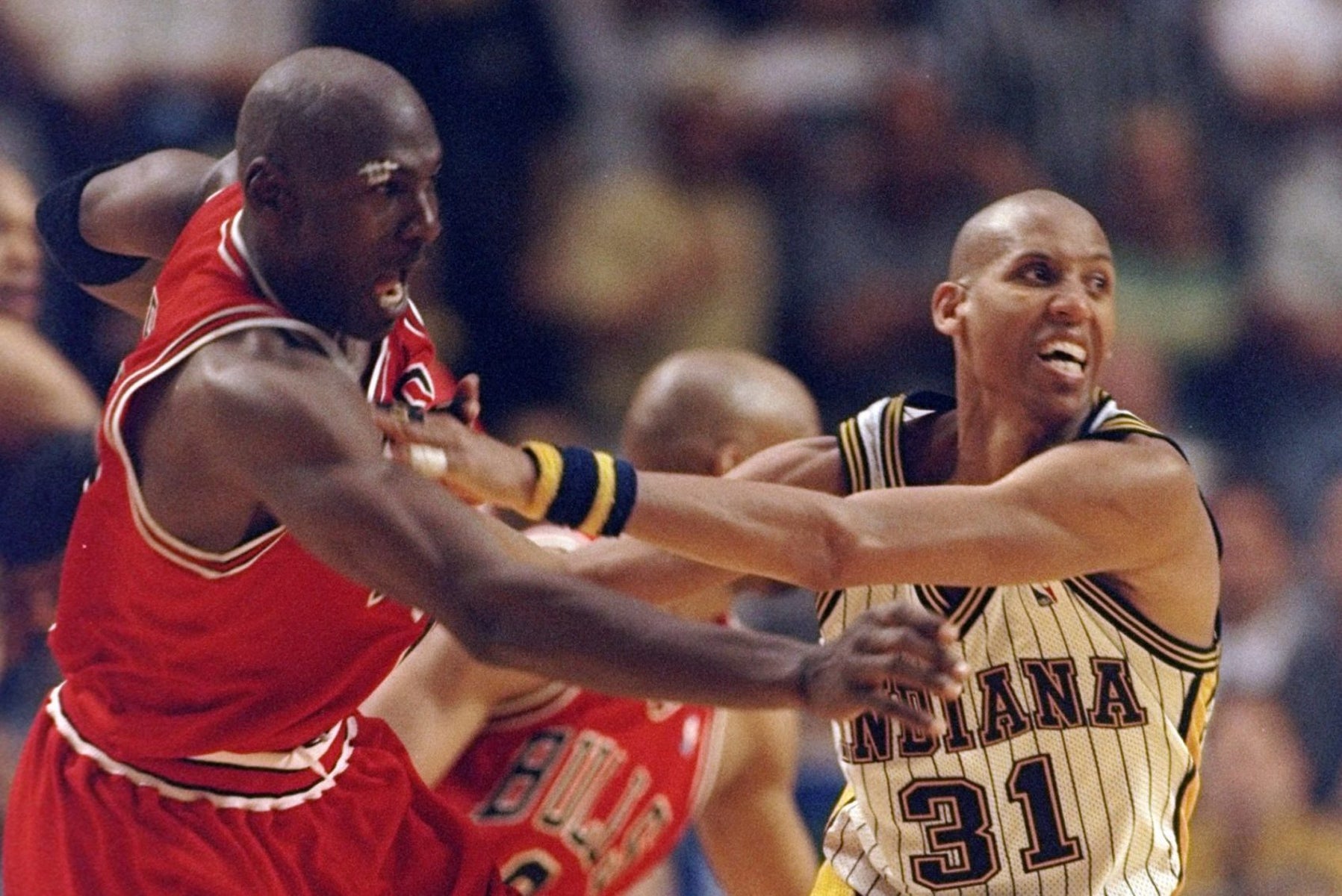
  • Creating Separation to Receive the Pass

    Creating Separation to Receive the Pass

    Getting open is not simply about running away from your defender.

    In most situations, the offensive player first wants to move the defender away from the area where the pass will be received.

    By moving the defender in one direction, the offensive player creates space in the opposite direction and opens a passing lane.

    There are several ways to create this separation.

    Some coaches teach players to:

    • move slowly away from the desired receiving area and then sprint back,
    • take two hard steps in one direction before exploding in the opposite direction,
    • step toward the defender before cutting sharply toward the ball.

    The correct solution depends on:

    • where the player is positioned,
    • where the ball is,
    • and how the defender is playing.

    Move the Defender Before You Move Yourself

    One of the most important principles for young players is simple:

    Move the defender in the opposite direction from where you want to go.

    If you want to receive the ball closer to the basket, first influence the defender away from the basket.

    If you want to receive the ball farther from the basket, first threaten the space inside.

    The defender’s movement creates the space for your next action.

    Use Changes of Speed

    Against a strong, energetic defender, constant movement can be useful.

    Make the defender work.

    Use:

    • changes of direction,
    • changes of pace,
    • screens from teammates,
    • and sudden stops.

    Sometimes the most effective move is not another sprint.

    It is stopping.

    A highly aggressive defender may continue moving or overplay the passing lane.

    That creates an opportunity for a sudden backdoor cut.

    The offensive player must learn to recognize when the defender’s aggression can be used against them.

    Read the Defender

    Getting open is not a predetermined movement.

    It is a reaction to the defender.

    If the defender overplays high, attack behind.

    If the defender protects the basket, create separation toward the perimeter.

    If the defender is extremely tight, move into the defender’s space before exploding away.

    If the defender gives space, take advantage of the open receiving area immediately.

    The offensive player should therefore learn both the movement and the reason behind the movement.

    Example: Getting Open from the Low Post

    Imagine an interior player beginning near the low block but wanting to receive the ball around the three-point line.

    Simply running toward the perimeter may allow the defender to follow easily.

    Instead, the offensive player can first move closer to the defender and threaten the space near the basket.

    Then the player suddenly changes direction and sprints toward the perimeter.

    Another option is to step strongly between the defender’s feet with the inside foot before exploding toward the desired receiving position.

    The key is the same:

    create a reaction from the defender before making the real cut.

    Create a Passing Lane

    The objective is not merely to become physically separated from the defender.

    The offensive player must also create a clear passing lane.

    Ideally, the receiver should position the body so that the defender cannot easily remain between the passer and the target.

    Good off-ball movement therefore connects three things:

    • the offensive player,
    • the defender,
    • and the passer.

    The player getting open must understand all three.

    Use Screens

    Against aggressive defenders, teammates can provide another solution.

    Use off-ball screens to force the defender to:

    • change direction,
    • fight through traffic,
    • communicate,
    • or switch.

    The offensive player should not simply run around the screen.

    The player should read how the defense responds and then choose the best route into open space.

    Backdoor Against Overplay

    When a defender becomes too aggressive in denying the pass, the offensive player should be ready to cut behind.

    A brief pause can sometimes encourage the defender to move farther into the passing lane.

    At that moment, an explosive backdoor cut can punish the overplay.

    This teaches an important offensive principle:

    every defensive choice gives something away.

    The offensive player’s job is to recognize what has been given.

    Separation Comes Before the Catch

    Receiving the ball successfully often begins before the pass is thrown.

    The player must first:

    1. read the defender,
    2. move the defender,
    3. change direction or speed,
    4. create separation,
    5. open the passing lane,
    6. then receive the ball in a useful position.

    Good players do not simply wait to become open.

    They create the situation in which they become open.

    That is one of the foundations of effective off-ball offense.

  • Key Factors in Building an Offensive System

    Key Factors in Building an Offensive System

    When we want to improve a team’s offense, we cannot begin simply by choosing a set play or offensive system.

    The structure of the team, the abilities of the players, the available practice time, physical condition, individual roles and even the environment around the team all influence what kind of offense can be played successfully.

    The offense should fit the team.

    The following factors should therefore be considered when building or developing an offensive system.

    Team Structure

    The balance between taller and smaller players has a major influence on the style a team can play.

    At senior level, players in each position should be capable of meeting the basic demands of that role.

    Ideally, a team has strong and athletic interior players who can operate around the basket but are also mobile enough to support a faster style of play.

    Perimeter players should provide:

    • reliable outside shooting,
    • ball handling,
    • passing,
    • and versatility.

    Lineup flexibility is also valuable.

    If a team can successfully play with three or four bigger players in one situation and three or four smaller players in another, the coach can pursue different tactical objectives at both ends of the floor.

    Number of Reliable Ball Handlers

    The more players who can safely handle the ball, the greater the freedom of the offense.

    Reliable ball handlers allow other players to move without the ball and create:

    • cuts,
    • screening actions,
    • close-range opportunities,
    • and quality perimeter shots.

    Ball security makes the offense more flexible.

    Outside Shooters

    Without reliable perimeter shooting, the defense has an easier task.

    It can defend a smaller area of the court and concentrate more players around the offense’s strongest weapons.

    Outside shooting creates space.

    Spacing then creates opportunities for penetration, cutting and interior play.

    Dominant Rebounders

    Strong rebounding can support an offensive philosophy based on creating easier scoring opportunities.

    Defensive rebounds can start transition offense.

    Offensive rebounds can create second possessions.

    A team capable of controlling the boards can build an offensive identity around those advantages.

    Strong Individual Defenders

    Offense is also influenced by defense.

    Strong individual defenders can:

    • pressure opponents,
    • create steals,
    • force mistakes,
    • and generate easier scoring opportunities in transition.

    A team that can create offense from its defense does not have to manufacture every score against an organized half-court defense.

    Interior Players Who Can Shoot

    A post player who is dangerous only directly around the basket allows the defense to stay compact.

    If that same player can consistently score from farther away, the defender must move away from the basket.

    This can create additional space for perimeter players to:

    • penetrate,
    • cut,
    • and attack open areas.

    Bigs with Three-Point Range

    Modern basketball increasingly includes interior players who can shoot from three-point range.

    If the roster, team discipline and offensive structure can support it, this ability can create valuable scoring balance.

    A big player who can make an open three also creates a psychological and tactical problem for the defense.

    The paint becomes more open because the opposing big cannot simply remain near the basket.

    Free-Throw Percentage

    An aggressive attacking style often produces fouls.

    That advantage only becomes fully valuable if the team can convert from the free-throw line.

    Games can be won from the line.

    Free-throw shooting must therefore be considered part of the offensive system rather than an isolated technical skill.

    Speed

    Speed means more than running speed.

    A fast team also needs:

    • quick passing,
    • quick decisions,
    • quick recognition,
    • and fast execution.

    An offense can only play at the speed at which its players are able to make good decisions and perform the required skills.

    Slower Key Players

    Not every important player will be fast.

    If a key scorer is slower because of physical characteristics, age or playing style, the offense should find situations in which that player’s advantages become more important than the lack of speed.

    A historical example is Sejo Bukva, whose size, experience and intelligent play around the basket could compensate for limited quickness.

    The principle is broader:

    do not judge a player through one weakness when another quality can create a major advantage.

    The Position of Creative Players

    Where is the team’s most creative player?

    The offensive possibilities are different depending on whether that player is:

    • a point guard who creates for others,
    • a tall wing who can attack from multiple positions,
    • or an interior player who attracts double-teams and traps.

    A player who can both create an individual scoring opportunity and create opportunities for teammates gives the coach many tactical possibilities.

    Individual Size and Physical Characteristics

    Height, body mass, width and general physical characteristics influence the strengths and weaknesses of every player.

    These characteristics must be considered when designing the offense.

    The system should make use of the physical advantages of the roster rather than constantly placing players in situations that expose their limitations.

    Number of Practices Per Week

    The number of weekly practices determines how often the coach can teach and reinforce the offense.

    Repetition is a basic principle of learning.

    A complex system requires enough opportunities to practice it.

    Duration of Practice

    The total time available for training matters as well.

    Teaching an offensive system requires both physical and tactical work.

    The coach must realistically evaluate how much practice time can be devoted to offense.

    Individual Training Opportunities

    Individual development sessions allow coaches to improve specific strengths and weaknesses.

    They also give motivated players additional opportunities to develop the skills their roles require.

    The effectiveness of the team offense is ultimately limited by the individual abilities of the players executing it.

    Length of the Preparation Period

    A longer preparation period provides more time to:

    • establish roles,
    • teach principles,
    • introduce the system,
    • and build the required habits.

    More preparation time usually creates better conditions for developing a sophisticated offense.

    Amount of Preseason Competition

    During the preseason, practice games and tournaments become increasingly important.

    The team needs opportunities to test what has been taught.

    There must be something to:

    • practice,
    • evaluate,
    • correct,
    • and develop.

    Preseason Tournaments

    Tournament games provide valuable feedback.

    They show which offensive ideas work under competitive pressure and which do not.

    The actual characteristics of the team must remain the deciding factor.

    Exhibition Games

    Practice games are not played simply to increase the number of competitions.

    They provide opportunities to evaluate new offensive elements.

    They can also give important minutes to players who may later need to fill replacement or supporting roles during the season.

    Capacity to Handle Training Load

    The physical condition developed during preparation — and the ability to maintain it — affects the offense.

    A demanding style requires players capable of sustaining the required workload.

    Physical Condition

    Health and recovery are fundamental.

    A tired team cannot be expected to run for forty minutes.

    The offensive philosophy must match the actual physical condition of the players.

    Injuries and Player Availability

    Injuries are part of the reality of a season.

    The offense should therefore be playable by more than one specific lineup.

    For example, a team cannot continue forcing an interior-oriented offense designed around a 210 cm center if that player is injured and the remaining available players are around 190 cm.

    The system must be adaptable.

    Tactical Discipline

    Players must recognize the desired style during competition and remain disciplined enough to execute it.

    A conscious offense requires players to understand:

    • what the team wants,
    • when it wants it,
    • and why.

    Technical Ability

    The speed of the offense must match the technical ability of the players.

    If players cannot correctly execute:

    • running,
    • passing,
    • stopping,
    • ball handling,
    • or shooting

    at high speed, then the pace must be reduced.

    Speed without technical control does not create good offense.

    Age Structure

    The balance between younger and older players can influence:

    • roles,
    • cohesion,
    • responsibility,
    • and the style of play.

    An experienced coach can often recognize these relationships quickly.

    Motivation

    Daily effort is difficult to maintain without goals.

    Players need both:

    • short-term objectives,
    • and long-term objectives.

    Motivation influences how consistently the offensive system is learned and executed.

    Financial Background

    At some levels of basketball, financial stability influences whether committed players can focus on the work required from them.

    It is worth remembering, however, that even when basketball becomes serious work, it is still a game.

    Players need an environment in which they can enjoy playing.

    Family Background

    With younger players, personal and family circumstances may influence development.

    Emotional and psychological maturation cannot be separated completely from performance.

    When a player is struggling away from the court, demanding increasingly complex basketball solutions may not always be realistic.

    Relationships Within the Team

    Friendship, trust and healthy relationships can move a team forward.

    Jealousy and conflict can move it in the opposite direction.

    Offense depends heavily on cooperation.

    Passing the ball, accepting roles and creating opportunities for teammates all require trust.

    Integrating Young Players

    Introducing younger players can give a team new energy.

    However, young players must understand:

    • the principles of the system,
    • their responsibilities,
    • and their roles.

    Technical and physical expectations should remain appropriate for their stage of development.

    At the same time, receiving a genuine opportunity can produce rapid improvement.

    Foreign Players

    Creative players can be expensive.

    Recruit foreign players to strengthen a weakness or add something the team genuinely needs.

    The original principle is important:

    do not build the entire offensive system around one imported player.

    The player should strengthen the system rather than become the system.

    National-Team Players

    High-level players require appropriate attention and management.

    The best players are valuable resources and should be developed and protected accordingly.

    Club Expectations

    The goals of the club influence offensive philosophy.

    A team expected to win immediately may make different tactical choices from a developmental team.

    A more controlled offense may be reliable but easier to scout.

    A faster, more aggressive style may offer greater potential but also involve more risk.

    The key question is:

    What does the club expect from the team?

    Major Competitions

    The offense must be prepared for the most important competitions of the season.

    The coach should plan when additional offensive variations are introduced and when the team should be capable of using its full tactical repertoire.

    Goals

    Short-term and long-term goals define where the team wants to go.

    The offensive process should support those objectives.

    Defining Roles

    Players may have different responsibilities, such as:

    • primary scorer,
    • creator,
    • supporting player,
    • substitute,
    • or sixth man.

    These roles influence how the team plays.

    Accepting Roles

    Roles should be clear and understood.

    When responsibilities are transparent, it also becomes easier to identify where the team is missing a particular type of player or skill.

    Weaknesses

    Technical and physical weaknesses must be identified.

    If, for example, the center is a poor free-throw shooter, the team must recognize that weakness and prepare for its consequences.

    Ignoring weaknesses does not make them disappear.

    Strengths

    The same applies to strengths.

    When the coach knows exactly what the team does well, those advantages can be emphasized deliberately.

    Maintaining Creativity

    Structure and freedom should exist together.

    Controlled offensive work should be combined with situations that allow players to find their own solutions.

    These situations help players develop and can reveal:

    • natural creators,
    • dominant personalities,
    • and unexpected offensive possibilities.

    Individual Needs and Goals

    The offense should also consider the needs of individual players.

    If a strong perimeter shooter rarely receives quality shooting opportunities, the system is probably not using that player effectively.

    Playing time is another factor.

    An older interior player may require more frequent substitutions if the style demands constant running.

    Likewise, in a fast system, interior players still need to receive the ball in useful positions. Otherwise, frustration may develop.

    The team system and individual needs must therefore remain connected.

    Reward the Right Behaviors

    When players execute their roles well and use creativity within the structure, those actions deserve recognition.

    Players should understand which behaviors contribute to the team’s offensive identity.

    Hold Players Accountable

    If something has been taught, it can also be demanded.

    The coach should hold players accountable for the principles that have been established.

    Otherwise, individual ego can gradually pull the team away from the style the group is trying to build.

    Build the Offense Around Reality

    An offensive system should never exist only in the coach’s imagination.

    It must reflect:

    • the players available,
    • their technical abilities,
    • their physical characteristics,
    • the time available for teaching,
    • team relationships,
    • competition demands,
    • and the goals of the club.

    The best offense is not necessarily the most complicated one.

    It is the offense that allows the actual players on the roster to use their strengths, manage their weaknesses and play together with a clear purpose.

  • Four Aspects of Offense

    Four Aspects of Offense

    We divide our offense into four main parts:

    1. Early offense
    2. Motion offense
    3. Controlled half-court offense against a set defense
    4. Isolation

    Each phase has a different purpose, but together they create a complete offensive system.

    1. Early Offense

    Fast break and secondary break are our primary tools for attacking before the defense becomes organized.

    The secondary break I teach is different from what many other teams use.

    That difference itself can become an advantage.

    If opponents have to spend additional time preparing specifically for our offense, they have less time to work on their own system.

    Our secondary break is designed to create quick, high-quality scoring opportunities.

    We do not simply run with the ball.

    We sprint with it.

    There is a difference.

    We want to attack at full speed and create either:

    • a layup,
    • an easy shot,
    • or an immediate advantage.

    Our goal is to punish every opponent who fails to sprint back on defense.

    If the defense does recover and there is no immediate, accurate and high-quality scoring opportunity, we begin moving the ball.

    From there, we search for:

    • a prepared quality shot,
    • or an opportunity to play inside.

    Attack the Paint Aggressively

    We want to attack the paint with aggression.

    If our secondary break works effectively, we should be able to win many games from the free-throw line.

    One important objective is to attempt more free throws than the opponent.

    If we sprint the floor hard enough, the defense has to react.

    Speed places defenders under pressure.

    If they cannot keep up, they are often forced to foul.

    2. Motion Offense

    If we do not create a scoring opportunity from the break or from the first series of quick passes — for example, after reversing the ball to the opposite side — we enter our motion offense.

    This phase gives players enough creative freedom to play basketball.

    That requires an important coaching distinction:

    We must teach players how to play, not only what to play.

    The objective is to make every player better.

    If every individual improves, the team improves as well.

    The fast break can be stopped.

    And it is unrealistic to expect every point to come from controlled half-court offense.

    When both the transition game and structured offense fail to create an advantage, players must still be capable of making plays.

    Four Roles Within the Motion Offense

    I divide our motion offense into four main roles:

    • ball handlers,
    • screeners,
    • cutters,
    • interior players.

    Each component should be taught in detail.

    We begin with simple situations such as 2-on-0.

    Then we add defenders.

    Step by step, the teaching progresses through increasingly complex situations until players can execute the principles in:

    • 4-on-4,
    • and eventually 5-on-5.

    By building the system through these smaller components, the complete motion offense gradually develops.

    Every Player Must Understand Every Role

    One of the most important principles of the system is that every player must know, practice and apply different roles.

    At certain moments, any player may have to perform almost any responsibility.

    If we want to exploit mismatches, our interior players must be capable of making entry passes.

    At the same time, our guards must understand post play.

    We therefore need to develop players who are comfortable with every major element of the motion offense.

    These skills will also improve our controlled half-court offense.

    3. Controlled Half-Court Offense

    We only enter our controlled half-court offense when neither the early offense nor the motion offense produces a quality shot.

    If approximately 12–13 seconds pass without a clear and efficient scoring opportunity, we begin our structured offense.

    Many teams prefer to run their controlled sets first.

    Only when those actions fail do they begin to play more freely.

    I want to do the opposite.

    I want our team to play differently from most opponents.

    That makes preparation against us more difficult.

    Opponents do not enjoy spending twenty seconds repeatedly working in a defensive stance while trying to contain continuous offensive movement.

    Search for High-Percentage Finishes

    Our controlled offense primarily searches for opportunities near the basket rather than outside shots.

    The main exception is when we specifically need a three-point field goal.

    Structured offense must always be designed around the strengths and weaknesses of the players available.

    For example, it makes little sense to design a final action around a lob pass if the personnel cannot execute that action consistently.

    The offense should emphasize strengths.

    It should not expose weaknesses unnecessarily.

    Every Play Needs Multiple Options

    Each set should contain two or three possible finishing options.

    Our primary target may be the center — the 5 — but we should also create opportunities for other players, such as the 4 or the 2.

    The center may become tired.

    The defense may remove the first option.

    When that happens, another player or another part of the action must become more important.

    Multiple options also make it easier to adjust when the defense reacts successfully.

    The goal is to make a good decision when the primary option is taken away.

    Attack the Opponent’s Weaknesses

    Controlled offense allows us to target weaknesses in the opponent’s defense.

    Sometimes it is difficult to explain every individual weakness to the players during a game.

    But by selecting the correct play, we can attack that weakness without needing a long explanation.

    For example, if the opponent’s center cannot defend our 5 on the perimeter, we can run an action that forces that defender away from the basket.

    The right play can also help keep the ball away from players who should not be asked to handle it excessively.

    The offensive structure itself can guide decision-making.

    How Many Plays Do We Need?

    In my experience, we may begin a season using approximately 8–12 controlled offensive plays.

    By the end of the season, that number often decreases to around 6–8.

    Why?

    Because there may only be roughly 20–25 controlled half-court possessions in a game.

    The remaining shots come from:

    • early offense,
    • motion offense,
    • zone offense,
    • or isolation.

    During the first half of the season, we evaluate which plays fit the team best.

    Over time, the players themselves begin to reveal which actions are most useful.

    There is no need to worry that opponents will completely scout us simply because we use only six primary plays.

    Each play can contain several possible finishes.

    If the defense finds one effective way to stop an action, we can react quickly through the other options built into it.

    4. Isolation

    We do not use isolation very often.

    However, when the shot clock is approaching its final seconds, it is extremely useful to have a player who can create a scoring opportunity individually.

    If early offense, motion offense and controlled offense have all failed, we need another solution.

    At that point, we put the ball into the hands of our most creative player.

    Then we either:

    • clear the floor,
    • or provide a screen.

    But we want to avoid the hero shot.

    That is the type of shot where, if it goes in, the crowd erupts and the player becomes a hero.

    If it misses, everyone simply says:

    “Well, it was almost impossible anyway.”

    That is not the kind of offense we want.

    Isolation Must Be Practiced

    Creative players also need to practice the exact situations they are likely to face late in possessions.

    Isolation should not mean improvisation without preparation.

    We need actions that can reliably create a legitimate scoring opportunity within approximately seven seconds.

    The objective is not to ask a player to perform a miracle.

    The objective is to give the right player enough space, structure and preparation to create a good shot.

    Bringing the Four Aspects Together

    A complete offense cannot depend on only one method of scoring.

    Transition can be stopped.

    Motion offense will not always create an advantage.

    Controlled sets can be defended.

    And isolation should never become the primary solution.

    The strength of the system comes from connecting all four phases.

    We begin with speed.

    If that does not produce an advantage, we flow into movement.

    If the defense remains organized, we use controlled offense.

    And when the possession reaches its final stage, we rely on a prepared creative solution.

    The purpose is not simply to run plays.

    It is to develop players who understand when to run, when to move, when to execute and when to create.

  • How to Use Screens More Effectively

    How to Use Screens More Effectively

    How to Use Screens More Effectively

    A few ideas on how to use screens more effectively to create better perimeter shooting opportunities

    Before using a screen, always move your defender one or two steps in the opposite direction from where you want to receive the screen.

    This helps create separation and gives you a better chance of coming off the screen into a shooting position.

    Run shoulder-to-shoulder with the screener.

    Even the smallest gap between you and the screener gives the defender enough space to recover and reduces the effectiveness of the cut.

    Show your hands and call for the ball as soon as you are ready to receive the pass.

    Unfortunately, many players come off screens with their hands down.

    If you are already prepared to receive the ball, you reduce the time and distance needed to bring the ball into your shooting pocket.

    Showing your hands also gives the passer a clear target.

    One of the most important conditions for a high shooting percentage is receiving the ball with proper timing.

    Continue to improve your offensive footwork before the shot.

    Younger players often use a pivot to establish balance.

    As they become stronger and more coordinated, they can learn to use a jump stop and turn their feet toward the basket while receiving the ball in the air.

    Coming off a screen, establishing a low and balanced position, maintaining control of the center of gravity and preserving enough energy for the shot all require a great deal of practice.

    Keep your eyes focused on the basket while using your peripheral vision to locate both the defender and the ball.

    The goal is to be ready to shoot immediately when you receive the pass.

    If the screen does not create a good enough shooting opportunity, continue moving and use the screen again.

    Your movement should force the defender to respect the possibility of a back cut.

    Once the defender becomes concerned about being beaten behind, it becomes easier for you to come toward the ball and create separation.

    Playing Without the Ball: Screens and Cuts

    The effectiveness of an off-ball screen depends largely on how well the offensive player uses it.

    The cutter has the best chance of creating an advantage when he waits for the screen to be properly established before moving toward the ball.

    The cut should be made as close to the screener as possible.

    There are several ways to take advantage of how the defender chooses to defend the screen.

    1. Curl toward the screen if the defender trails

    If the defender follows around the screen, move tightly toward the screener and curl into the open space.

    2. Flare or step back if the defender tries to go underneath

    If the defender attempts to slide under the screen, move away from the basket-side pressure and create space for an outside shot.

    3. Back cut if the defender jumps high over the screen

    If the defender aggressively jumps above the screen before it is fully established, immediately move in the opposite direction.

    A back cut can also become available if the defender overplays the passing lane.

    The key is not simply to use the screen, but to read how the defense reacts to it.

    Good off-ball offense requires timing, footwork, spacing and the ability to recognize the defender’s decision in real time.